G20 trade talks in Milwaukee end without outcome document: Piyush Goyal
Synopsis
The G20 trade ministerial in Milwaukee ended without a joint outcome document — a quiet but telling failure. Commerce Minister Piyush Goyal says discussions were 'fruitful', yet unnamed countries blocked consensus on forced labour, WTO reform, and state-backed overcapacity: three fault lines that will follow world leaders to Miami.
Key Takeaways
G20 trade ministers failed to agree on an outcome document at their meeting in Milwaukee under the US G20 presidency in 2026 .
Commerce Minister Piyush Goyal said the discussions were 'fruitful' but acknowledged that 'differences of opinion in some countries' blocked a formal text.
Key topics included forced labour in global supply chains, the future of the WTO — described as under 'severe stress' — and state-backed industrial overcapacity.
Goyal declined to name the countries that blocked consensus or the specific sticking points.
Informal agreement reportedly existed among several nations on opposing imports of goods produced using forced labour .
The unresolved differences are expected to carry over to the G20 leaders' summit in Miami .
Commerce and Industry Minister Piyush Goyal has said that disagreements among certain countries prevented G20 trade ministers from adopting an outcome document at their meeting in Milwaukee, even as he characterised the broader discussions as productive and pointed to areas of convergence on key trade issues.
What Happened in Milwaukee
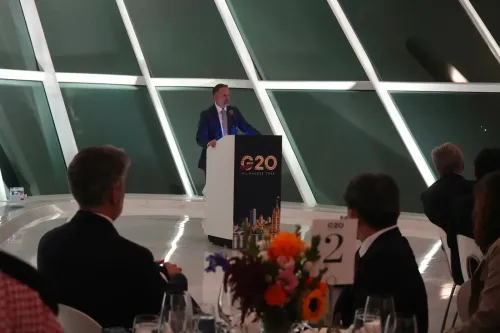
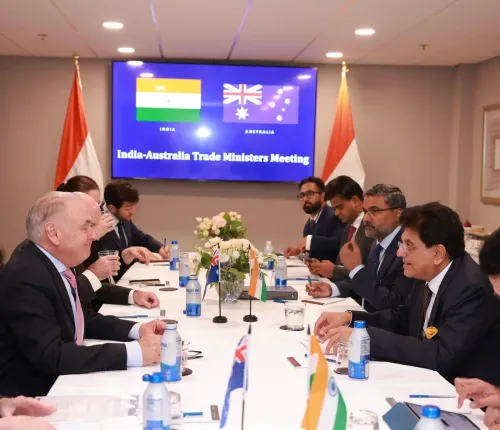
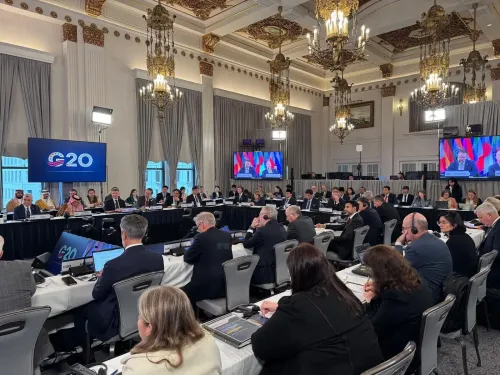
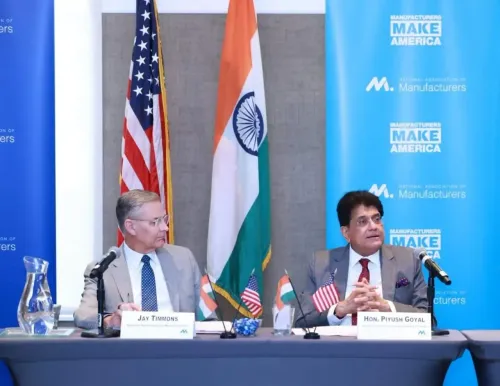
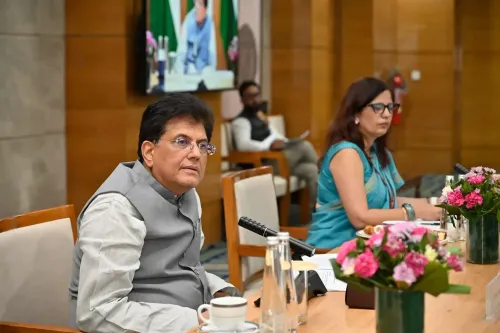
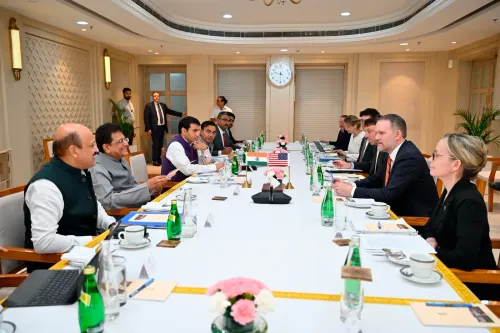
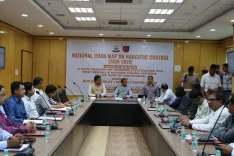
The G20 Trade Ministers' Meeting, held in Milwaukee under the United States' current G20 presidency, concluded without a joint communiqué or agreed outcome text. Goyal, who represented India at the two-day ministerial, described the sessions as covering a range of contested global trade topics — including forced labour, the future of the World Trade Organization (WTO), and the distortionary effect of large state-backed production capacities.
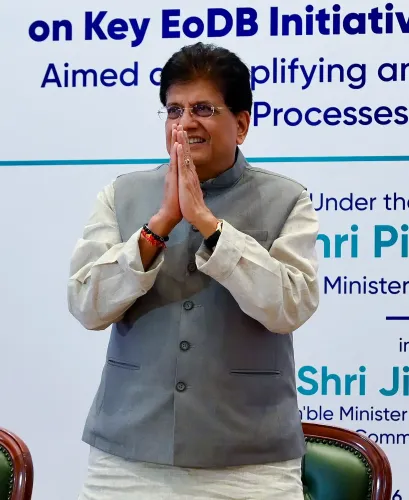
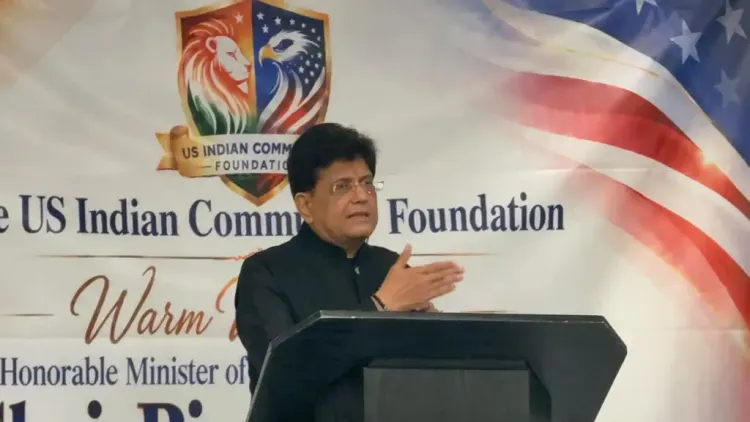
'We had very good discussions. I think it was a very fruitful set of conversations,' Goyal said during an interaction with the Indian-American community in Chicago, organised by the US Indian Community Foundation. 'Of course, because of differences of opinion in some of the other countries, they were not able to have an outcome document,' he added.
Key Issues on the Table
Goyal indicated that ministers reached informal consensus on several fronts, even if a formal document proved elusive. On forced labour, he said G20 nations broadly agreed to collectively oppose the importation of goods produced under such conditions. The WTO was described by Goyal as being under 'severe stress', with ministers discussing how to revive and reform the multilateral trading system.
A significant focus, according to Goyal, was the impact of large government-supported production capacities on manufacturing in other economies. He argued that 'certain geographies with very large production capacities created at different points of times with government support should not be allowed to hurt manufacturing in countries where fair trade and honest business practices are carried out such as the United States or Europe or India.' He did not name the geographies in question.
Who Blocked Agreement — and Why It Was Not Disclosed
Notably, Goyal declined to identify either the countries responsible for the impasse or the specific issues that prevented agreement. This diplomatic restraint is consistent with India's broader approach of maintaining working relationships across G20 blocs, even as underlying tensions — over industrial subsidies, supply chain decoupling, and WTO reform — have deepened in recent years.
The failure to produce an outcome document is not without precedent in the G20 framework. Similar stalemates occurred during earlier presidencies when geopolitical tensions cut across trade agendas, underscoring how the grouping increasingly struggles to translate ministerial-level discussions into binding or even declaratory consensus.
Chicago Engagements and What Comes Next
After Milwaukee, Goyal travelled to Chicago on Friday, where he met businesses of varying sizes through US business organisations and held one-on-one sessions with large investors. He also used the platform to invite Indian-American businesses to increase investment in India and participate in its economic expansion.
When asked about the upcoming G20 leaders' summit in Miami, Goyal indicated the agenda would be determined at the leadership level. 'As regards the summit in Miami, that is for the two leaders to decide,' he said. The leaders' summit, scheduled as the culmination of the US G20 presidency in 2026, will be closely watched to see whether the unresolved trade differences from Milwaukee surface at the highest diplomatic tier.
Point of View
The Miami leaders' summit faces a heavier lift than its organisers would like to admit. India's positioning — aligning rhetorically with the US and Europe on overcapacity without naming China — reflects New Delhi's continued balancing act, and may limit its credibility as a genuine rule-shaper in multilateral trade forums.
NationPress
3 Oct 2026
Frequently Asked Questions
Why did the G20 trade ministers' meeting in Milwaukee fail to produce an outcome document?
According to Commerce Minister Piyush Goyal, 'differences of opinion in some of the other countries' prevented ministers from agreeing on a joint outcome text. Goyal did not identify the countries or the specific issues that caused the impasse.
What issues were discussed at the G20 trade ministerial in Milwaukee?
Ministers discussed forced labour in global supply chains, the future and reform of the World Trade Organization (WTO), and the impact of large government-supported production capacities on manufacturing in other countries. Goyal said there was informal agreement among several nations on opposing imports made with forced labour.
What did Piyush Goyal say about state-backed overcapacity at the G20?
Goyal argued that geographies with 'very large production capacities created with government support' should not be allowed to hurt manufacturing in countries practising fair trade — naming the US, Europe, and India as examples. He did not name the geographies he was referring to.
What happens next after the Milwaukee G20 trade ministerial?
The unresolved differences are expected to be addressed at the G20 leaders' summit in Miami. Goyal indicated that agenda decisions for the summit would be made at the leadership level, saying 'that is for the two leaders to decide.'
What is the significance of the G20 meeting failing to produce an outcome document?
A failed outcome document signals that major economies remain deeply divided on core trade issues — including industrial subsidies, WTO reform, and supply chain rules. This is not unprecedented in G20 history but underscores growing difficulty in translating ministerial dialogue into multilateral consensus.