US food outbreaks hit 15+ states: lettuce, meat, eggs under scrutiny

Synopsis
The US is simultaneously battling a cyclospora outbreak in Mexican iceberg lettuce across 15 states with two deaths, salmonella alerts spanning meat, jalapeños, eggs, and fresh produce across 27 states, and a screwworm threat to beef — the most complex multi-pathogen food safety crisis in recent years, with no import restrictions announced and investigations still open.
Key Takeaways
A cyclospora outbreak linked to iceberg lettuce from Mexico has reached 15 states , with two deaths reported in late June and early July.
NIH Director Dr Jay Bhattacharya called the outbreak 'larger than in normal years' and said the CDC and FDA are tracing contamination sources.
Salmonella alerts cover meat and poultry (USDA), jalapeños across 27 states , cilantro , red onion , avocado , and eggs in Texas ; Albertsons has issued recalls.
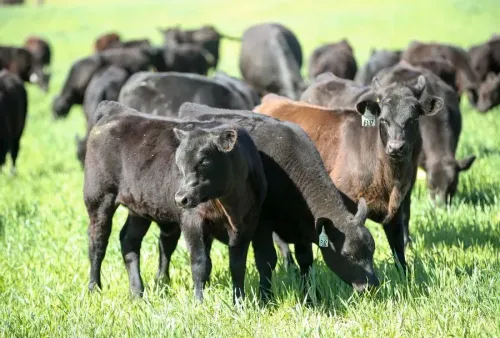
A separate New World screwworm outbreak is affecting the US beef supply .
No new import restrictions on Mexican produce were announced; investigations have no stated completion timeline.
Consumers are advised to wash lettuce thoroughly, discard outer leaves, or cook vegetables if concerned.
US health agencies are actively tracing multiple simultaneous food safety outbreaks spanning dozens of states, involving iceberg lettuce, meat, poultry, eggs, jalapeños, and other fresh produce. Dr Jay Bhattacharya, Director of the National Institutes of Health (NIH), acknowledged the scale of the crisis on 10 August, while urging consumers not to panic about the overall safety of the US food supply.
Cyclospora Outbreak Larger Than Usual
The most prominent concern is a cyclospora outbreak linked to iceberg lettuce imported from Mexico, which has spread to 15 states. Two deaths were reported — both occurring in late June and early July, before authorities had identified the source. Bhattacharya described the outbreak as 'larger than in normal years,' noting it had exceeded the scale of typical annual cyclospora cases.
The Centers for Disease Control and Prevention (CDC) and the Food and Drug Administration (FDA) are jointly tracing the contamination chain and coordinating with suppliers to halt the movement of affected products. 'The CDC and the FDA are working hard to trace back exactly where these outbreaks are occurring from, intervening with the sort of suppliers to make sure that they don't — and doing recalls to make sure that the condition doesn't spread,' Bhattacharya said.
Salmonella Risks Across Multiple Products and States
Compounding the crisis, the US Department of Agriculture (USDA) has issued an alert covering meat and poultry products that could be contaminated with salmonella. Separately, possible salmonella contamination has been flagged in connection with jalapeños across 27 states, with a CDC notice also referencing cilantro, red onion, and avocado. Grocery chain Albertsons has recalled certain products as a precautionary measure. Authorities are additionally investigating salmonella risks tied to eggs in Texas.
Screwworm Outbreak Adds to Beef Supply Concerns
A separate outbreak of New World screwworm — a parasitic fly whose larvae infest wounds in warm-blooded animals — has affected the beef supply, adding a third layer of concern for consumers and livestock producers alike. This is the first such concurrent multi-pathogen food safety episode of this scale in recent memory, according to reports.
What Consumers Should Do
Bhattacharya, who is temporarily overseeing the CDC pending the appointment of a new director, advised consumers that lettuce remains safe to purchase provided proper precautions are taken. 'If you're worried, you can buy the lettuce, but make sure you wash it carefully. You don't eat outer leaves. And if you're really worried, just cook your vegetables,' he said.
He noted that cyclospora is particularly difficult to trace because it is caused by a microscopic parasite rather than a bacterium, making source identification more technically complex. 'For cyclospora specifically, it's complicated because for technical reasons, it's much more difficult than if it was just a bacteria to find the exact source,' he said. No new import restrictions on Mexican produce were announced, and Bhattacharya said he could not speak on the FDA's behalf regarding any potential trade measures.
Health Risks at a Glance
Cyclospora infection can cause prolonged diarrhoea, stomach cramps, nausea, fatigue, and loss of appetite; symptoms may recur if untreated. Salmonella poses heightened risk to young children, older adults, and immunocompromised individuals. The screwworm, if unchecked, can cause serious harm to livestock. With investigations still ongoing and no completion timeline provided, consumers and the food industry are being asked to remain vigilant.
Point of View
Salmonella across multiple vectors, and screwworm in a single news cycle is not routine — it signals either a genuine spike in food-chain vulnerability or a surveillance system finally catching up after years of underfunding. Bhattacharya's reassurance tour on CBS, while measured, sidestepped the harder question: whether DOGE-era cuts to CDC and FDA field staff have slowed the tracing that might have contained these outbreaks earlier. The two deaths from cyclospora occurred before the source was even identified — that lag deserves scrutiny. And with no import restriction announced despite a clear Mexican-origin link, the gap between epidemiological evidence and policy action is worth watching.
NationPress
24 Sept 2026
Frequently Asked Questions
What is the cyclospora outbreak in the US linked to?
The current US cyclospora outbreak has been linked to iceberg lettuce imported from Mexico and has spread to 15 states, with two deaths reported in late June and early July. The CDC and FDA are actively tracing the contamination source and working with suppliers to prevent further spread.
Which foods are under salmonella alert in the US right now?
Salmonella alerts currently cover meat and poultry products flagged by the USDA, jalapeños across 27 states, and a CDC notice referencing cilantro, red onion, and avocado. Authorities are also investigating salmonella risks linked to eggs in Texas, and Albertsons has recalled some products.
Is it safe to eat lettuce during the current US outbreak?
US health officials say lettuce can still be purchased but consumers should take precautions — wash it thoroughly, avoid outer leaves, and consider cooking vegetables if concerned. Authorities say they are working to ensure contaminated products do not reach store shelves.
What is cyclospora and why is it hard to trace?
Cyclospora is an infection caused by a microscopic parasite, commonly linked to contaminated fresh produce, that causes prolonged diarrhoea, cramps, nausea, and fatigue. NIH Director Dr Jay Bhattacharya noted it is harder to trace than bacterial outbreaks because identifying its exact source requires more complex technical analysis.
Will the US restrict food imports from Mexico over these outbreaks?
No new import restrictions have been announced. Dr Jay Bhattacharya said he could not speak on behalf of the FDA on the matter, and no timeline for completing the investigations was provided as of 10 August.