New World Screwworm confirmed in Texas: 2nd case in Zavala County
Synopsis
The US has now recorded two New World Screwworm cases in Zavala County, Texas — the first domestic detections in decades. With larvae that consume living flesh and a pest front advancing from Central America, the USDA is racing to contain a potential outbreak with 8 million sterile flies released weekly and movement control zones already in place.
Key Takeaways
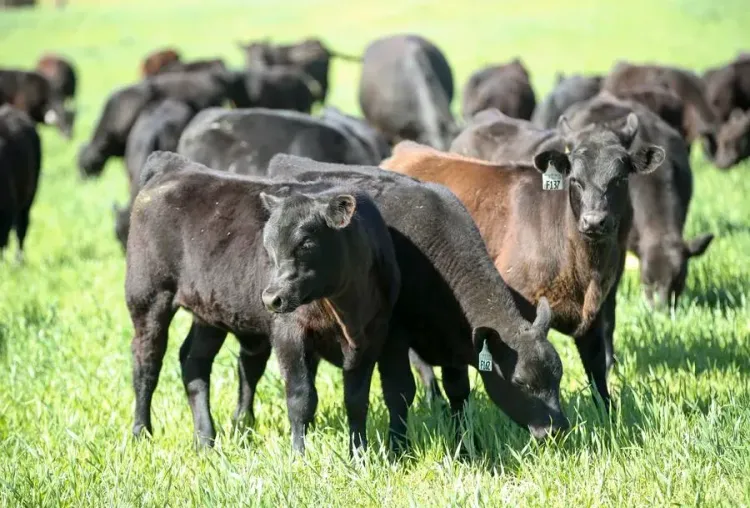
The USDA confirmed a second New World Screwworm case in Zavala County, Texas — a one-month-old calf , approximately 9 km from the first detected case.
Both detections are the first confirmed NWS cases in the United States in decades .
An APHIS emergency response team is on the ground; sterile fly releases have scaled up to approximately 8 million flies per week .
Movement control zones have been established and surveillance intensified across the affected county.
US Agriculture Secretary Brooke Rollins confirmed a full federal-state emergency response plan is active.
NWS has been spreading northward through Central America and Mexico , posing an ongoing border re-entry risk.
The US Department of Agriculture (USDA) has confirmed a second detection of the New World Screwworm (NWS) in Zavala County, Texas, just days after the first such case in the United States in decades was recorded in the same county. The latest case involves a one-month-old calf, identified approximately 9 km from the site of the initial detection, which involved a three-week-old calf.
What Is New World Screwworm
NWS is a severe parasitic pest whose larvae burrow into open wounds of living animals, feeding on flesh and causing extensive tissue damage. The pest affects livestock, pets, wildlife, and in rare instances, humans. Once eradicated from the United States, NWS has persisted in parts of South America and has in recent years spread northward through Central America and Mexico, according to the USDA.
Emergency Response Underway
An emergency response team from the US Animal and Plant Health Inspection Service (APHIS) has been deployed to Zavala County, with mobile response units operational on the ground. Sterile NWS fly releases are underway, totalling approximately 6 million flies per week through combined aerial and ground operations. US Secretary of Agriculture Brooke Rollins confirmed on Thursday that federal and state authorities are fully implementing an emergency response plan to contain the outbreak.
Containment Measures in Place
Movement control zones have been established around the affected area, and surveillance has been significantly intensified. Treatment supplies are being distributed through the Texas Animal Health Commission. Authorities are also expanding sterile fly releases, with Rollins stating that approximately 8 million sterile flies are now being released weekly via aerial and ground-based operations — a scale-up from the initial deployment figure.
Border Monitoring and Wildlife Surveillance
In addition to on-ground response efforts, authorities are increasing trapping for NWS flies along the US-Mexico border and enhancing wildlife monitoring in the region. This comes amid broader concern that the pest's northward migration through Mexico poses a sustained re-entry risk. Notably, the two confirmed Texas cases represent the first domestic detections in decades, raising alarms among livestock and agriculture officials about potential spread if containment measures are not sustained.
The USDA said it is working closely with Texas state authorities and that the situation remains under active monitoring. Further developments are expected as surveillance results from the expanded response zone come in.
Point of View
But its success depends on speed and scale, both of which are being tested right now. What mainstream coverage underplays is the northward migration dynamic: NWS was not reintroduced by accident but has been advancing through Central America and Mexico for years, making this a border biosecurity failure as much as an outbreak response challenge. The real question is whether 8 million sterile flies a week is enough to suppress a population whose size and spread are still being mapped.
NationPress
22 Oct 2026
Frequently Asked Questions
What is New World Screwworm and why is it dangerous?
New World Screwworm is a parasitic fly whose larvae burrow into the living tissue of animals — and rarely humans — feeding on flesh and causing severe, often fatal damage. It affects livestock, pets, and wildlife, and was previously eradicated from the United States decades ago.
Where were the two Texas screwworm cases detected?
Both cases were confirmed in Zavala County, Texas. The first involved a three-week-old calf, and the second — detected days later — involved a one-month-old calf approximately 9 km away from the initial site.
What is the USDA doing to contain the screwworm outbreak?
The USDA has deployed an APHIS emergency response team to Zavala County, established movement control zones, and is releasing approximately 8 million sterile screwworm flies per week through aerial and ground operations. Treatment supplies are being provided via the Texas Animal Health Commission.
How did New World Screwworm reach Texas?
According to the USDA, NWS was eradicated from the US decades ago but has persisted in South America and has been spreading northward through Central America and Mexico in recent years, raising the risk of re-entry across the US-Mexico border.
Who is overseeing the US response to the screwworm detection?
US Secretary of Agriculture Brooke Rollins confirmed on Thursday that federal and state authorities are jointly implementing a full emergency response plan, with the USDA coordinating closely with Texas state agencies including the Texas Animal Health Commission.