US sanctions on ICC draw UN alarm, eight nations push back
Synopsis
Washington's move to sanction the ICC — banning transactions and cutting off its resources — has triggered an immediate global backlash: the UN Secretary-General called it 'a serious blow' to international justice, while eight major US allies issued a rare joint condemnation. With the Assembly of States Parties looming in December 2026, the diplomatic confrontation over the court's survival is just beginning.
Key Takeaways
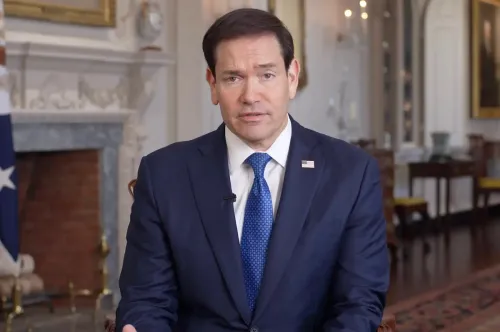
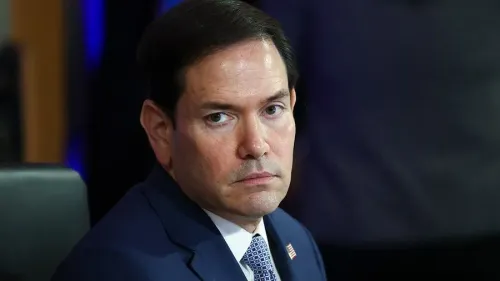
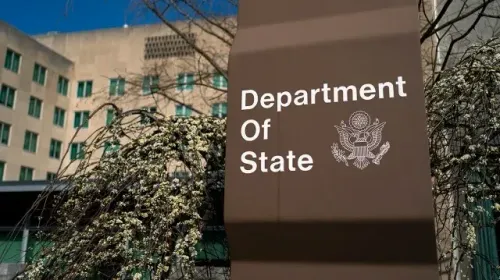
US Secretary of State Marco Rubio announced sanctions against the International Criminal Court (ICC) on 10 October 2026 , aiming to ban transactions and cut off the court's resources.
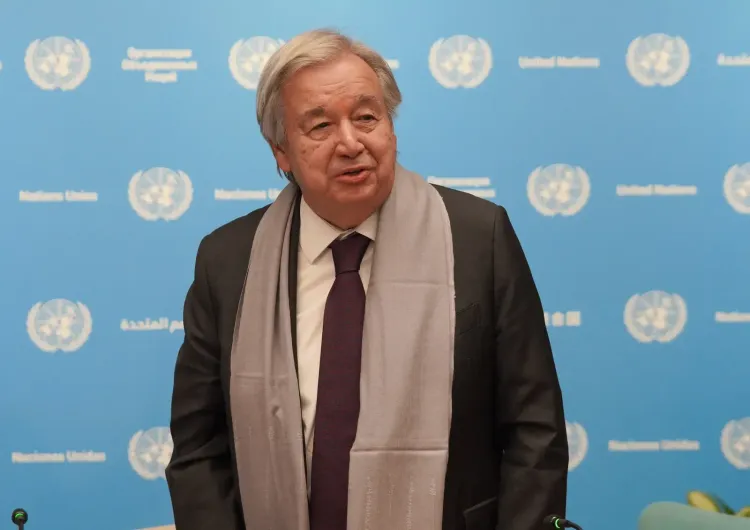
UN Secretary-General António Guterres said he was 'deeply alarmed,' calling the decision 'a serious blow' to international criminal justice.
Foreign ministers of Canada , Denmark , Germany , France , Italy , Japan , the Netherlands , and the United Kingdom issued a joint statement of 'strong opposition.' The eight nations reaffirmed 'unwavering support' for the ICC's independence and pledged dialogue ahead of the Assembly of States Parties in December 2026 .
Ongoing ICC situations referred by the UN Security Council could face operational disruption under the sanctions.
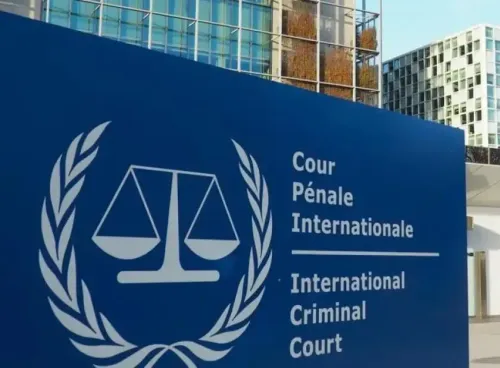
United Nations Secretary-General António Guterres and the foreign ministers of eight countries on 10 October 2026 sharply criticised the United States government's announcement of sweeping sanctions against the International Criminal Court (ICC), warning that the measures could cripple the court's ability to pursue accountability for the world's gravest crimes.
UN's Alarm Over ICC Sanctions
Stéphane Dujarric, the spokesman for Secretary-General Guterres, said the UN chief was 'deeply alarmed' by the expected impact of the sanctions on the ICC as a whole. 'Today's decision marks a serious blow to our collective pursuit of international criminal justice, of which the ICC is a key pillar,' Dujarric said in a statement. 'Accountability for international crimes and delivery of justice to victims are central to our global commitment to peace, security, human rights and fundamental freedoms.'
Dujarric added that Guterres reiterated his 'unwavering support' for the independence of the ICC and its officials, and called on all states to uphold their obligations under international law and support accountability efforts for the most serious crimes of international concern.
Eight Nations Issue Joint Condemnation
In a coordinated diplomatic response, foreign ministers of Canada, Denmark, Germany, France, Italy, Japan, the Netherlands, and the United Kingdom — all States Parties to the Rome Statute — issued a joint statement expressing 'regret' and 'strong opposition' to the US sanctions announcement. 'We reaffirm our continued and unwavering support for the independence, impartiality, and integrity of the ICC,' the statement read.
The eight nations also pledged to engage in constructive and inclusive dialogue with non-States Parties as they prepare for the Assembly of States Parties in December 2026.
What the US Announced
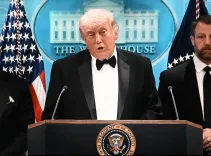
US Secretary of State Marco Rubio announced the sanctions earlier on Friday, stating that the measures would ban transactions with the court, cut off its resources, and, in his words, 'cripple its ability to operate.' The announcement represents a significant escalation in Washington's long-running tensions with the Hague-based court, which the US has never joined as a member.
Why This Matters
The ICC prosecutes individuals for war crimes, crimes against humanity, and genocide when national courts are unwilling or unable to act. Notably, several ongoing ICC situations — including those referred by the UN Security Council itself — could face operational disruption if the court loses access to staff, funding, and international cooperation. This comes amid a broader global debate over the future of multilateral legal institutions and their vulnerability to unilateral pressure from major powers.
The diplomatic fallout is likely to intensify ahead of the Assembly of States Parties meeting in December 2026, where member states are expected to debate protective measures for the court.
Point of View
Explicitly designed to 'cripple' operations, is qualitatively different from past pressure. What is striking is the swiftness and breadth of the allied response: eight of America's closest partners, including the G7 bloc, publicly broke with Washington on the same day. That kind of coordinated dissent is rare. The deeper risk is institutional: if the court cannot access staff or funding because of US secondary-sanction exposure, investigations referred by the Security Council itself — making the US a de facto sponsor — could stall, creating a contradiction that even Washington's allies will find hard to explain to their electorates.
NationPress
10 Oct 2026
Frequently Asked Questions
What are the US sanctions on the ICC?
The US sanctions, announced by Secretary of State Marco Rubio on 10 October 2026, ban transactions with the International Criminal Court, cut off its resources, and are explicitly intended to cripple its ability to operate. They represent a significant escalation in US pressure on the Hague-based court, which Washington has never joined.
Why did the UN criticise the US ICC sanctions?
UN Secretary-General António Guterres, through spokesman Stéphane Dujarric, said he was 'deeply alarmed' and called the sanctions 'a serious blow' to international criminal justice. The UN warned that the measures could undermine the ICC's ability to carry out mandates, including cases referred to it by the Security Council.
Which countries condemned the US sanctions on the ICC?
Canada, Denmark, Germany, France, Italy, Japan, the Netherlands, and the United Kingdom — all States Parties to the Rome Statute — jointly expressed regret and strong opposition to the US announcement. They reaffirmed their support for the ICC's independence, impartiality, and integrity.
What is the Rome Statute and why does it matter here?
The Rome Statute is the treaty that established the ICC in 1998, signed and ratified by over 120 countries. States Parties to it are legally committed to cooperate with the court. The US never ratified the statute, which underpins its long-standing tension with the ICC.
What happens next following the US sanctions on the ICC?
The Assembly of States Parties is scheduled to meet in December 2026, where member nations are expected to debate protective measures for the court. The eight nations that condemned the sanctions have pledged constructive dialogue with non-member states ahead of that meeting.