BRICS parliaments condemn unilateral sanctions, demand urgent UN Security Council reform
Synopsis
Ten BRICS parliaments gathered in New Delhi have collectively labelled Western-style unilateral sanctions 'unlawful' under international law — one of the bloc's strongest joint statements yet. Paired with a unified demand to reshape the UN Security Council and a Russian proposal for a BRICS Plus group inside the IPU, the 12th Parliamentary Forum signals a coordinated Global South push to redraw the rules of global governance before China takes the BRICS chair in 2027.
Key Takeaways
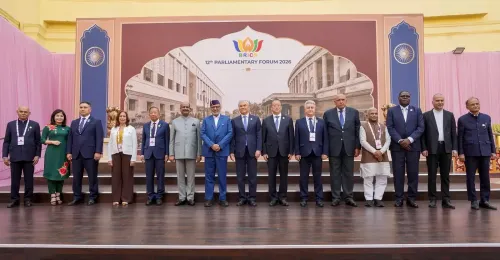
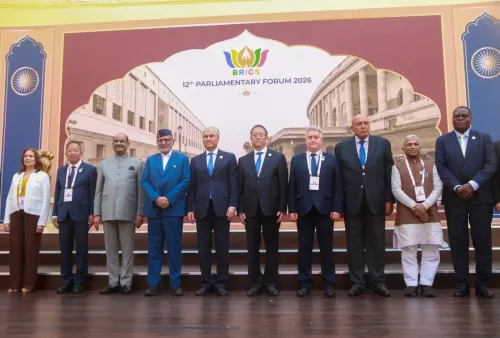
Parliaments of all ten BRICS nations adopted a joint declaration at the 12th BRICS Parliamentary Forum in New Delhi on 27 October 2026 .
The declaration explicitly condemned unilateral economic and secondary sanctions as contrary to international law and the UN Charter .
Member parliaments called for a comprehensive reform of the UN Security Council to make it more democratic, representative, and reflective of contemporary realities.
Russia proposed establishing a BRICS Plus geopolitical group within the Inter-Parliamentary Union (IPU) to amplify the Global South's voice.
Developed nations were called on to provide 'additional, adequate, predictable' climate finance and technology transfers to developing countries.
The next BRICS Parliamentary Forum will be held in 2027 under China's BRICS Chairship .
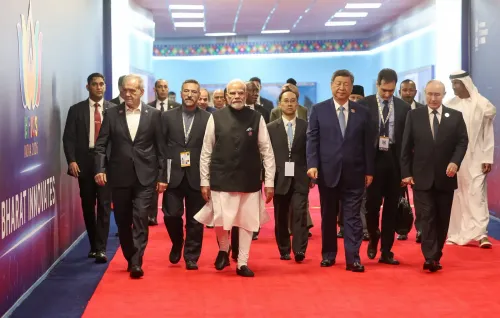
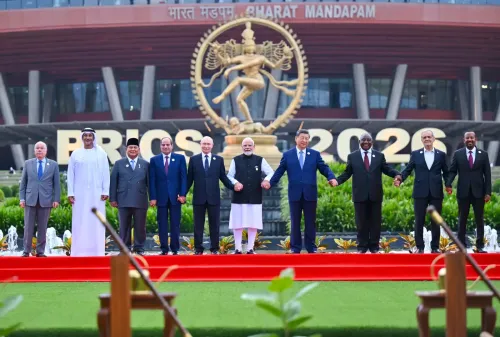
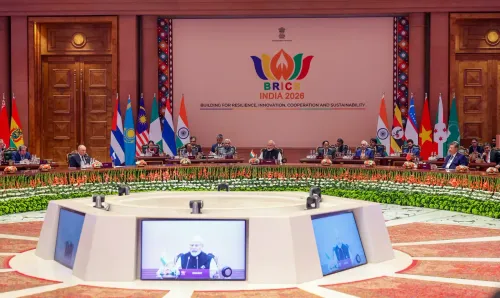
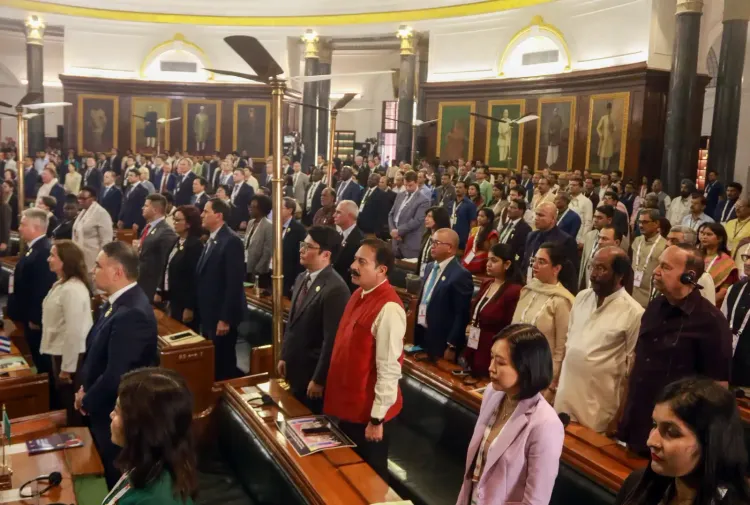
Parliaments of all ten BRICS member nations on Tuesday, 27 October 2026, jointly condemned the imposition of unilateral coercive measures — including economic and secondary sanctions — and issued a collective call for a sweeping overhaul of the United Nations, including its Security Council, at the conclusion of the 12th BRICS Parliamentary Forum in New Delhi. The joint declaration, adopted by Presiding Officers and parliamentary representatives, marks one of the bloc's sharpest collective statements on global governance to date.
What the Joint Declaration Says
The declaration pulled no punches on sanctions, stating: 'We condemn the imposition of unilateral coercive measures that are contrary to international law, and reiterate that such measures, inter alia in the form of unilateral economic sanctions and secondary sanctions, have far reaching negative implications on human rights, including the right to development, health and food security of the general population of targeted states.'
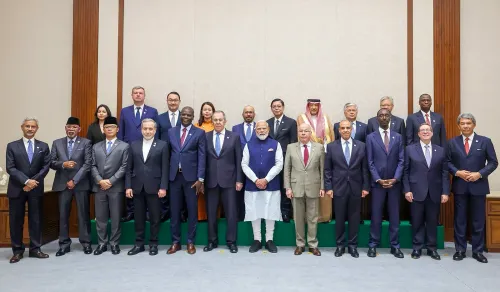
Parliaments of Brazil, China, Egypt, Ethiopia, India, Indonesia, Iran, Russia, South Africa, and the UAE signed on to the declaration at the close of the two-day forum. They further called for 'the elimination of such unlawful measures which undermine international law and the principles and purposes of the UN Charter.'
Push for UN and Security Council Reform
Stressing the urgency of restructuring the current international peace and security architecture, the participating parliaments argued that reform of the UN and its Security Council should render the body 'more just, equitable, democratic, representative, effective and efficient, and better reflect contemporary realities.' This language echoes — and amplifies — the New Delhi Declaration adopted by BRICS leaders in September 2026, in which heads of state had reaffirmed their commitment to a more accountable and representative multilateral order.
Notably, the parliamentary forum's declaration goes further than the leaders' summit text by explicitly condemning sanctions as 'unlawful' — a formulation that is likely to draw a sharp response from Western capitals, particularly Washington and Brussels, which have deployed sanctions as a key foreign policy instrument against Russia, Iran, and others.
Global South, Climate Finance and a BRICS Plus Idea
The declaration underlined the importance of the Global South as a driver for positive change, a theme that has become a defining pillar of BRICS messaging under its expanded membership. On climate finance, the parliaments stated that developed countries 'shall provide additional, adequate, predictable, accessible financial resources, capacity building support, technology development and transfer to developing countries on mutually agreed terms for adaptation' — language that reflects longstanding demands from developing nations ahead of upcoming global climate negotiations.
The forum also took note of Russia's initiative to explore establishing a BRICS Plus geopolitical group within the Inter-Parliamentary Union (IPU), a move aimed at amplifying the Global South's collective voice in multilateral legislative forums. No formal decision was announced on the proposal.
What Comes Next
The member parliaments agreed to reconvene in 2027 under China's BRICS Chairship. With Beijing at the helm, observers expect renewed momentum on institutional reform proposals, particularly those touching the IMF, World Bank, and UN Security Council. This comes amid deepening geopolitical tensions, rapid economic shifts, and escalating debates over the dollar's role in global trade — all issues BRICS nations have flagged as central to their reform agenda.
Point of View
Including those of India, UAE, and Indonesia — nations that maintain significant economic ties with the West — signed on to this text is the real story. It suggests that the expanded BRICS is finding consensus on anti-Western governance rhetoric even when bilateral interests diverge. The Russian proposal for a BRICS Plus group inside the IPU deserves more scrutiny than it has received: if adopted, it would create a structured legislative lobby within a UN-affiliated body, institutionalising Global South coordination in a way that goes well beyond summit declarations. Whether India, which navigates carefully between blocs, will back that proposal in 2027 will be a telling indicator of how far New Delhi is willing to push its multi-alignment strategy.
NationPress
27 Oct 2026
Frequently Asked Questions
What was decided at the 12th BRICS Parliamentary Forum in New Delhi?
The 12th BRICS Parliamentary Forum, held in New Delhi on 27 October 2026, concluded with a joint declaration that condemned unilateral economic and secondary sanctions as unlawful under international law and called for urgent reform of the UN and its Security Council. Parliaments of all ten BRICS member nations — Brazil, China, Egypt, Ethiopia, India, Indonesia, Iran, Russia, South Africa, and the UAE — adopted the declaration.
Why did BRICS parliaments condemn unilateral sanctions?
The declaration states that such sanctions have 'far reaching negative implications on human rights, including the right to development, health and food security' of the populations of targeted states. BRICS members argue these measures are contrary to international law and undermine the principles of the UN Charter, and called for their elimination.
What reforms to the UN Security Council are BRICS nations seeking?
The joint declaration calls for reforms that would make the Security Council more just, equitable, democratic, representative, effective, and efficient, and better reflective of contemporary geopolitical realities. This aligns with the broader New Delhi Declaration adopted by BRICS leaders in September 2026.
What is the BRICS Plus IPU proposal put forward by Russia?
Russia introduced an initiative at the forum to consider establishing a BRICS Plus geopolitical group within the Inter-Parliamentary Union (IPU), a UN-affiliated body. The proposal aims to amplify the voice of the Global South in multilateral legislative settings. No formal decision was taken, and the matter is expected to be deliberated further under China's 2027 BRICS Chairship.
When will the next BRICS Parliamentary Forum be held?
The member parliaments agreed to reconvene in 2027, under China's BRICS Chairship. Beijing's stewardship is expected to renew momentum on institutional reform agendas, particularly regarding the UN, IMF, and World Bank.