BRICS New Delhi Declaration 2026: Bloc slams unilateral tariffs, backs WTO reform
Synopsis
At their 2026 summit in New Delhi, BRICS nations issued a pointed collective rebuke of unilateral tariffs and economic sanctions, backed WTO membership for Ethiopia and Iran, and demanded urgent IMF quota reform — signalling a coordinated push by the Global South to reshape the rules of the global economic order.
Key Takeaways
BRICS unanimously adopted the New Delhi Declaration on 12 September 2026 , condemning unilateral tariffs inconsistent with WTO rules.
The bloc reaffirmed support for WTO reform and backed Ethiopia and Iran 's accession bids.
China 's zero-tariff treatment extended to 53 African countries was acknowledged in the declaration.
Unilateral economic sanctions and secondary sanctions were condemned as violations of international law harming human rights.
BRICS called for immediate implementation of IMF quota increases under the 16th GRQ and endorsed the 2025 World Bank Shareholding Review .
The declaration demands greater voice and shareholding representation for developing countries in global financial institutions.
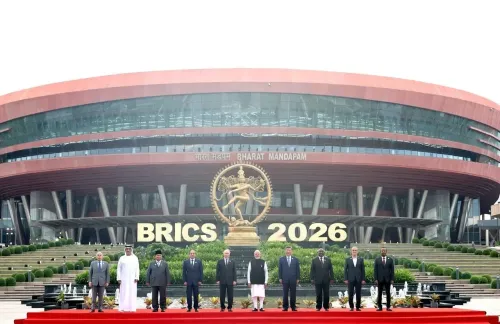
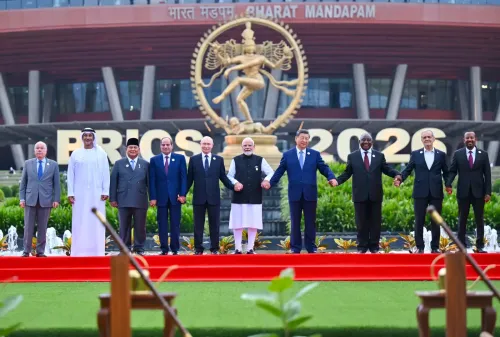
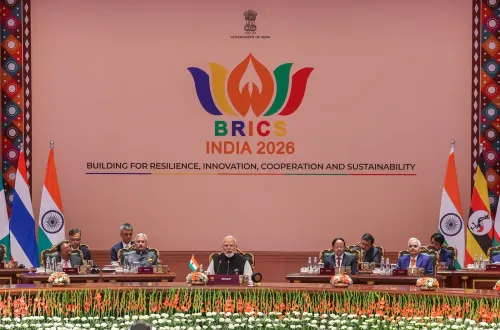
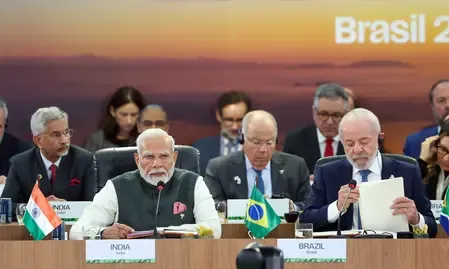
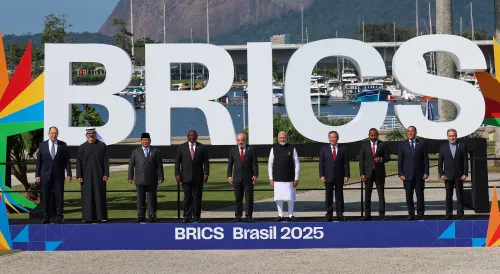
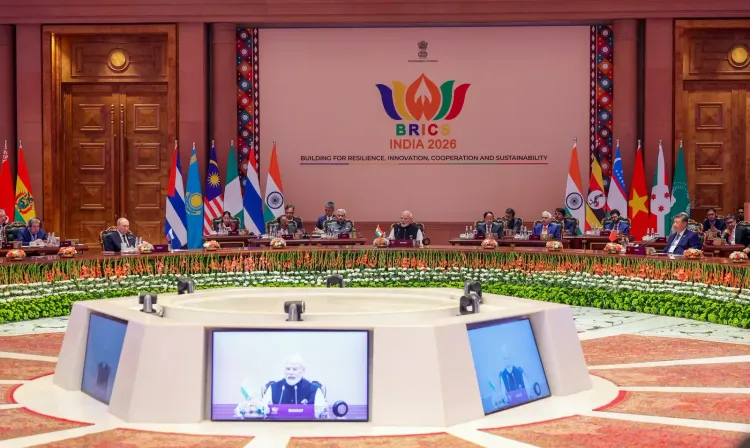
The BRICS group of emerging economies on Saturday, 12 September unanimously adopted the New Delhi Declaration, voicing serious concern over the proliferation of unilateral tariffs and non-tariff measures that distort global trade and contravene the rules of the World Trade Organisation (WTO). The declaration marks a collective stand by the bloc in defence of a rules-based multilateral trading order at a time of escalating trade protectionism worldwide.
Key Commitments on WTO Reform
The BRICS nations reaffirmed their 'unwavering support for reform of the World Trade Organisation (WTO) and to strengthening a non-discriminatory, open, equitable, transparent, fair, inclusive, predictable and rules-based multilateral trading system, with the WTO at its core.' The declaration also extended strong backing to Ethiopia and Iran's bids for accession to the WTO, echoing the aspirations of the Global South to fully integrate into the multilateral trading architecture.
Notably, the declaration acknowledged China's expansion of zero-tariff treatment to cover 53 African countries with which it maintains diplomatic ties — a significant signal of South-South economic cooperation and a pointed contrast to protectionist trends in advanced economies.
Condemnation of Unilateral Coercive Measures
The declaration went beyond trade rhetoric, explicitly condemning the imposition of unilateral coercive measures contrary to international law. It stated that such measures — including unilateral economic sanctions and secondary sanctions — carry far-reaching negative implications for human rights, encompassing the rights to development, health, and food security of the general populations of targeted states. The declaration noted these measures disproportionately affect the poor and people in vulnerable situations, while also deepening the digital divide and exacerbating environmental challenges. The BRICS countries called for the elimination of such unlawful measures.
Reforming Global Financial Institutions
With emerging markets and developing economies (EMDEs) accounting for a growing share of global output, the declaration identified reform of global economic governance as a consistent BRICS priority. Member states agreed to strengthen coordination to make international financial institutions — including the International Monetary Fund (IMF) and the World Bank — more representative, transparent, and accountable.
On IMF reform, the declaration called for a 'strong, quota-based and adequately resourced IMF at the centre of the global financial safety net.' It urged the immediate entry into effect of quota increases agreed under the 16th General Review of Quotas (GRQ) and called for the development of approaches to meaningful quota realignment under the 17th GRQ at the earliest.
The declaration also reaffirmed the 2025 World Bank Shareholding Review as a critical instrument for strengthening multilateralism and enhancing the legitimacy of the World Bank Group as a 'better, bigger, and more effective development finance institution.' BRICS countries committed to advocating for increased voice and representation of developing countries, underpinned by shareholding realignment that corrects their historic underrepresentation.
What This Signals for Global Trade
The New Delhi Declaration arrives against the backdrop of rising tariff barriers in major advanced economies and growing frustration among developing nations with a global financial architecture they argue was designed without their adequate input. This is the latest in a series of BRICS declarations pushing back against Western-led economic frameworks, but the 2026 edition is notably more pointed in its language on sanctions and coercive measures — a reflection of the bloc's expanded membership and heightened geopolitical stakes.
Whether the declaration translates into coordinated action or remains aspirational will depend on the bloc's ability to navigate its own internal divergences on trade and sanctions policy in the months ahead.
Point of View
And BRICS has a long record of strong declarations followed by limited coordinated action. The push for IMF and World Bank reform is not new, but the 17th GRQ demand, coming alongside a direct critique of unilateral coercive measures, maps the fault lines of a world fracturing into rival economic blocs. Whether New Delhi 2026 is a turning point or another aspirational communiqué will be decided not in the declaration text, but in how — and whether — BRICS members translate it into coordinated voting power at Bretton Woods institutions.
NationPress
13 Sept 2026
Frequently Asked Questions
What is the BRICS New Delhi Declaration 2026?
It is a joint declaration unanimously adopted by the BRICS group of emerging economies on 12 September 2026 in New Delhi, condemning unilateral tariffs, economic sanctions, and non-tariff barriers while reaffirming support for WTO reform and equitable representation in global financial institutions.
Which countries did BRICS support for WTO membership?
The New Delhi Declaration extended strong support to Ethiopia and Iran's bids for accession to the World Trade Organisation, framing it as part of the Global South's drive to fully integrate into the multilateral trading system.
Why did BRICS condemn unilateral sanctions?
BRICS stated that unilateral economic and secondary sanctions are contrary to international law and have far-reaching negative implications for human rights — including rights to development, health, and food security — disproportionately affecting the poor and vulnerable populations of targeted states.
What did BRICS say about IMF reform?
The declaration called for immediate entry into effect of quota increases agreed under the 16th General Review of Quotas and urged development of approaches for meaningful quota realignment under the 17th GRQ, with the goal of making the IMF more representative of emerging and developing economies.
What is the significance of China acknowledging zero-tariff treatment for African countries?
The declaration acknowledged China's extension of zero-tariff treatment to 53 African countries with which it has diplomatic ties, presenting it as a model of South-South cooperation and implicitly contrasting it with protectionist tariff policies in advanced economies.