12th BRICS Parliamentary Forum ends with Joint Declaration; Om Birla urges dialogue over conflict
Synopsis
The 12th BRICS Parliamentary Forum closed with a Joint Declaration that mirrors India's diplomatic wish-list almost point for point — UN Security Council reform, zero-tolerance counterterrorism language, Digital Public Infrastructure expansion, and ethical AI governance. With China taking the Chairship in 2027, the test is whether these commitments outlast India's turn at the helm.
Key Takeaways
The 12th BRICS Parliamentary Forum concluded on 27 October 2026 in New Delhi with a unanimous Joint Declaration .
The declaration endorsed UN Security Council reform in line with Paragraph 13 of the New Delhi Declaration to better represent the Global South .
Strong counterterrorism language — referencing Paragraph 40 of the NDD — condemned cross-border terrorism, terror financing, and safe havens, calling for zero tolerance.
India-led initiatives on Digital Public Infrastructure (DPI) , ethical AI governance , and the CBDR-RC climate principle were unanimously endorsed.
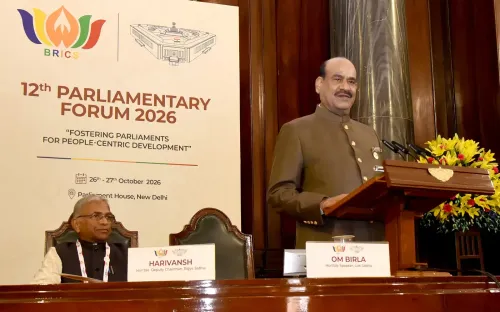
Lok Sabha Speaker Om Birla described Parliaments as 'vital centres of dialogue, consensus, accountability, and public trust' in his valedictory address.
China takes over the BRICS Chairship for 2027 , with Birla expressing confidence in continued deepening of cooperation.
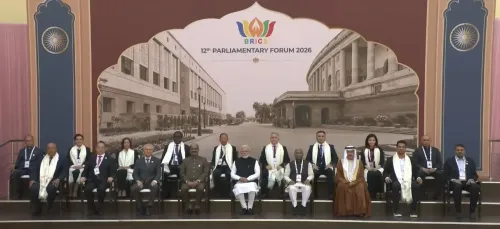
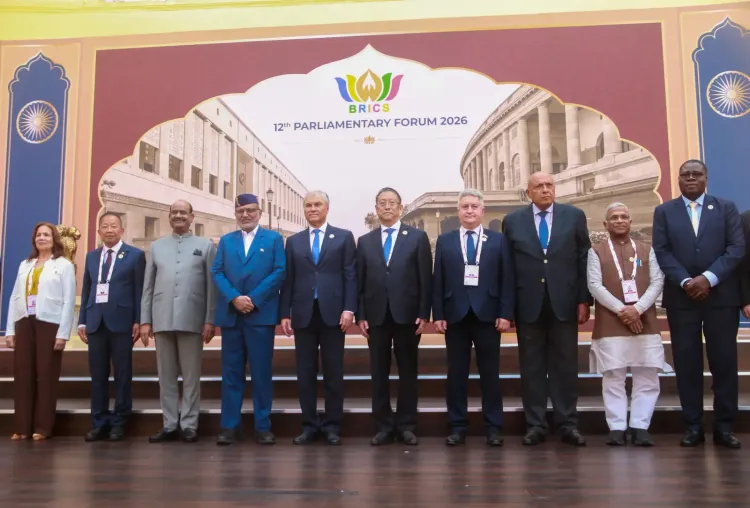
Lok Sabha Speaker Om Birla on Tuesday, 27 October 2026, presided over the conclusion of the 12th BRICS Parliamentary Forum in New Delhi, which wrapped up with the unanimous adoption of a Joint Declaration reaffirming member nations' commitment to the principles of the United Nations Charter. The declaration covers sovereign equality, mutual respect, non-interference in internal affairs, and peaceful resolution of international disputes — core pillars that India has consistently championed during its BRICS Chairship.
Key Provisions of the Joint Declaration
The declaration drew heavily from India's strategic priorities as the sitting BRICS Chair. Member Parliaments explicitly endorsed UN Security Council reform — in line with Paragraph 13 of the New Delhi Declaration (NDD) — to make global governance more representative of the Global South, according to a statement from the Lok Sabha Secretariat.
On counterterrorism, the text adopted robust language referencing Paragraph 40 of the NDD, condemning cross-border terrorism, terror financing, and the provision of safe havens. It called for zero tolerance towards terrorism and an explicit end to double standards — language that mirrors India's long-standing diplomatic position.
India's Development and Climate Agenda Endorsed
The final text also endorsed several India-led initiatives, including the expansion of Digital Public Infrastructure (DPI), the ethical governance of Artificial Intelligence (AI), and adherence to the principle of Common but Differentiated Responsibilities and Respective Capabilities (CBDR-RC) on climate action. The forum also recorded unanimous support for India's BRICS Chairship — a notable diplomatic endorsement from the bloc's expanding membership.
Notably, this alignment on both digital and climate frameworks signals a broader consensus within BRICS that the Global South must shape, rather than merely adopt, global governance norms in these emerging domains.
Om Birla's Valedictory Address
In his valedictory address, Speaker Om Birla stressed that global challenges can only be resolved through steadfast dialogue, mutual peace, and collaborative action — not through conflict. Addressing presiding officers, delegates, and international parliamentarians from BRICS member and partner nations, he acknowledged the diverse backgrounds and challenges of participating countries while asserting that their shared commitment to humanity's welfare remains the coalition's core strength.
'India believes in peace, not war, and it believes in cooperation more than competition,' he said. He called for a global framework grounded in absolute respect for national sovereignty, peaceful dispute resolution, and equitable development for all nations.
Birla also underscored the evolving role of democratic institutions, describing Parliaments not merely as lawmaking bodies but as 'vital centres of dialogue, consensus, accountability, and public trust.' He urged global legislatures to become more effective, transparent, and citizen-centric, and noted that AI and digital tools can optimise parliamentary workflows — provided their development aligns with human values, ethics, and accountability.
Transition to China's BRICS Chairship
As the forum drew to a close, Speaker Birla congratulated China on assuming the BRICS Chairship for 2027 and expressed confidence that inter-BRICS cooperation would deepen under its leadership. The forum concluded with a collective call for Parliaments worldwide to serve as powerful voices for peace, cooperation, and shared prosperity.
With China taking the helm, attention will now turn to whether the bloc can sustain the momentum on UN reform and counterterrorism frameworks that India worked to consolidate during its Chairship.
Point of View
Zero-tolerance counterterrorism language, and digital governance frameworks that New Delhi has been pushing in every multilateral forum for years. That level of alignment during India's own Chairship is diplomatically significant, but it raises the harder question: how durable are these commitments once China, which has historically resisted some of this language, holds the chair in 2027? The counterterrorism text in particular — with its explicit condemnation of cross-border terrorism and safe havens — is language that has caused friction within BRICS before. Whether it survives into substantive policy action, or remains performative consensus, will define the forum's real legacy.
NationPress
27 Oct 2026
Frequently Asked Questions
What was decided at the 12th BRICS Parliamentary Forum?
The 12th BRICS Parliamentary Forum, held in New Delhi, concluded on 27 October 2026 with the adoption of a Joint Declaration that reaffirmed member nations' commitment to UN Charter principles, endorsed UN Security Council reform, backed strong counterterrorism language, and supported India-led initiatives on Digital Public Infrastructure, ethical AI governance, and climate responsibility.
What did Lok Sabha Speaker Om Birla say at the forum?
Speaker Om Birla urged global legislators to resolve international challenges through dialogue rather than conflict, stating that 'India believes in peace, not war.' He also called for Parliaments to become more transparent and citizen-centric, and endorsed the use of AI tools in parliamentary processes, provided they align with human values and accountability.
How does the Joint Declaration reflect India's foreign policy priorities?
The declaration closely mirrors India's strategic priorities during its BRICS Chairship. It includes explicit backing for UN Security Council reform to amplify the Global South's voice, condemnation of cross-border terrorism and terror financing — a longstanding Indian demand — and endorsement of Indian-led frameworks on digital infrastructure and climate principles.
Which country takes over the BRICS Chairship after India?
China assumes the BRICS Chairship for 2027. Speaker Om Birla congratulated China at the forum's closing and expressed confidence that cooperation among BRICS nations would continue to deepen under its leadership.
What is the significance of the BRICS Parliamentary Forum?
The BRICS Parliamentary Forum brings together presiding officers and legislators from BRICS member and partner nations to build legislative consensus on global governance, development, and security. The Joint Declaration adopted at each forum shapes the political messaging and priorities of the BRICS bloc beyond executive-level summits.