US lawmakers demand Pentagon answers on Iran wedding strike deaths
Synopsis
Three Democratic House members — including a former Army Ranger on the Armed Services Committee — have formally demanded the Pentagon explain whether US Navy aircraft killed five civilians, including two children, at a wedding in southern Iran on September 1. The letter also flags an elementary school strike that reportedly killed 120 children, and reveals civilian harm mitigation staff at US Central Command has collapsed from over 10 to just one.
Key Takeaways
Representatives Jason Crow, Yassamin Ansari and Sara Jacobs sent a letter to Defence Secretary Pete Hegseth on 13 October 2026 demanding answers on the Kuhestak wedding strike.
The 1 September strike reportedly killed five civilians , including a four-year-old and a 16-year-old , and injured dozens.
Reporting cited in the letter indicates six weapons from US Navy aircraft targeted a communications complex near the venue; one missed its intended target.
The letter also flags the 28 February Minab elementary school strike, which reportedly killed 175 civilians including 120 children , with no Pentagon acknowledgement.
Civilian harm mitigation staff at US Central Command have reportedly fallen from more than 10 to one ; Civilian Protection Centre of Excellence staffing dropped from over 30 to seven .
The Pentagon has until 26 October to respond to the lawmakers' demands.
A group of Democratic lawmakers has formally demanded that the Pentagon clarify whether American forces were responsible for a deadly strike on a wedding gathering in Kuhestak, southern Iran, that reportedly killed five civilians, including two children, on 1 September. The demand, made public on Tuesday, 13 October 2026, marks one of the sharpest congressional challenges yet to the military's conduct during its ongoing campaign against Iran.
The Lawmakers and Their Demands
Representatives Jason Crow of Colorado, Yassamin Ansari of Arizona, and Sara Jacobs of California addressed a letter to Defence Secretary Pete Hegseth, pressing for detailed explanations of the military's targeting decisions, the status of any investigation, and the protective measures in place for civilians. The lawmakers set a deadline of 26 October for the Pentagon to respond.
Crow, a former Army Ranger who served in Iraq and Afghanistan, sits on the House Armed Services Committee and the House Permanent Select Committee on Intelligence, and co-chairs the congressional Protection of Civilians in Conflict Caucus. His office released the letter publicly on Tuesday.
What the Strike Involved
According to reporting by The Washington Post, cited in the lawmakers' letter, six weapons launched from US Navy aircraft targeted a communications complex near the wedding venue in Kuhestak. One of those weapons reportedly missed its intended target. The victims, according to the letter, included a four-year-old boy and a 16-year-old boy, along with dozens of injured. The Pentagon has not publicly acknowledged responsibility for the strike.
'We demand urgent answers regarding the United States' role in this strike, why the strike proceeded given the clear risk of significant civilian harm, and what steps the Department is taking to prevent further civilian casualties in Iran,' the lawmakers wrote.
Earlier Strikes Also Questioned
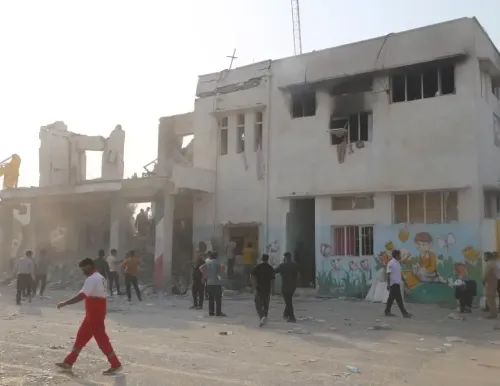
The letter also raised concerns about two additional incidents. The first involved the Shajareh Tayyebeh Elementary School in Minab, struck on 28 February — the opening day of the war — where reports indicate 175 civilians, including 120 children, were killed. The Pentagon has neither publicly acknowledged responsibility nor released investigation findings for that incident, according to the lawmakers.
The second involved a youth sports hall in Lamerd, where 21 civilians, including seven children, were reportedly killed. The Pentagon has denied responsibility for the Lamerd strike.
Civilian Harm Safeguards Under Scrutiny
The lawmakers also criticised sharp reductions in Pentagon programmes designed to minimise civilian casualties. According to their letter, civilian harm mitigation personnel at US Central Command have reportedly fallen from more than 10 to just one full-time staff member. Staffing at the congressionally mandated Civilian Protection Centre of Excellence has declined from more than 30 to seven. The lawmakers argued these cuts weaken the military's capacity to identify civilian infrastructure and assess risks ahead of operations.
This comes amid sustained congressional scrutiny of the human cost of American military operations against Iran. In March, 121 House members had separately sought information on civilian casualties and military safeguards during the Iran campaign. The Pentagon at the time said an investigation had been initiated and its findings would be shared with Congress once completed. Vice President J D Vance previously expressed scepticism about reports of American responsibility for the wedding strike, while acknowledging the incident was under investigation.
US Central Command has maintained that the American military does not target civilians. With the Pentagon's response deadline set for 26 October, the coming days will test whether Congress can secure the transparency it is demanding.
Point of View
But for what it reveals: civilian harm oversight at US Central Command has been reduced to a single full-time staff member. That is not an administrative detail — it is a structural condition that makes accountability harder and future incidents more likely. The Pentagon's silence on the Minab elementary school strike, where 120 children reportedly died on the war's opening day, is the more glaring omission that mainstream coverage has underweighted. Congressional pressure has a track record of producing investigations that are initiated and then quietly shelved; the 26 October deadline will reveal whether this letter carries real consequence or becomes another data point in a long pattern of deferred transparency.
NationPress
13 Oct 2026
Frequently Asked Questions
What happened in the Kuhestak wedding strike in Iran?
A strike on a wedding gathering in Kuhestak, southern Iran, on 1 September reportedly killed five civilians, including a four-year-old boy and a 16-year-old boy, and injured dozens more. According to reporting cited by US lawmakers, six weapons launched from US Navy aircraft targeted a nearby communications complex, with one missing its intended target. The Pentagon has not publicly acknowledged responsibility.
Why are Democratic lawmakers demanding answers from the Pentagon?
Representatives Jason Crow, Yassamin Ansari, and Sara Jacobs argue the Pentagon has not explained its targeting decisions, the civilian risk assessment made before the strike, or the status of any investigation. They also raised concerns about broader reductions in civilian harm mitigation staff that, in their view, increase the risk of future casualties.
What other strikes did the lawmakers raise concerns about?
The letter flagged a strike on the Shajareh Tayyebeh Elementary School in Minab on 28 February — the war's opening day — where reports indicate 175 civilians, including 120 children, were killed. A separate strike on a youth sports hall in Lamerd reportedly killed 21 civilians, including seven children; the Pentagon has denied responsibility for that incident.
What has the Pentagon said about these strikes?
The Pentagon has not publicly acknowledged responsibility for the Kuhestak wedding strike or the Minab school strike. US Central Command has stated that the American military does not target civilians. Vice President J D Vance previously expressed scepticism about reports of US responsibility for the wedding strike while confirming it was under investigation.
What is the current state of US civilian harm safeguards in the Iran campaign?
According to the lawmakers' letter, civilian harm mitigation personnel at US Central Command have reportedly fallen from more than 10 to one full-time staff member. Staffing at the congressionally mandated Civilian Protection Centre of Excellence has declined from over 30 to seven. The lawmakers argue these reductions undermine the military's ability to protect civilians during operations.