Trump's Iran war a failure after 6 months, says top Democrat
Synopsis
Six months into Operation Epic Fury, a top House Democrat is putting stark numbers on the table — 19 US troops dead, 750+ wounded, tens of billions spent — and charging that not one of Trump's four stated objectives in Iran has been met. With a disputed memorandum of understanding and an uninvestigated school strike in Minab hanging over the conflict, the political battle over who won — or lost — this war is now fully joined.
Key Takeaways
Representative Adam Smith , ranking Democrat on the House Armed Services Committee , accused President Trump on 28 August of failing all stated objectives in Iran .
Smith cited 19 American service members killed and more than 750 wounded over six months of conflict; figures were presented by his office without supporting documentation.
A US strike on a girls' school in Minab, Iran , reportedly killed over 150 people , mostly children; the Defence Department's investigation is said to be incomplete.
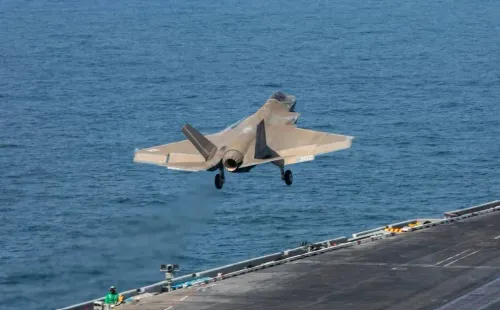
Ford Carrier Strike Group has been deployed for 11 months — reportedly the longest such deployment since the Vietnam War .
The Trump administration disputes the assessment, saying Operation Epic Fury weakened Iran's capabilities and led to a memorandum of understanding brokered with help from Pakistan and Qatar .
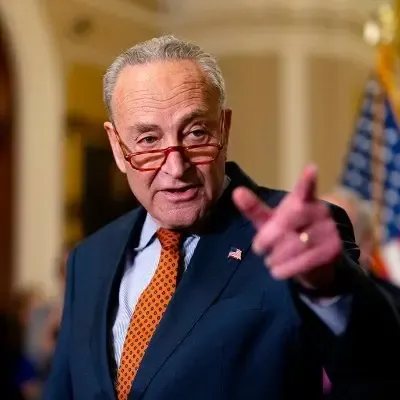
A senior Democratic lawmaker on Friday, 28 August accused President Donald Trump of failing to achieve any of his stated objectives in Iran, asserting that six months of conflict had left 19 American service members dead and more than 750 wounded. The allegations were levelled by Representative Adam Smith of Washington, the ranking Democrat on the House Armed Services Committee.
Key Allegations Against the Administration
Smith charged that the war — which he described as a 'catastrophic war of choice' — had cost tens of billions of dollars and placed severe strain on US military personnel, weapons stocks, and equipment. He listed four objectives the administration had set for itself: ending Iran's support for armed proxy groups, eliminating its ballistic missile programme, removing its highly enriched uranium, and achieving regime change in Tehran.
'It has been six months since Trump unilaterally launched his catastrophic war of choice against Iran and so far, he has failed to achieve any of his administration's constantly changing strategic objectives,' Smith said. According to the lawmaker, Iran has not only continued to destabilise the region but has also gained greater negotiating leverage as a result of the prolonged conflict.
Casualties, Costs, and the Strait of Hormuz
Smith's office presented the casualty figures and financial estimates cited in the statement. The statement did not include supporting documents or detail the methodology behind the calculations. Smith also criticised the costs associated with reopening the Strait of Hormuz, a strategically vital route for global oil shipments.
'Losses continue to accumulate, including 19 American service members killed and over 750 wounded, while thousands of innocent civilians have been killed across the region,' Smith said. There was no immediate response from the White House or the Defence Department to the lawmaker's claims.
Minab School Strike and Oversight Failures
Smith also raised questions about a US strike on a girls' school in Minab, Iran, during the opening days of the military campaign. 'It has also become clear that in the opening days of Trump's war, the United States inadvertently struck a girls' school in Minab, Iran. Over 150 people were killed, most of them children,' he said.
He accused the Defence Department of failing to complete its investigation into the strike and criticised congressional Republicans for what he described as insufficient oversight. Smith warned that the lack of transparency could damage Washington's standing with its allies, partners, and adversaries.
Carrier Deployments and Military Strain
The Democrat warned that prolonged operations had placed American ships and personnel under unnecessary strain. He said the USS Gerald R. Ford Carrier Strike Group had been deployed for 11 months — reportedly the longest such deployment since the Vietnam War. The USS Abraham Lincoln had also faced several unplanned extensions before beginning its return from the Middle East.
'Service members across all branches of the military have had to shoulder the burden of an unchecked and unprepared executive branch,' Smith said, adding that congressional Republicans had failed to exercise appropriate oversight of the Trump administration.
The Administration's Counter-Narrative
The Trump administration has sharply disputed such assessments. It contends that Operation Epic Fury — launched on 1 March — severely weakened Iran's nuclear, ballistic missile, naval, and defence capabilities, forcing Tehran to negotiate from a position of weakness. The White House said in June that President Trump and Vice President JD Vance had secured a memorandum of understanding with Iran, describing it as a 'historic breakthrough.'
The agreement reportedly provides for an end to hostilities, the reopening of the Strait of Hormuz, and further negotiations over Tehran's nuclear programme. Pakistan and Qatar were among the countries involved in mediating the deal. The administration has warned that military and economic pressure could resume if Iran violates its commitments. Smith, however, argued that Congress and the American public want the conflict brought to a close, and cautioned that continued involvement risks drawing the United States into another prolonged Middle Eastern war.
Point of View
But the underlying accountability questions are legitimate regardless of partisan framing. The Minab school strike — with over 150 reportedly killed — has received strikingly little scrutiny relative to its scale, and an incomplete Defence Department investigation is a serious institutional failure. The administration's 'historic breakthrough' framing for the June memorandum of understanding sits awkwardly alongside Smith's casualty figures, which the White House has not directly refuted. The deeper issue is structural: when Congress does not exercise war-powers oversight, the executive branch — of any party — faces no check on cost, duration, or objective-creep. The 11-month carrier deployment is a symptom of exactly that dynamic.
NationPress
13 Oct 2026
Frequently Asked Questions
What did Representative Adam Smith say about Trump's Iran war?
Smith, the ranking Democrat on the House Armed Services Committee, said on 28 August that six months of conflict had failed to achieve any of the Trump administration's stated objectives in Iran. He cited 19 US troops killed, over 750 wounded, and tens of billions of dollars spent, while arguing that Iran had gained greater negotiating leverage.
What were the US objectives in Iran according to Smith?
Smith listed four objectives: ending Iran's support for armed proxy groups, eliminating its ballistic missile programme, removing its highly enriched uranium, and changing the country's ruling regime. He argued that none of these had been achieved.
What is the Minab school strike and why is it significant?
Smith alleged that during the opening days of Operation Epic Fury, the United States inadvertently struck a girls' school in Minab, Iran, killing over 150 people, most of them children. He criticised the Defence Department for failing to complete its investigation into the incident and warned the lack of transparency could damage US credibility with allies and adversaries.
What is Operation Epic Fury and what did the Trump administration say it achieved?
Operation Epic Fury was launched by the Trump administration on 1 March, targeting Iran's nuclear programme, ballistic missile arsenal, and support for armed groups. The administration says the campaign severely weakened Iran's military and defence capabilities and led to a memorandum of understanding signed in June, which it described as a 'historic breakthrough.'
How has the US military been affected by the Iran conflict?
According to Smith, the USS Gerald R. Ford Carrier Strike Group has been deployed for 11 months — reportedly the longest such deployment since the Vietnam War. The USS Abraham Lincoln also faced several unplanned extensions. Smith argued that prolonged operations have placed American ships, weapons stocks, and personnel under unnecessary strain.