Trump vows continued Iran strikes until nuclear threat eliminated
Synopsis
Trump's Camp David Cabinet briefing was less a policy review and more a war declaration in plain language. With Iran's navy and air force claimed destroyed, five missiles intercepted over Jordan, and diplomacy described as built on lies, the President signalled the US campaign is far from over — and tied Iran's degradation directly to a Hamas disarmament deal that would have been 'impossible' months ago.
Key Takeaways
President Trump on 1 August vowed continued US military strikes on Iran until Tehran cannot threaten American forces or develop a nuclear weapon.
Trump claimed Iran's entire navy of 159 ships and 200 aircraft have been destroyed — figures that could not be independently verified.
Iran reportedly fired 5 missiles at a US base in Jordan during ongoing diplomatic talks; all were said to have been intercepted.
Trump said he is 'losing faith' in Iran's credibility as a negotiating partner, citing what he described as deliberate misrepresentation.
The President linked military pressure on Iran to a proposed Hamas disarmament understanding with Israel .
On Ukraine , Trump said both Moscow and Kyiv must make concessions, while advanced weapons transfers — including Patriot systems and Tomahawk missiles — remain under discussion.
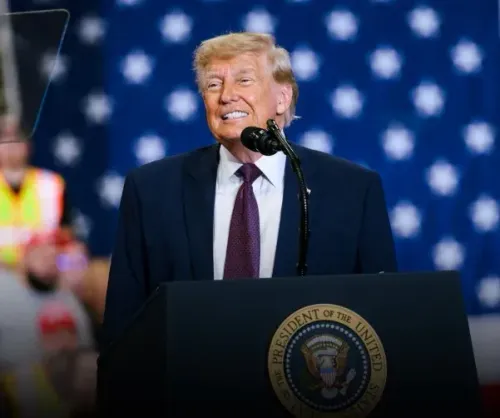
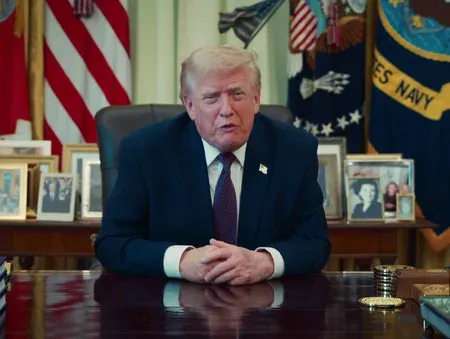
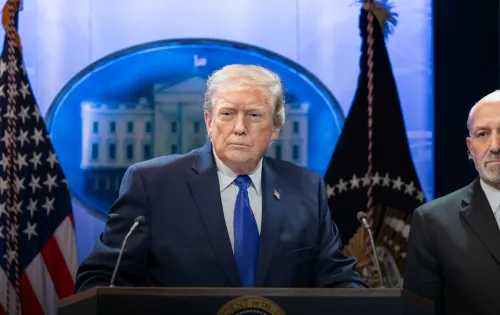
US President Donald Trump on 1 August declared that the United States would press on with military action against Iran until Tehran is no longer capable of threatening American forces or developing a nuclear weapon, while openly expressing eroding confidence in the prospects of a negotiated settlement. The remarks came after Trump chaired what the White House described as the first live televised Cabinet meeting ever held at Camp David, the presidential retreat in Maryland.
Trump's Warning to Tehran
Speaking to reporters following the Cabinet session, Trump signalled that the military campaign against Iran would intensify before any diplomatic breakthrough. 'Well, we'll be hitting — we'll be hitting them very hard and, you know, at some point they're going to say, we just can't take it anymore,' he said when asked what to expect in the coming weeks.
Trump reiterated that denying Iran a nuclear weapon remained Washington's primary objective. 'They cannot have a nuclear weapon. Iran will not have a nuclear weapon, and they can't have a nuclear weapon,' he said. 'If they did, the Middle East would have been wiped out by now.'
Iran's Military Losses, According to Trump
The President claimed Iran had sustained sweeping military losses, asserting that its naval and air capabilities had been effectively destroyed. 'They have no navy, they have no air force, they have no anti-aircraft. Doesn't mean they don't have any capability. They have some, but very little,' Trump said.
He elaborated: 'They had 159 ships. That was their entire Navy, 159. Their entire Navy is laying at the bottom of the sea. I'd say that's going big. They had 200 airplanes, they're all gone, every one of them.' These figures could not be independently verified at the time of the briefing.
Diplomacy Under Strain
Despite ongoing diplomatic contacts between the two sides, Trump cast doubt on Tehran's sincerity at the negotiating table. 'I guess you can. I mean, I'm losing faith in them because they do lie and do they do misrepresent,' he said when asked whether a diplomatic agreement remained possible.
Trump said talks had been further undermined after Iran reportedly launched missiles during negotiations. 'I got a call from Pete that they just shot five missiles at one of our bases in Jordan,' he said, adding that all five were intercepted by US forces. The incident, he argued, demonstrated Tehran's bad faith.
Hamas Disarmament and the Broader Regional Picture
Trump also connected the Iran campaign to what he described as progress on a proposed Hamas disarmament agreement. 'So we do have an understanding with Israel. Israel is very happy about it,' he said. 'Nobody thought that would be possible, to disarm Hamas.'
He framed the development as a direct consequence of military pressure on Iran, arguing that a deal of this nature would have been inconceivable several months earlier. This comes amid broader US efforts to reshape regional security arrangements involving Israel while tightening economic and military pressure on Tehran.
Ukraine, Russia, and Advanced Weapons Transfers
On the parallel conflict in Ukraine, Trump said the administration was continuing discussions over potential transfers of advanced US weapons — including Patriot air defence systems and Tomahawk missiles — but stressed such technology would be shared only with caution given its strategic sensitivity.
Addressing Russia's war against Ukraine, Trump said both Moscow and Kyiv would ultimately need to compromise. 'They're both going to have to make some concessions,' he said. 'Twenty-five thousand young, beautiful people, soldiers, mostly soldiers, are dying a month.'
With Iran's military reportedly degraded and diplomatic channels strained, the coming weeks will test whether Washington's three-pillar strategy of sanctions, military pressure, and selective diplomacy can force a settlement — or push the region deeper into confrontation.
Point of View
If even partially accurate, represents an extraordinary escalation that mainstream coverage is treating as a press-conference boast rather than a strategic inflection point. The missile intercept over Jordan during active negotiations is the detail that matters most: it suggests either that Iran's military command is not coordinated with its diplomatic track, or that Tehran has decided talks are a stalling tactic on both sides. Either reading makes a negotiated off-ramp significantly harder to engineer.
NationPress
15 Sept 2026
Frequently Asked Questions
Why is the US continuing military strikes on Iran?
President Trump stated on 1 August that the US will keep striking Iran until Tehran can no longer threaten American forces or pursue a nuclear weapon. He described preventing Iran from obtaining nuclear capability as Washington's central objective.
What military losses has Iran reportedly suffered?
Trump claimed Iran's entire navy of 159 ships has been sunk and all 200 of its aircraft destroyed, though these figures could not be independently verified. He acknowledged Iran retains 'some' capability but described it as 'very little'.
Did Iran attack US forces during diplomatic talks?
According to Trump, Iran fired five missiles at a US military base in Jordan while negotiations were under way. He said all five were intercepted by US forces, and cited the incident as evidence of Tehran's bad faith at the negotiating table.
Is a diplomatic deal with Iran still possible?
Trump said he is 'losing faith' in Iran as a negotiating partner, citing what he described as deliberate lies and misrepresentation. He did not rule out a deal entirely but indicated diplomatic contacts had been severely undermined by the missile attack.
How does Trump connect Iran to the Hamas disarmament talks?
Trump argued that US military pressure on Iran has directly enabled progress on a proposed Hamas disarmament agreement with Israel. He said such a deal would have been 'impossible' four or five months ago, framing Iran's military degradation as a regional game-changer.