US Senate rejects Iran war-powers resolution 50–49, backing Trump
Synopsis
The US Senate came within one vote of stripping Trump of his Iran war authority — and the margin came down to a Democrat crossing the aisle and an absent colleague. With 200-plus days of conflict, $43 billion allegedly spent, and four Republicans already peeling away, the political ground under this war is shifting faster than the Senate tally suggests.
Key Takeaways
The US Senate voted 50–49 on 25 September 2026 to reject H.
89 , which sought to end military involvement in the war against Iran without congressional authorisation.
The conflict has reportedly lasted more than 200 days ; Senate Democratic Leader Chuck Schumer alleged at least 19 US service member deaths and costs exceeding $43 billion — figures not independently confirmed.
Four Republican senators — Collins , Murkowski , Paul , and Tillis — crossed the aisle to support the resolution; Democrat John Fetterman voted against it.
Democrats have now forced 14 votes seeking to end the conflict, according to Schumer .
A classified briefing by Admiral Brad Cooper of US Central Command preceded the vote; Republicans largely backed the administration while Democrats said there was 'no clear path to an end-state.'
The US Senate on 25 September 2026 narrowly voted 50–49 to reject a resolution that would have compelled President Donald Trump to withdraw American forces from hostilities against Iran without explicit congressional authorisation, handing Trump another legislative victory in an increasingly contentious war-powers debate. The defeat comes after more than 200 days of conflict, according to the official Senate floor summary.
What the Resolution Sought
The measure, H. Con. Res. 89, had already cleared the House in July and qualified for expedited Senate consideration under the 1973 War Powers Resolution. It called for the withdrawal of US forces from hostilities against Iran unless Congress passed specific authorisation or formally declared war. Its Senate defeat prevents any further advancement of the measure.
The Crossover Votes That Defined the Outcome
Four Republican senators — Susan Collins, Lisa Murkowski, Rand Paul, and Thom Tillis — broke with their party and joined Democrats in supporting the resolution. On the other side, Democratic Senator John Fetterman voted against it, while Senator Angela Alsobrooks did not vote. Those two absences from the Democratic column proved decisive: had all 100 senators voted and the result been tied, Vice President JD Vance could have cast the deciding vote in his constitutional role as president of the Senate.
Schumer's Broadside and the Democrats' Tally
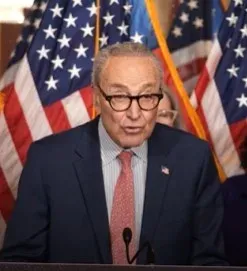
Senate Democratic Leader Chuck Schumer said Democrats had now forced 14 votes seeking to end the conflict. 'Senate Republicans voted down today's War Powers Resolution and once again own the exorbitant cost this war has placed on Americans at home and abroad,' Schumer said. He further alleged that the war had cost Americans through 'skyrocketing gas prices, soaring grocery bills, and chaos on the global stage.'
Schumer's office alleged that the conflict had killed at least 19 US service members and cost taxpayers more than $43 billion. Those figures represent the Democratic leader's account and were not independently confirmed in available materials.
Republican Defence After Classified Briefing
The vote followed a closed-door briefing by Admiral Brad Cooper, head of US Central Command, to members of the Senate Armed Services Committee. Republican senators emerging from that session largely backed the administration's direction. Senator Mike Rounds said 'there appears to be a plan laid out that will continue to degrade their economic capabilities to wage a war.' Senator Joni Ernst acknowledged economic consequences but said she supported the president, adding that she would 'like the administration to come back with a very clear plan on how we bring this to an end.'
Democratic Concern Over End-State
Democrats offered a starkly different read from the same briefing. Senator Richard Blumenthal said, 'My impression is there's no clear path to an end-state here,' adding that 'the American people deserve to know what the cost and risk would be of that kind of military strategy.' The vote also exposed the limits of bipartisan resistance: four Republican defectors brought supporters to within a single vote of Senate approval, setting up the prospect of further challenges as the conflict drags on and economic pressures mount.
Point of View
Not shrinking, as fuel prices rise and the bill climbs past $43 billion by the Democratic leadership's count. The administration has so far avoided a binding congressional constraint, but the architecture of the 1973 War Powers Resolution was designed for exactly this kind of protracted, undeclared conflict. What is striking is that the decisive votes were not Republican holdouts but a Democratic crossover and an absence — meaning the opposition's own discipline is the variable Trump cannot control for next time.
NationPress
25 Sept 2026
Frequently Asked Questions
What was the US Senate vote on Iran and what did it decide?
The US Senate voted 50–49 on 25 September 2026 to reject H. Con. Res. 89, a resolution that would have required President Trump to withdraw American forces from hostilities against Iran unless Congress formally authorised continued military action. The defeat prevents the resolution from advancing further.
Why did the Iran war-powers resolution fail in the Senate?
The resolution fell short primarily because Democratic Senator John Fetterman voted against it and Senator Angela Alsobrooks did not vote, offsetting the four Republican senators who broke with their party to support the measure. A single-vote swing in either direction would have changed the outcome.
How long has the US been involved in hostilities against Iran?
According to the official Senate floor summary, the conflict had lasted more than 200 days by the time of the 25 September vote. Senate Democratic Leader Chuck Schumer's office alleged the war has killed at least 19 US service members and cost taxpayers more than $43 billion — figures that were not independently confirmed in available materials.
Which Republican senators voted for the Iran war-powers resolution?
Four Republican senators — Susan Collins, Lisa Murkowski, Rand Paul, and Thom Tillis — crossed party lines to support the resolution alongside Senate Democrats. Their defection brought the measure to within one vote of Senate approval.
What happens next after the Senate rejected the war-powers resolution?
The Senate defeat terminates H. Con. Res. 89's legislative path. Democrats, who have now forced 14 votes on the conflict according to Schumer, are expected to continue challenging the administration's war authority. Senator Joni Ernst has called on the administration to present a 'very clear plan' for ending the conflict.