Trump's Iran war powers under Senate fire over reset 60-day clock
Synopsis
The Trump administration is accused of gaming the War Powers Resolution by declaring a temporary ceasefire with Iran — resetting the 60-day congressional clock — then resuming hostilities. A Republican senator is leading the charge, and the Pentagon's defence rests entirely on untested Article 2 authority.
Key Takeaways
Republican Senator Lisa Murkowski challenged the administration's reset of the War Powers Resolution 60-day clock at a Senate Appropriations Committee hearing on 22 July .
Hostilities with Iran began on 28 February ; Congress was told they ended on 1 May , but a ceasefire memorandum later collapsed and attacks resumed near the Strait of Hormuz .
A new war powers notification was sent to Congress on 10 July , effectively restarting the statutory 60-day deadline.
Defence Secretary Pete Hegseth maintained the president holds sufficient Article 2 constitutional authority, pledging to consult lawyers on the funding-as-authorisation question.
General Dan Caine , chairman of the Joint Chiefs of Staff , acknowledged the limits of air power but declined to discuss potential ground force deployment.
The hearing centred on President Trump's $87.6 billion supplemental funding request for the operation.
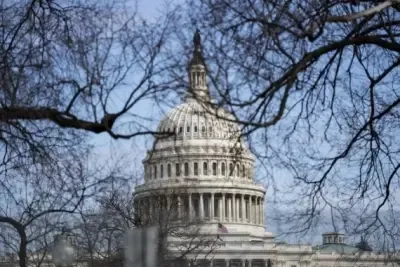
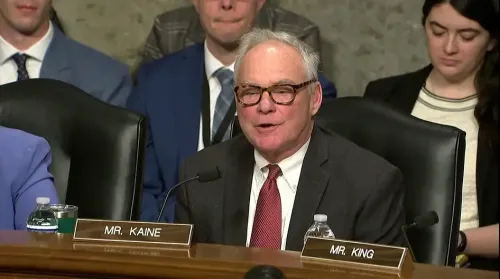
The Trump administration faced bipartisan scrutiny in the US Senate on 22 July over whether it was circumventing congressional war powers by resetting the statutory 60-day deadline under the War Powers Resolution — a manoeuvre critics say exploits a legal grey zone after a temporary ceasefire with Iran collapsed. The hearing, held before the Senate Appropriations Committee, centred on President Donald Trump's $87.6 billion supplemental funding request.
The Core Legal Dispute
Under the War Powers Resolution, a president must generally terminate hostilities within 60 days unless Congress authorises military action or extends the deadline. Republican Senator Lisa Murkowski noted that hostilities with Iran began on 28 February without specific congressional authorisation. Congress was subsequently notified on 1 May that hostilities had ended, and a memorandum of understanding was signed in June to preserve the ceasefire while negotiations continued.
That agreement later collapsed, and attacks resumed around the Strait of Hormuz. The administration then sent Congress a fresh war powers notification on 10 July, effectively restarting the 60-day clock.
Murkowski's Warning
'I'm concerned about this sequence, because you have a situation where the claim essentially allows the president to extinguish the war powers clock just at the moment that it becomes legally inconvenient through declaration of temporary ceasefire,' Murkowski said during the hearing.
She also raised a separate question: whether congressional approval of the supplemental funding could itself be treated as authorisation for military operations. She cited a 1999 Justice Department legal opinion on US operations in Kosovo, which held that a supplemental appropriation could satisfy the War Powers Resolution's requirements even without separate authorising language.
What the Pentagon Said
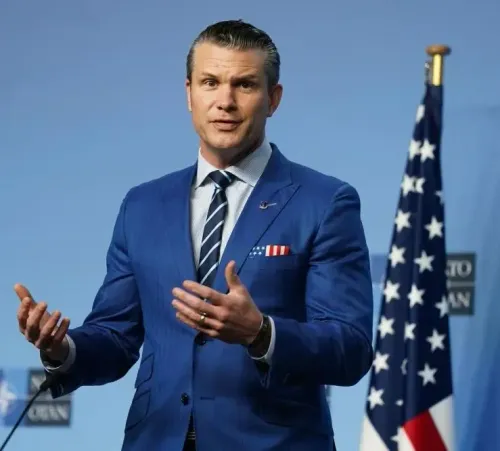
Defence Secretary Pete Hegseth defended the administration's position, stating the Pentagon shared the White House's view that the president held sufficient constitutional authority to continue the operation. 'We have all the authorities necessary at this moment,' Hegseth said. On the funding-as-authorisation question, he said he would consult Pentagon lawyers before responding, adding: 'As of right now, we think standalone Article 2 authorities exist for us to conduct this operation on behalf of the defense of the American people.'
Ground War Risk Raised
Democratic Senator Jack Reed separately questioned whether airstrikes alone could defeat Iran and deter further attacks. General Dan Caine, chairman of the Joint Chiefs of Staff, acknowledged that air power had limitations but declined to discuss the possibility of deploying American ground forces. 'I think academically, as you look across the totality of history, air power has got limits and we always have to be mindful of those,' Caine said. He added that military planners develop a range of options and explain their risks to national leaders, but said it would be unhelpful to comment on hypothetical operations.
What Comes Next
The administration's use of the reset war powers clock sets up a potential constitutional confrontation with Congress. Lawmakers on both sides of the aisle are now weighing whether to attach explicit authorisation — or explicit limits — to the supplemental funding bill. The outcome could define the boundaries of executive war-making authority for this conflict and beyond.
Point of View
The administration created a precedent that could render the Resolution effectively unenforceable — a president could theoretically pause and restart hostilities indefinitely. Murkowski's bipartisan framing matters: this is not opposition noise, it is a structural constitutional challenge from within the president's own party. Hegseth's reliance on standalone Article 2 authority is the same legal argument that has been contested since the War Powers Resolution passed in 1973 over Nixon's veto — it has never been definitively settled by the Supreme Court. If Congress approves the $87.6 billion supplemental without explicit authorisation language, the 1999 Kosovo precedent Murkowski flagged could be used retroactively to claim congressional blessing — a sleight of hand that deserves far more scrutiny than it is receiving.
NationPress
20 Oct 2026
Frequently Asked Questions
Why is the Trump administration's Iran war powers authority under scrutiny?
The administration is accused of resetting the War Powers Resolution's 60-day clock by declaring a temporary ceasefire with Iran and then resuming hostilities, effectively giving the president more time to act without congressional authorisation. Republican Senator Lisa Murkowski raised the concern at a Senate Appropriations Committee hearing on 22 July.
What is the War Powers Resolution and why does it matter here?
The War Powers Resolution is a US federal law requiring the president to notify Congress within 48 hours of committing armed forces to hostilities and to terminate those hostilities within 60 days unless Congress authorises the action. In this case, critics argue the administration gamed the law by using a ceasefire to reset that deadline.
What did Defence Secretary Pete Hegseth say about the administration's legal authority?
Hegseth stated that the Pentagon and White House believe the president has sufficient constitutional authority under Article 2 to continue the Iran operation without separate congressional authorisation. He said he would consult Pentagon lawyers before addressing whether the supplemental funding bill could itself serve as authorisation.
Could the $87.6 billion supplemental funding bill count as authorisation for military action?
Senator Murkowski raised this possibility, citing a 1999 Justice Department opinion on Kosovo that held a supplemental appropriation could satisfy the War Powers Resolution even without explicit authorising language. Hegseth did not rule it out and said he would seek legal counsel on the question.
What did military leaders say about the risk of a ground war with Iran?
General Dan Caine, chairman of the Joint Chiefs of Staff, acknowledged that air power has historical limitations but declined to discuss the possibility of deploying US ground forces, saying it would be unhelpful to comment on hypothetical operations.