Trump Steps Back from Military Escalation with Iran: A Conditional Two-Week Pause Announced
Synopsis
US President Donald Trump has announced a temporary two-week pause in military actions against Iran, contingent upon the reopening of the crucial Strait of Hormuz. This decision, made shortly before a deadline, has significant implications for regional stability and global oil supplies.
Key Takeaways
Trump announces a conditional two-week pause in military actions against Iran.
The decision follows backchannel diplomacy with Pakistan.
Ceasefire contingent on Iran agreeing to reopen the Strait of Hormuz.
Iran shows tentative acceptance of the ceasefire terms.
Key issues remain unresolved including sanctions and nuclear ambitions.
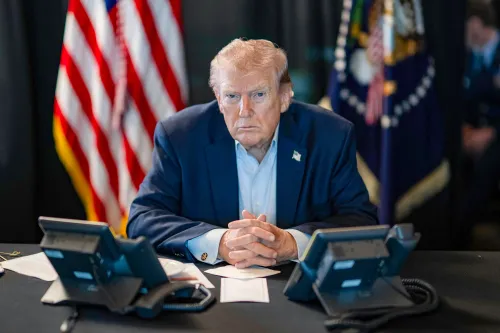
Washington, April 8 (NationPress) - In a significant move, US President Donald Trump has retreated from the verge of a significant military confrontation with Iran, declaring a conditional two-week suspension of planned attacks related to the reopening of the Strait of Hormuz. This announcement has brought considerable relief to people worldwide.
This decision was made just 90 minutes before the deadline of 8 p.m. EST, which Trump had set for Iran to negotiate a deal, following secret diplomatic discussions with Pakistan.
In a post on Truth Social, Trump stated he would “pause” any escalation of military actions for two weeks, contingent on Iran's agreement to reopen the vital shipping channel.
He noted that dialogues with Pakistan resulted in what he termed a “double-sided ceasefire.”
Trump elaborated, “The rationale behind this is that we have already fulfilled and surpassed all military objectives, and we are making significant progress towards a conclusive agreement aimed at achieving long-term peace with Iran and stability in the Middle East.”
He mentioned that the United States had received a “10-point proposal from Iran,” which he described as a “feasible foundation for negotiation.”
Trump emphasized that “almost all of the various contentious issues” had been resolved, and the two-week pause would facilitate the finalization of the agreement.
This ceasefire is conditional; Trump stated that it relies on Iran consenting to the “complete, immediate, and secure reopening of the Strait of Hormuz.”
Iran has indicated tentative acceptance, with Foreign Minister Seyed Abbas Araghchi stating that Tehran would halt operations if attacks were discontinued.
“If attacks against Iran cease, our powerful armed forces will stop their defensive operations,” he remarked.
“For the next two weeks, safe passage through the Strait of Hormuz will be coordinated with Iran’s armed forces, considering technical limitations,” he added.
A White House representative confirmed that Israel has also agreed to the two-week halt, though the specifics remain unclear.
The pause follows a sharp escalation earlier that day, where Trump warned that “a whole civilization will perish tonight, never to be restored” if Iran failed to reach an agreement.
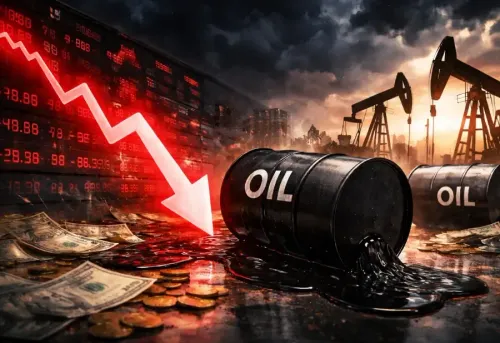
The Strait of Hormuz is central to the ongoing crisis, with its closure affecting oil supplies and driving up prices.
At the United Nations, a Bahrain-led initiative to reopen the strait was thwarted after Russia and China vetoed the resolution.
The White House indicated that discussions might proceed but stressed that “nothing is finalized until officially announced by the President or the White House.”
Reports of missile and drone activity in the Gulf following the announcement have raised concerns regarding the enforcement of the ceasefire.
This two-week pause provides a narrow window for diplomatic engagement. Key disagreements remain regarding sanctions, Iran’s nuclear ambitions, and control over the strait.
The ongoing conflict has unfolded over several weeks of military strikes by the United States and Israel on Iranian positions, escalating fears of a larger regional conflict. The Strait of Hormuz is crucial, handling a substantial portion of global oil shipments.
For India, which heavily relies on energy imports from the Gulf, any disruption related to the strait or escalation of the conflict could have notable economic and strategic consequences.
Point of View
It opens a path for negotiations that could stabilize the region. However, the conditional nature of this ceasefire highlights the ongoing complexities and tensions that still exist.
NationPress
22 Sept 2026
Frequently Asked Questions
What prompted Trump's decision to pause military actions against Iran?
Trump's decision was influenced by backchannel diplomacy with Pakistan and the need to address the escalating tensions surrounding the Strait of Hormuz.
What conditions are attached to the two-week ceasefire?
The ceasefire is contingent on Iran agreeing to the complete and safe reopening of the Strait of Hormuz.
What implications does this pause have for global oil supplies?
The Strait of Hormuz is a vital shipping route for global oil. A pause in military actions could stabilize oil markets and prevent further disruptions.
How has Iran responded to Trump's announcement?
Iran has tentatively accepted the ceasefire terms, with its Foreign Minister stating that Iran would halt operations if US attacks stop.
What are the key issues still unresolved between the US and Iran?
Key unresolved issues include sanctions, Iran's nuclear program, and control over the Strait of Hormuz.