Oil Prices Tumble as Trump Announces Iran Strike Pause
Synopsis
Oil prices have sharply declined following President Trump's announcement of a two-week pause on military actions against Iran. This decision has eased fears of a larger conflict in the Gulf region, resulting in a positive reaction from stock markets and a potential opportunity for diplomatic resolutions.
Key Takeaways
Oil prices fell significantly following Trump's announcement.
The Strait of Hormuz is critical for global oil supply.
Stock markets reacted positively, with a rise in major US indexes.
Analysts warn of the fragile nature of the ceasefire.
India's economy could be impacted by sustained oil price volatility.
Washington, April 8 (NationPress) Oil prices experienced a significant decline after US President Donald Trump announced a two-week pause on planned military actions against Iran, alleviating concerns about a broader conflict in the energy-rich Gulf region.
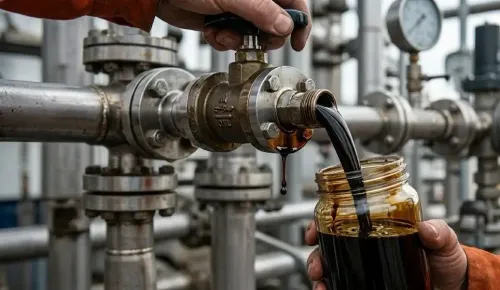
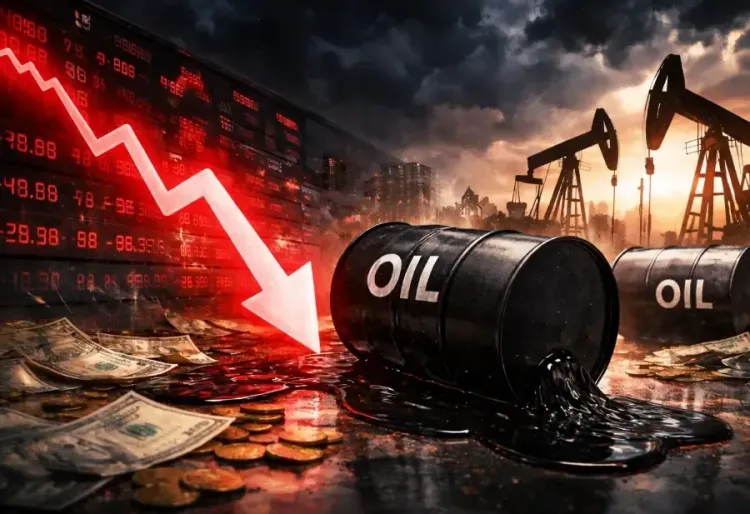
US crude futures plummeted below $100 per barrel, reversing recent increases fueled by escalating tensions surrounding the Strait of Hormuz, a vital global oil transit corridor, as reported by The Wall Street Journal on Tuesday (Local time).
This drop followed Trump’s declaration that he would halt attacks on Iran, contingent on Tehran reopening the strait, according to the Journal.
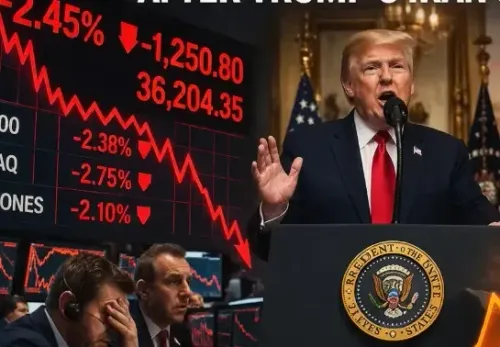
Stock markets reacted positively to the news, with futures linked to major US indexes climbing more than 2%, indicating investor relief after a period of volatility associated with the crisis, as detailed in the report.
“Stock futures are surging and oil prices are decreasing after President Trump announced via Truth Social that he would suspend military actions against Iran for two weeks,” the report stated.
The Strait of Hormuz, through which approximately one-fifth of global oil flows, has been central to the ongoing conflict. Iran had restricted passage for several weeks, leading to rising prices and supply anxieties, as noted in reports by The Hill.
Markets had been unsettled in anticipation of Trump’s deadline for Iran to come to an agreement, with traders worried that a major escalation could disrupt shipments across the Gulf and cause prices to soar, the Journal pointed out.
In contrast, the announcement of a potential ceasefire ignited a widespread rally across global markets. Asian stock indices also rose, with Japan’s Nikkei and South Korea’s Kospi advancing following this news.
Investors had largely perceived Trump’s previous threats as leverage in negotiations. “Some investors speculated that Trump could extend the deadline for reopening the Strait of Hormuz, a strategy he has employed multiple times in the past month,” the daily reported.
Oil prices had surged in recent weeks due to fears that the strait could be closed or significantly limited. This crucial waterway facilitates shipments essential to global supply chains, including crude oil and liquefied natural gas.
The de-escalation of tensions also positively impacted other asset classes. Gold prices increased, reflecting ongoing uncertainty, while equities rose as the risk of immediate conflict diminished, according to the Journal.
Nonetheless, analysts warned that the situation remains precarious. The proposed two-week ceasefire hinges on Iran’s agreement to fully reopen the strait and both parties avoiding further escalation.
Even after the announcement, reports of missile and drone activity in various parts of the Gulf raised questions about the sustainability of the pause, according to The New York Times.
The broader conflict has already disrupted energy markets for weeks. Limited shipping access and uncertainty regarding supply have caused significant price fluctuations and heightened volatility across global markets.
The two-week window now presents an opportunity for diplomatic efforts to stabilize the situation, but traders remain cautious of abrupt changes in policy or military actions.
The Strait of Hormuz continues to be one of the world’s most crucial energy chokepoints. Any disruption there can have immediate global ramifications, especially for large importers.
For India, which heavily depends on crude imports from the Gulf, prolonged fluctuations in oil prices could adversely affect inflation, currency stability, and overall economic growth.
Point of View
The recent announcement by President Trump regarding the pause in military actions against Iran marks a critical juncture in US-Iran relations. While this development may alleviate immediate tensions, the situation remains unpredictable, requiring careful monitoring of diplomatic efforts and market reactions.
NationPress
20 Sept 2026
Frequently Asked Questions
Why did oil prices drop recently?
Oil prices dropped sharply after President Trump announced a two-week pause on military strikes against Iran, which eased fears of an escalating conflict in the Gulf region.
What impact does the Strait of Hormuz have on global oil supply?
The Strait of Hormuz is a vital global oil transit route, through which approximately one-fifth of the world's oil supply flows. Any disruption in this area can significantly affect global oil prices and supply chains.
How did the stock market react to Trump's announcement?
Following Trump's announcement, stock futures linked to major US indexes rose by more than 2%, reflecting investor relief after a period of volatility related to the crisis.
What are the potential risks following this pause?
The two-week pause is contingent on Iran reopening the Strait of Hormuz and both sides avoiding further escalation, leaving the situation fragile and prone to sudden changes.
How does this situation affect India?
India, which relies heavily on crude imports from the Gulf, may face economic challenges such as inflation and currency stability if oil prices remain volatile.