Trump backs Essar's $18 billion Mesabi Metallics plan for fully integrated US steel
Synopsis
US President Trump has backed a historic $18 billion bet on American steel — Essar-owned Mesabi Metallics will connect the first new US iron ore mine in 50 years in Minnesota to a brand-new Iowa steel complex, creating a fully domestic supply chain projected to generate $95 billion in economic output over a decade. It is the largest single-location integrated steel investment in American history, and carries an explicit India-US economic partnership signal from Essar's Ravi Ruia.
Key Takeaways
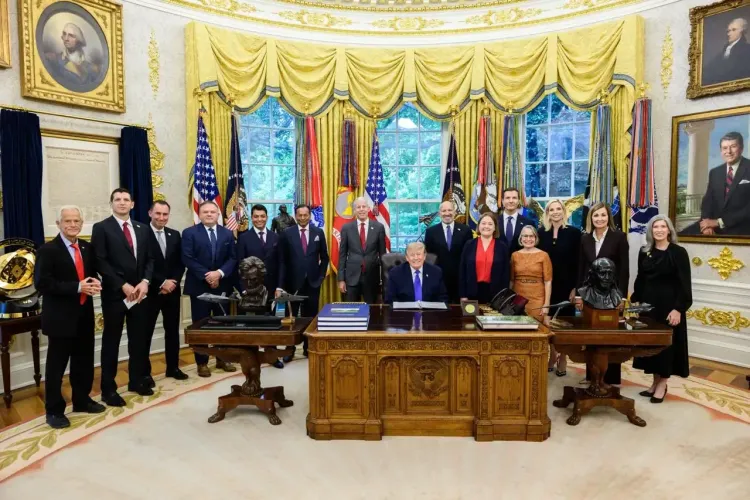
US President Donald Trump announced Essar -backed Mesabi Metallics' $18 billion investment at the White House on 29 September 2026 .
The project combines a $3 billion iron ore mine in Nashwauk, Minnesota with a proposed $15 billion integrated steel complex in Iowa .
It is described as the largest single-location integrated steel complex investment in American history .
The Iowa complex is expected to create more than 8,000 construction jobs and at least 1,750 permanent positions ; total economic output projected at $95 billion over 10 years.
Ravi Ruia of Essar linked the investment to PM Modi's vision for a stronger India-US economic partnership .
The facility will use hot DRI and electric arc furnace technology, aiming to be among the most energy-efficient steel plants in the world.
US President Donald J. Trump on 29 September 2026 announced at the White House in Washington, D.C. that Essar-backed Mesabi Metallics will invest $18 billion to build a fully integrated American steel company, linking its iron ore mine on Minnesota's Mesabi Iron Range with a new steel complex in Iowa. The project is described as the largest single-location investment in an integrated steel complex in American history, and is expected to generate thousands of jobs across the Midwest.
Key Developments
The $18 billion outlay comprises a $15 billion proposed integrated steel complex in Iowa and an existing $3 billion investment in the iron ore mine and pelletizing facility in Nashwauk, Minnesota. The announcement was made in the presence of Ravi Ruia, Vice Chairman and Founder of Essar Group, and Rewant Ruia, Chairman of Mesabi Metallics.
Senior US officials were also present, including Commerce Secretary Howard Lutnick, Energy Secretary Chris Wright, and John Jovanovic, Chairman of the US Export-Import Bank. Iowa Governor Kim Reynolds, Senator Joni Ernst, and Iowa congressional representatives Mariannette Miller-Meeks and Ashley Hinson attended the White House event as well.
What Essar's Leadership Said
Ravi Ruia described the investment as 'a new chapter in Essar's global journey,' adding that it 'carries forward the vision of my brother, Shashi Ruia, to build world-class businesses with a global footprint.' He also linked the project to Prime Minister Narendra Modi's vision for a stronger India-US economic partnership, calling it a reflection of 'our commitment to contributing to that vision through long-term investment, industrial growth and job creation.'
Rewant Ruia called it 'a defining moment for American steel,' saying the company is 'building a fully integrated steel business from the ground up, connecting Minnesota's world-class iron ore resources with steelmaking in Iowa to produce 100 per cent American steel.'
Scale of the Project: Minnesota to Iowa
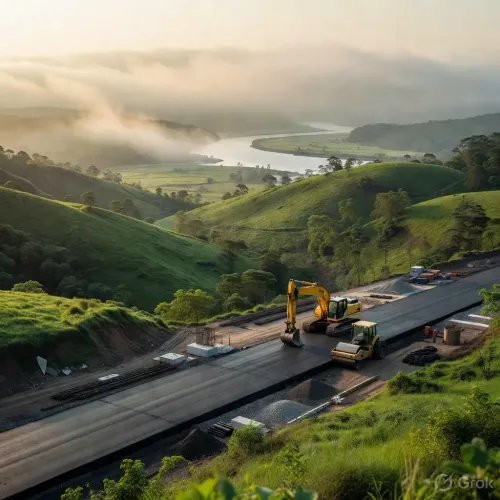
Mesabi Metallics recently opened the first iron ore mine in the United States in 50 years, with more than 1,500 construction workers currently on site and over 200 full-time employees already working at the Nashwauk facility. Once fully operational, the mine is expected to employ 350 full-time workers, producing what the company calls Patriot Pellet — a direct-reduction-grade (DR-grade) iron ore pellet engineered for modern electric arc furnace steelmaking.
The Iowa steel complex is projected to create more than 8,000 construction jobs and at least 1,750 full-time positions once operational. Over its construction phase and the first 10 years of full operations, the investment is expected to generate $95 billion in total economic output across the region.
Innovation and Sustainability at the Core
The Iowa facility will deploy hot direct-reduced iron (DRI) and electric arc furnace (EAF) technologies, which the company says will significantly lower energy usage and reduce emissions compared to traditional coal-fired blast furnaces. The DRI process removes oxygen from iron ore at temperatures below its melting point, creating solid metallic iron; feeding this into the EAF while still hot further reduces the energy required to melt it.
The EAFs will be fed with a mix of hot, freshly reduced iron from the plant's own DRI process and scrap steel, positioning Mesabi Metallics as one of the more environmentally efficient steel producers in the world, according to the company.
Reshaping American Steelmaking
The project is designed to bridge two existing US steelmaking models — integrated blast furnace mills that rely on domestic iron ore, and highly efficient EAF mills that recycle scrap and imported iron. By pairing domestic ore from Minnesota with a modern EAF complex in Iowa, Mesabi Metallics aims to produce a fully domestic, mine-to-mill steel supply chain — the first of its kind at this scale in the country.
With steel self-sufficiency a key pillar of the Trump administration's industrial policy agenda, the project is positioned as a flagship example of reshoring critical manufacturing. Whether the $15 billion Iowa complex proceeds on schedule will be closely watched by policymakers and the broader steel industry.
Point of View
Not merely foreign investors. The $18 billion figure is striking, but the Iowa complex is still at the proposal stage; the gap between a White House announcement and steel being poured is where past mega-projects have stumbled. That said, the Minnesota mine is already operational and construction-ready, which gives this more credibility than a press-release promise. If the EAF-DRI model delivers on its efficiency claims, it could also quietly accelerate the obsolescence of legacy blast furnace capacity — an industry disruption worth tracking beyond the jobs numbers.
NationPress
29 Sept 2026
Frequently Asked Questions
What is the Mesabi Metallics $18 billion steel investment announced by Trump?
It is a plan by Essar-backed Mesabi Metallics to build a fully integrated American steel company, combining its existing $3 billion iron ore mine in Nashwauk, Minnesota with a proposed $15 billion steel complex in Iowa. The project, announced at the White House on 29 September 2026, is described as the largest single-location integrated steel investment in American history.
How many jobs will the Mesabi Metallics project create?
The Iowa steel complex alone is expected to generate more than 8,000 construction jobs and at least 1,750 permanent full-time positions once operational. The Minnesota mine is projected to employ 350 full-time workers at full capacity, with over 200 already on-site. Total economic output over construction and the first 10 years of operations is projected at $95 billion.
What is the connection between Essar Group and India-US relations?
Ravi Ruia, Vice Chairman and Founder of Essar Group, stated at the White House announcement that the investment reflects Prime Minister Narendra Modi's vision for a stronger India-US economic partnership. The Ruia family, which founded Essar, is one of India's most prominent industrial families with decades of experience in steel.
What technology will the Iowa steel complex use?
The facility will use hot direct-reduced iron (DRI) and electric arc furnace (EAF) technology, which the company says significantly reduces energy consumption and emissions compared to traditional coal-fired blast furnaces. The DRI process creates solid metallic iron from ore mined in Minnesota, which is then fed hot into EAFs alongside scrap steel.
Why is the Minnesota iron ore mine significant?
Mesabi Metallics' mine in Nashwauk, Minnesota is the first new iron ore mine built in the United States in 50 years, with nearly $3 billion invested to date. It produces what the company calls Patriot Pellet — a DR-grade iron ore pellet designed for modern electric arc furnace steelmaking — which will feed directly into the planned Iowa steel complex.