Is the US Waging Psychological Warfare Against Venezuela?
Synopsis
Venezuelan Foreign Affairs Minister Yvan Gil accuses the US of engaging in 'psychological warfare' against Venezuela after the failure of economic sanctions. This article explores the implications of such tactics and the challenges facing the region, emphasizing the significance of the ongoing People's Assembly for Peace and Sovereignty.
Key Takeaways
The US is accused of engaging in psychological warfare against Venezuela.
Economic sanctions have not achieved their intended goals .
The People's Assembly for Peace and Sovereignty involves over 500 delegates from around the world.
Key issues discussed include US military threats and transnational crime.
The situation reflects broader geopolitical tensions.
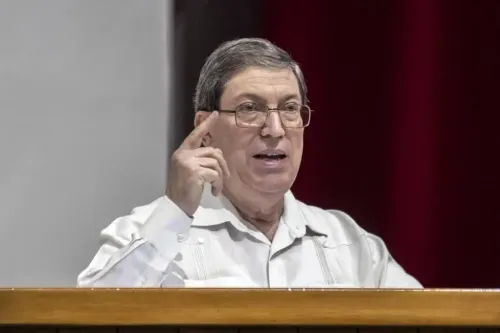
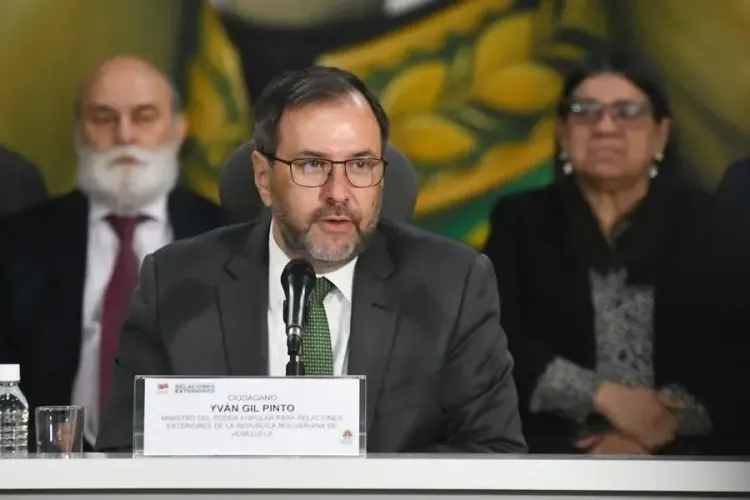
Caracas, Dec 10 (NationPress) The US administration is engaging in psychological warfare against Venezuela following the unsuccessful implementation of its economic sanctions, asserted Venezuelan Foreign Affairs Minister Yvan Gil.
"They have now turned to psychological warfare, particularly military psychological tactics," Gil stated on Tuesday (local time) during the commencement of the People's Assembly for Peace and Sovereignty of Our America, an event taking place in Caracas.
According to him, the US is employing its economic, military, and media influence to launch an unparalleled psychological assault against Venezuela and the wider region.
Gil remarked, "We are confronted with a significant challenge in the history of our republics and our region," noting the participation of over 500 delegates from approximately 50 countries globally.
The assembly, organized by the National Council for Sovereignty and Peace of Venezuela, will address critical matters such as the US military threat, transnational crime in the area, and the Monroe Doctrine, a policy that Washington has revived to exert control in the region, according to Gil.
Since late August, the US has sustained a substantial military presence in the Caribbean, which it claims is part of its efforts to combat drug trafficking. Venezuela has denounced this as an attempt to instigate regime change in the South American nation, as reported by Xinhua news agency.
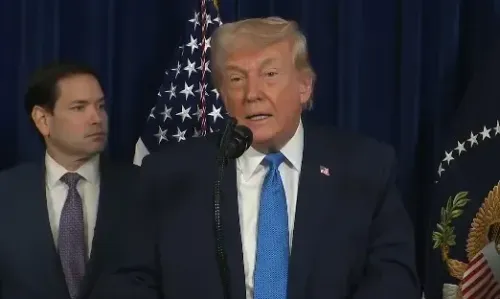
Earlier, on December 1, US President Donald Trump convened with his top national security advisors at the White House Oval Office to contemplate potential actions, including land attacks on Venezuela.
Reports indicate that Trump had set a deadline of November 28 for Venezuelan President Nicolas Maduro to step down and leave the oil-rich South American nation with his family during a phone conversation on November 21, but Maduro rejected the ultimatum.
During the call, Maduro insisted on global amnesty for himself and others.
Point of View
The situation in Venezuela highlights the complexities of international relations. The accusations of psychological warfare underscore the ongoing tensions between the US and Venezuela, reflecting broader geopolitical struggles. It is crucial to approach this situation with a nuanced understanding of both sides' narratives and the impact on regional stability.
NationPress
20 Oct 2026
Frequently Asked Questions
What is the US's strategy against Venezuela?
The US is accused of using psychological warfare tactics following the failure of its economic sanctions, according to Venezuelan officials.
What is the People's Assembly for Peace and Sovereignty?
It is an event organized to address key issues affecting Venezuela and the region, with participation from international delegates.
How has the US military presence affected Venezuela?
The US has maintained a significant military presence in the Caribbean, which Venezuela claims is an attempt to instigate regime change.