U.S. Redefines Export-Import Bank as a Key Economic Asset
Synopsis
The U.S. is repositioning the Export-Import Bank as an essential economic asset to strengthen American exporters and counter China's growing influence in global markets. EXIM's initiatives aim to enhance economic security and support small businesses.
Key Takeaways
EXIM is being repositioned as a critical economic instrument.
U.S. companies face competition from state-backed financing, particularly from China.
Project Vault aims to create a strategic reserve of critical minerals.
90 percent of EXIM authorizations benefit small businesses.
Congress must reauthorize EXIM to maintain competitiveness.
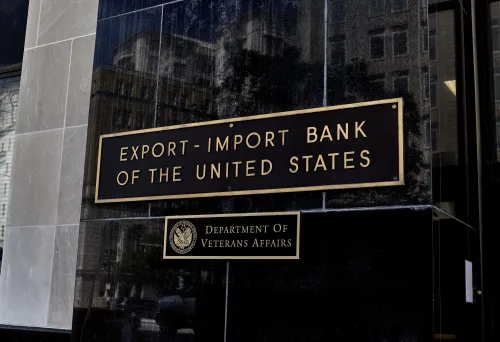
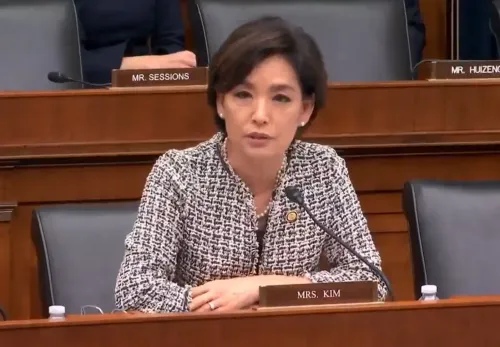
Washington, March 18 (NationPress) The United States is redefining the Export-Import Bank as a “critical economic instrument,” its leader informed lawmakers, emphasizing a more aggressive approach to support American exporters and tackle the global competition spearheaded by China.
During his testimony before a House subcommittee, EXIM President and Chairman Jovan Jovanovic remarked that the bank is being synchronized with initiatives aimed at reindustrializing the U.S., safeguarding supply chains, and enhancing economic security.
“As many members have pointed out, EXIM serves as one of America’s key economic instruments in executing President Trump’s vision for reindustrializing America, securing our supply chains, and ensuring our economy benefits American workers and businesses, both large and small,” he stated.
Subcommittee Chairman Warren Davidson emphasized that Beijing continues to be “the world’s foremost provider of export credit,” noting that China disbursed “over $23 billion in medium and long-term loans” in 2024, which is “four times the amount that EXIM provided to U.S. companies.”
Jovanovic cautioned that American firms are competing in markets where adversaries leverage “substantial state financing and subsidies,” contributing to “diminished economic security” and job losses within the U.S.
A primary point of discussion during the hearing was the China and Transformational Exports Program (CTEP), established by Congress to counteract Beijing’s export financing strategies. Jovanovic indicated that this program has now been incorporated into the bank’s essential operations.
“Currently, one out of every four transactions we process at the bank is tied to the KTP program,” he noted, deeming it “vital” for achieving U.S. economic goals.
Lawmakers emphasized the necessity of reauthorizing and strengthening this program to maintain competitiveness. Representative Andy Barr suggested that it has evolved into a crucial instrument in U.S. economic policy, while others cautioned that uncertainty surrounding EXIM’s future could damage trust among international partners.
The hearing also spotlighted “Project Vault,” a suggested public-private initiative aimed at creating a U.S. strategic reserve of critical minerals. Jovanovic explained that the project would merge “$10 billion of XM debt financing” with “nearly $2 billion of private sector investment” to mitigate supply chain weaknesses.
He expressed that the initiative aims to ensure businesses can “access essential resources when they need them most,” while reducing reliance on foreign sources for critical materials.
Support for small businesses emerged as another significant theme. Ranking Member Joyce Beatty stated, “90 percent of EXIM authorizations directly support U.S. small enterprises,” asserting that the bank is essential for empowering them to compete on the global stage.
Jovanovic recognized existing gaps in outreach, revealing that he discovered only “two active relationships” in the community lending program upon taking office. He mentioned ongoing efforts to broaden partnerships and enhance access to export financing across all states.
The bank is also working to rectify internal inefficiencies and workforce obstacles. Jovanovic indicated that reforms include “clarifying priorities, streamlining internal procedures,” and enhancing accountability to facilitate quicker deal execution.
In terms of broader competition with China, lawmakers consistently pointed to Beijing’s utilization of state-backed financing to gain global leverage. Jovanovic asserted that the U.S. must respond without compromising its standards.
“We do not pollute — we adhere to the law,” he stated, emphasizing the goal of showcasing the long-term benefits of collaborating with the United States.
Jovanovic also highlighted that EXIM operates profitably, having “returned nearly $10 billion to the U.S. Treasury” while maintaining a lower default rate than private sector lenders.
Congress must reauthorize EXIM before its mandate concludes later this year. Lawmakers conveyed that a clear indication of bipartisan support would be essential to restore confidence and ensure U.S. exporters remain competitive in international markets.
Founded in 1934 under President Franklin D. Roosevelt, EXIM was established to support American jobs by financing exports when private lenders are unable or unwilling to do so. Over the years, it has evolved into a pivotal tool for promoting U.S. trade and industrial strength abroad.
In recent times, the bank has assumed a more strategic role as Washington seeks to counter China’s expanding economic dominance, especially in infrastructure, energy, and emerging technologies, where state-backed financing has become a central element of global competition.
Point of View
The recent developments surrounding the Export-Import Bank highlight a significant effort by the U.S. government to bolster its economic standing amidst fierce global competition, particularly from China. The focus on supporting American businesses and securing supply chains suggests a proactive approach to maintaining economic sovereignty.
NationPress
23 Sept 2026
Frequently Asked Questions
What is the primary role of the Export-Import Bank?
The Export-Import Bank primarily supports American jobs by financing exports when private lenders are unable or unwilling to do so.
Why is the U.S. focusing on reindustrialization?
The U.S. is reindustrializing to strengthen its supply chains, enhance economic security, and ensure competitiveness against countries like China.
What is Project Vault?
Project Vault is a proposed initiative to create a U.S. strategic reserve of critical minerals, combining public and private sector investments to address supply chain vulnerabilities.
How does EXIM support small businesses?
EXIM provides financing and support to small businesses, with 90 percent of its authorizations directly benefiting them.
What challenges does EXIM face?
EXIM faces challenges related to outreach, internal inefficiencies, and competition from state-backed financing in other countries.