U.S. Confronts China's Debt Influence in South Asia
Synopsis
U.S. lawmakers are sounding the alarm over China's increasing debt influence in South Asia, particularly in Pakistan and Sri Lanka. They seek to bolster American strategies to counter Beijing's global lending dominance amidst concerns about debt trap diplomacy.
Key Takeaways
China's influence in South Asia is a growing concern for U.S. lawmakers.
Debt levels in countries like Pakistan and Sri Lanka are alarming.
The U.S. is pushing for stronger measures to compete with China's global lending practices .
CTEP is a key initiative aimed at supporting American exporters.
Project Vault aims to secure critical minerals and reduce foreign dependency.
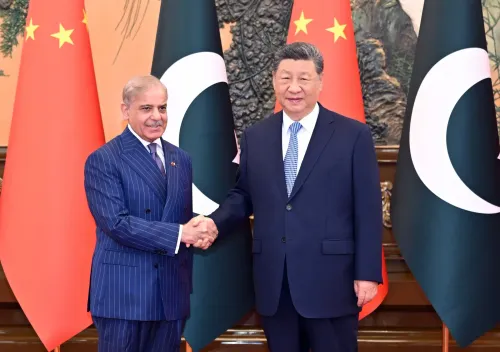
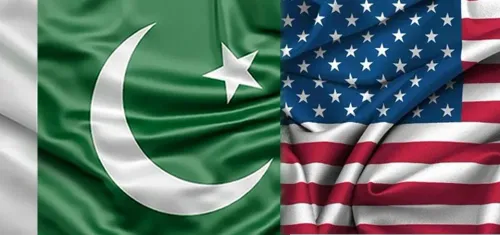
Washington, March 21 (NationPress) Concerned about the growing economic influence of China in South Asia, U.S. lawmakers have highlighted the escalating debt burden in nations such as Pakistan and Sri Lanka while advocating for enhanced American strategies to counter Beijing's global lending practices.
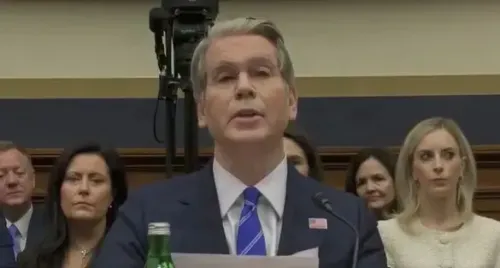
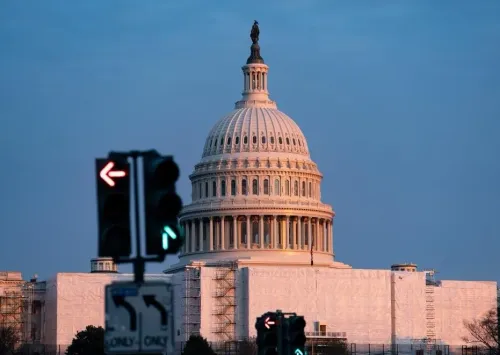
During a congressional session focused on the Export-Import Bank of the United States (EXIM), prominent American legislators from both parties cautioned that China's government-backed financing is altering economic and strategic dynamics in regions crucial to global competition.
Representative Zach Nunn emphasized, “This is not developmental finance; this is debt trap diplomacy,” referencing data indicating that Pakistan owes $77 billion and Sri Lanka has a debt of $11 billion to Chinese state lenders.
Committee Chairman Warren Davidson remarked that the challenge posed by China has become more acute, noting that the People’s Republic of China “is the world's largest provider of export credit” and operates outside recognized international guidelines.
Lawmakers pointed out that China provided over $23 billion in medium- and long-term export credit in 2024, significantly surpassing U.S. efforts.
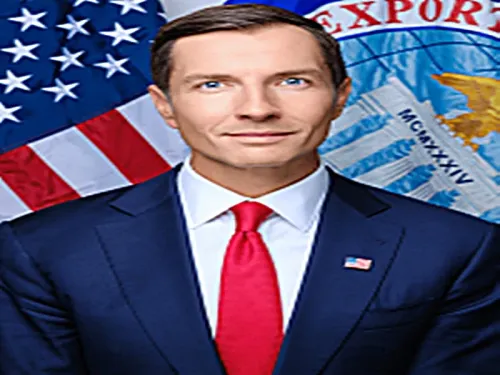
Jovan Jovanovic, president and chairman of EXIM, informed lawmakers that American businesses are increasingly vying in markets influenced by substantial state backing and subsidies.
“American companies are now competing in environments where rivals utilize extensive state financing, subsidies, and industrial strategies to dominate strategic sectors,” he stated.
He cautioned that this level of competition has led to diminished economic security and job losses within the U.S., underlining that the nation “cannot afford to remain passive.”
Central to Washington's strategy is the China and Transformational Exports Program (CTEP), aimed at assisting American exporters in sectors where China has gained a stronghold.
Jovanovic mentioned that “one out of every four transactions we handle at the bank involves the CTEP program,” describing it as “mission critical” for maintaining U.S. competitiveness in global markets.
Lawmakers contended that China’s lending tactics—especially in infrastructure and resource areas—have left numerous developing nations susceptible to financial instability, raising concerns about long-term viability.
Nunn stated that such arrangements “entrap developing nations in debt,” undermining both local economies and U.S. strategic interests.
Jovanovic asserted that the U.S. must offer an alternative model based on transparency and market-driven collaborations.
“We cannot compromise our values,” he insisted, urging that the U.S. needs to “think creatively, proactively, and aggressively” to promote its economic objectives.
A significant initiative discussed during the hearing was “Project Vault,” a planned $10 billion public-private partnership aimed at establishing a strategic reserve of critical minerals within the U.S.
This project seeks to alleviate dependence on foreign supply chains—especially those associated with China—and create a safeguard against disruptions affecting American manufacturers.
Jovanovic explained that this initiative would help “de-risk these supply chains” by merging government financing with private investment while allowing market demand to dictate decisions.
Representative Joyce Beatty remarked that the bank empowers U.S. companies to “compete directly with foreign adversaries,” noting that 90 percent of its approvals benefit small enterprises.
This hearing comes as Congress is poised to reauthorize EXIM later this year, with lawmakers stressing the necessity to enhance its resources to contend with China's growing global presence.
Point of View
U.S. lawmakers are advocating for stronger measures to counteract its influence. Highlighting the risks of debt trap diplomacy, they emphasize the need for a transparent and sustainable approach to international financing.
NationPress
21 Sept 2026
Frequently Asked Questions
What is debt trap diplomacy?
Debt trap diplomacy refers to a strategy where a creditor country (like China) extends loans to a debtor country (like Pakistan or Sri Lanka) with the intention of exerting influence or control over the debtor through unsustainable debt levels.
How much debt do Pakistan and Sri Lanka owe to China?
Pakistan owes approximately $77 billion and Sri Lanka around $11 billion to Chinese state lenders.
What is the China and Transformational Exports Program (CTEP)?
The CTEP is a U.S. initiative designed to assist American exporters in competing with China in sectors where it has established dominance, ensuring U.S. companies remain competitive in the global market.
What is Project Vault?
Project Vault is a proposed $10 billion public-private partnership aimed at building a strategic reserve of critical minerals in the U.S. to reduce reliance on foreign supply chains, particularly those linked to China.
What percentage of EXIM's authorizations benefit small businesses?
Approximately 90 percent of the authorizations from the Export-Import Bank benefit small businesses.