Is Bangladesh Falling into a Chinese Debt Trap?
Synopsis
As Bangladesh increasingly relies on China's Belt and Road Initiative, a concerning report reveals that the nation is on the brink of a debt crisis similar to Sri Lanka's. With debt servicing now a major budget concern, the implications for the economy are profound. What does this mean for the future of Bangladesh?
Key Takeaways
Bangladesh's dependence on Chinese loans is increasing.
The debt-to-GDP ratio has risen to over 39%.
Debt servicing is now a major part of the national budget.
Lessons from Sri Lanka's economic collapse are being ignored.
The World Bank projects a rise in external debt to nearly $105 billion.
New Delhi, Jan 3 (NationPress) With the growing reliance of Dhaka on China's Belt and Road Initiative (BRI), a recent report suggests that Bangladesh is heading towards a debt trap, reminiscent of Sri Lanka's predicament. The report indicates that Dhaka is now experiencing the consequences of accepting Chinese loans while remaining unwilling to adapt.
Following a path similar to its South Asian neighbors like Sri Lanka, as highlighted in a report by Asian News Post, Bangladesh's situation is concerning.
After accumulating unsustainable debts from China, Sri Lanka found itself in sovereign default in 2022, leading to an economic collapse.
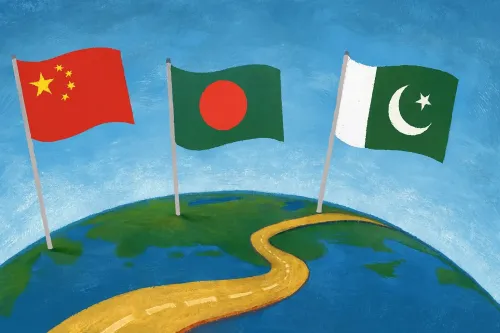
Additionally, Pakistan has requested $7 billion from the IMF's Extended Fund Facility to address its Chinese debt obligations. Under the China-Pakistan Economic Corridor, Islamabad's debt to China has reached nearly $30 billion, according to the same report.
“Bangladesh is indeed facing a debt trap. This acknowledgment comes from M. Abdur Raman Khan, the Chairman of Bangladesh’s National Board of Revenue,” the report stated.
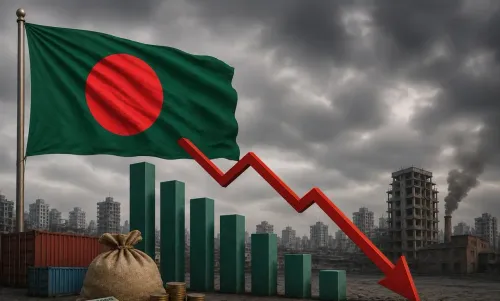
Servicing this debt has become the second largest expenditure in Bangladesh's budget.
The country's debt-to-GDP ratio has surged to over 39 percent, up from approximately 34 percent in 2017-18.
At a recent seminar, prominent economist Mustafizur Rahaman expressed concern that agriculture and education, once the second largest expenditures in Bangladesh's revenue budget after salaries and pensions, have now been overshadowed.
Furthermore, Finance Secretary M Khairuzzaman Mozumdar remarked that the current national budget for Bangladesh is smaller than that of the previous year for the first time in the nation's history.
He likened the situation to a “thin man being asked to lose even more weight,” the report noted.
The World Bank's latest ‘International Debt Report 2025’ indicates that Bangladesh's external debt has increased by 42 percent in the past five years, with total foreign borrowing expected to reach nearly $105 billion by the end of 2024, a significant rise from $26 billion in 2010.
“External debt now represents 192 percent of the country's export earnings, with debt service payments escalating to 16 percent of exports; highlighting the mounting pressure for repayment,” the report detailed.
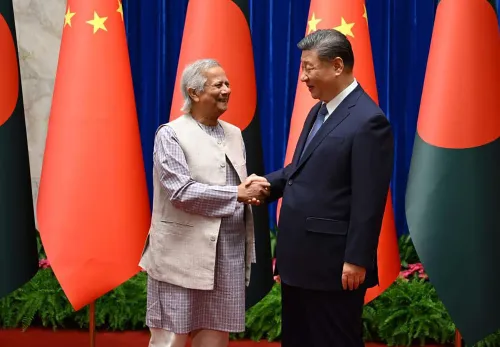
During Mohammed Yunus's tenure as Chief Advisor of the Interim Government, Bangladesh has strengthened its ties with China.
“However, Beijing has been cautious not to concentrate all its investments in one area. Understanding that the interim government is temporary, China has been building relationships with other influential groups in Bangladesh, including Jamaat-e-Islami, a pro-Pakistan organization that has not criticized Beijing's treatment of Uighur minorities,” the report emphasized.
Point of View
It is crucial to recognize the challenges Bangladesh faces with its mounting Chinese debts. The situation highlights a need for prudent financial management and a reevaluation of international partnerships. The nation must prioritize sustainable economic policies to prevent further financial strain.
NationPress
25 Sept 2026
Frequently Asked Questions
What is the Belt and Road Initiative?
The Belt and Road Initiative (BRI) is a global development strategy adopted by China involving infrastructure development and investments in countries across Asia, Europe, and Africa.
How has Bangladesh's debt situation changed?
Bangladesh's debt-to-GDP ratio has increased significantly, with external debt rising by 42% over the last five years and debt servicing becoming a major budgetary concern.
What are the implications of falling into a debt trap?
Falling into a debt trap can lead to economic instability, reduced investment in critical sectors like education and agriculture, and increased reliance on foreign creditors.
What lessons can Bangladesh learn from Sri Lanka?
Bangladesh can learn the importance of sustainable borrowing practices and the need to diversify its economic partnerships to avoid over-reliance on a single creditor.
Who is M. Abdur Raman Khan?
M. Abdur Raman Khan is the Chairman of the National Board of Revenue in Bangladesh, who has publicly acknowledged the country’s precarious debt situation.