Is a US Senator Supporting Trump's Initiative for Unity in Ukraine Negotiations?
Synopsis
A US Senator backs Trump's initiative for unity in Ukraine negotiations, emphasizing the need for a common stance to end the conflict. The senator highlights recent battlefield successes and calls for increased military support for Ukraine, warning against concessions that would undermine its sovereignty.
Key Takeaways
Western unity has shifted the balance against Russia in the Ukraine conflict.
Senator Wicker emphasizes the need for increased military support for Ukraine.
President Trump is credited with fostering this alignment among allies.
Ukraine has demonstrated success on the battlefield, reclaiming territories.
Any peace settlement must respect Ukraine's territorial integrity.
Washington, Jan 3 (NationPress) A prominent US Senator has expressed optimism regarding reports indicating that the United States, Ukraine, and Europe have unified behind a common negotiating stance to resolve the ongoing conflict in Ukraine, noting that this Western alliance has altered the balance against Russia.
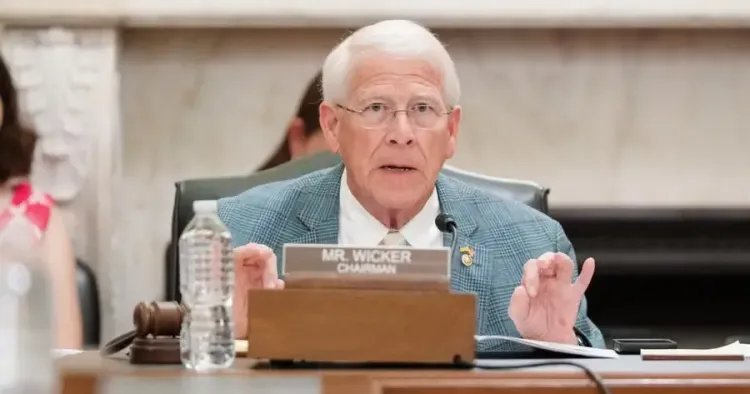
“I am encouraged by the news that the United States, Ukraine, and Europe have come together around a unified negotiating framework to put an end to Putin’s war of aggression,” stated Senate Armed Services Committee Chairman Roger Wicker.
“The West's show of solidarity sends a decisive message to Putin. His strategy to create division among us will not succeed,” he remarked.
Wicker attributed this alignment to President Donald Trump. “President Trump has played a crucial role in cultivating this unity, enabling the West to confront Putin from a position of strength,” he emphasized.
The senator from Mississippi dismissed what he characterized as Moscow’s misleading narrative regarding the conflict. “Putin, as always, continues to push a fabricated story,” Wicker stated. “He aims to convince the world that Russia will inevitably accomplish its military objectives in Ukraine. However, the reality on the ground tells a different story.”
Citing recent military developments, Wicker noted, “Ukraine has successfully reclaimed Kupiansk, and Russia has been unable to capture Pokrovsk. Both instances demonstrate that Putin’s narrative is unfounded.” He added, “Putin lacks the military strength necessary to fulfill his ambitious political aspirations. Ukraine continues to outmaneuver Russia.”
Wicker remarked that European allies, motivated by Trump, are increasing their contributions. “At President Trump’s encouragement, our European partners are making significant advancements in rebuilding their industrial capabilities alongside the United States,” he indicated.
He accused Moscow of disseminating false information to disrupt diplomacy. “Putin views the unity of the West as his most significant threat,” Wicker asserted, adding that claims of Ukrainian assaults near Putin’s residence in Novograd are “unverified” and “a blatant excuse to dismiss President Trump’s peace proposals.”
Wicker affirmed that Ukraine is prepared for peace under fair and realistic conditions, noting that Ukrainian President Volodymyr Zelensky “has consistently shown willingness to make public concessions.”
He cautioned against any agreements that would compel Kyiv to yield territory. “His country should not be forced to accept a peace deal that involves ceding unoccupied land to the Russians,” he stated.
Wicker called for enhanced military support, advocating for increased aid, specifically in the form of “air defense systems and long-range strike capabilities,” and emphasized that “credible security guarantees for Ukraine are essential for any lasting cessation of hostilities.” He praised Trump’s proposal to present such guarantees to the Senate, asserting that approval would exhibit “broad bipartisan backing for Ukraine.”
“It is time to conclude this war,” Wicker declared. “However, any cessation of hostilities must not reward the aggressor or impose further suffering on the victim.”
The Russia-Ukraine conflict, which erupted in February 2022, represents the most significant war in Europe since World War II. This conflict has displaced millions and transformed security discussions across Europe and within NATO.
Washington has extended billions in military and economic support to Kyiv since the onset of the invasion, while European nations have ramped up defense spending and synchronized arms production, even as diplomatic initiatives persist in seeking an end to the hostilities.
Point of View
It is imperative to recognize the significance of Western unity in addressing the Ukraine crisis. The alignment of the United States, Ukraine, and Europe, championed by influential leaders, underscores a collective commitment to countering Russian aggression. This situation demands balanced reporting, acknowledging both the geopolitical complexities and the humanitarian impacts of the ongoing conflict. Upholding the principles of democracy and sovereignty is essential as the world watches closely.
NationPress
5 Oct 2026
Frequently Asked Questions
What is the current status of the Ukraine war?
The Ukraine war continues, with significant developments on the battlefield leading to discussions about peace negotiations. A unified stance among the U.S., Ukraine, and Europe aims to end the conflict.
How has the U.S. supported Ukraine?
The United States has provided billions of dollars in military and economic assistance to Ukraine since the onset of the conflict in February 2022.
What role does Trump play in the negotiations?
President Trump is credited with fostering unity among Western allies, which has been crucial in strengthening the position against Russian aggression.
What are the implications of Western unity?
The unity among the U.S., Ukraine, and Europe sends a strong message to Russia, indicating that attempts to divide the West will not succeed.
Are there any risks in the negotiations?
Yes, there are concerns that any peace settlement should not force Ukraine to cede territory, which could undermine its sovereignty.