How is the ISI-Jamaat strategy turning minority persecution into an extortion model?
Synopsis
The ISI and Jamaat-e-Islami's targeting of minorities in Bangladesh has escalated into a horrifying extortion racket. This alarming trend not only threatens minority communities but also aims to instigate violence in neighboring India. As investigations stall and perpetrators remain unpunished, a dangerous precedent looms over the nation, highlighting the urgent need for action.
Key Takeaways
Minority persecution has become a systematic approach to instill fear.
Extortion rackets are exploiting the vulnerabilities of minority communities.
The lack of governmental action exacerbates the situation.
There is a potential for increased communal violence in the region.
International awareness and intervention may be necessary to protect minorities.
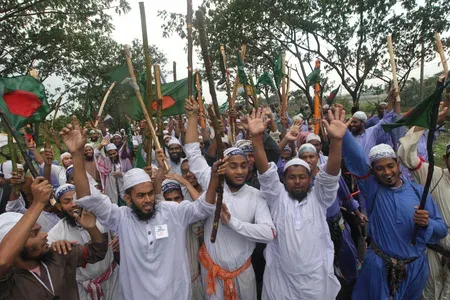
New Delhi, Jan 7 (NationPress) The ISI and Jamaat-e-Islami have integrated the targeting of minorities into a broader scheme aimed at the complete eradication of these groups from Bangladesh, facilitating its transformation into an entirely Islamic nation. For the perpetrators of these heinous acts, this has evolved into a lucrative extortion racket.
Officials express concern that the authorities are failing to intervene effectively.
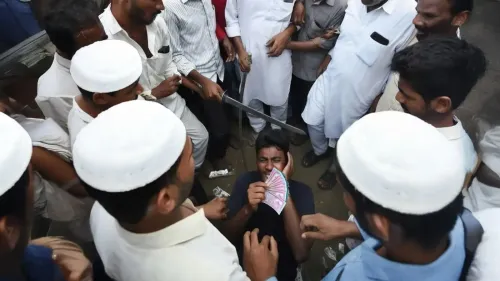
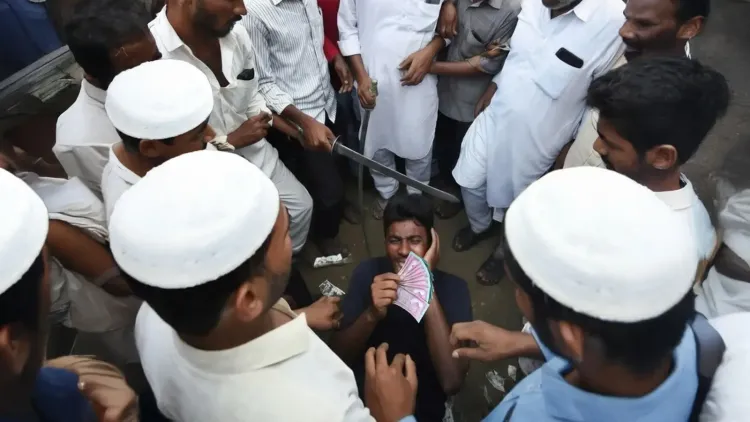
In numerous instances, particularly involving the murder of Hindus, criminals initially demand monetary payments; failure to comply results in death.
These criminals exploit the system for quick financial gain, according to officials.
One official noted that there is no specific hit-list guiding these attacks; individuals are randomly chosen. They approach these targets, demand money, and if it is not forthcoming, they kill.
Consider the case of Sarat Chakraborty, who fell victim to a mob. Just two days prior to his murder, radical factions demanded a substantial sum from him, threatening to abduct his wife if he did not comply. Unable to pay, he was brutally killed.
An Intelligence Bureau official stated that these killings have become fully institutionalized.
This scenario mirrors tactics employed by Pakistan for years and is now being enacted on a significant scale in Bangladesh.
The ISI and Jamaat seek the annihilation of minorities, while those executing these killings are profiting through extortion, the officer elaborated.
The overarching agenda of the ISI is to instill hatred among Bangladeshis towards Indians, Hindus, and other minorities, hoping these murders will provoke communal unrest in India.
Through these killings, they aim to incite Hindus in India, potentially leading to widespread clashes, an official remarked.
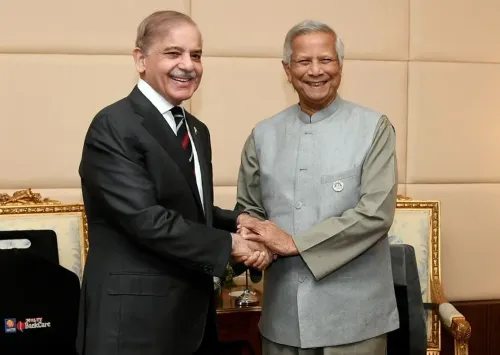
Another official pointed out that these murders are unlikely to cease. These radicals enjoy the backing of the establishment led by Muhammad Yunus. Investigations reveal a lack of interest from the police in resolving these cases. Instead, they are often diluted, and those arrested frequently escape punishment.
The administration is aware that imposing severe penalties could deter further targeting. The handling of these cases and the ongoing killings suggest significant interference from Pakistan.
It is evident that the country is attempting to weaponize religious identity to destabilize its neighbors, a strategy previously observed in Jammu and Kashmir, Kabul, and now Bangladesh.
Moreover, the ISI aims to undermine Dhaka's strategic autonomy, ensuring a constant state of insecurity.
Additionally, the ISI has introduced an India narrative, blaming New Delhi for the turmoil occurring in Bangladesh.
With elections just a month away, the ISI is striving to cultivate an anti-India sentiment throughout the nation, with attempts to delay the elections.
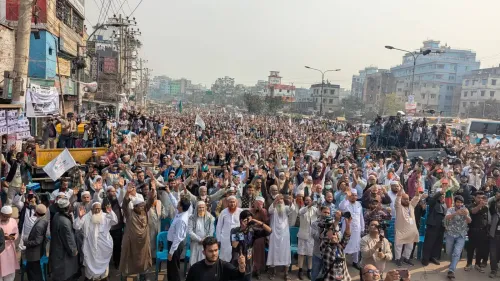
This week, a March for Justice took place, demanding a thorough investigation into the killing of student leader Osman Hadi. However, the march was more focused on advocating for a ban on Indians in Bangladesh than seeking justice for Hadi’s death.
Intelligence Bureau officials warn that a perilous precedent is being established. The radicals involved in minority killings will persist in their actions while simultaneously seeking financial gain.
It is likely that the minority community will soon feel compelled to pay off these extortionists to protect themselves, their families, and their properties, officials caution.
Point of View
I believe the situation in Bangladesh requires immediate attention. The targeting of minorities and the rise of extortion rackets pose a significant threat not only to the victims but also to regional stability. Authorities must prioritize justice and security to prevent this troubling trend from escalating further.
NationPress
20 Sept 2026
Frequently Asked Questions
What is the role of ISI and Jamaat-e-Islami in minority persecution?
The ISI and Jamaat-e-Islami have targeted minorities as part of a broader agenda to transform Bangladesh into an Islamic nation, utilizing violence and extortion.
How does the extortion racket operate?
Perpetrators demand money from selected individuals, and failure to comply often results in murder, turning these acts into a profitable scheme.
What are the implications for India?
The killings aim to incite communal tensions in India, fostering an environment of hatred towards minorities and potentially leading to violence.
Is the government taking action against these crimes?
Despite the alarming rise in violence, investigations are often stalled, and perpetrators frequently escape punishment, indicating a lack of governmental resolve.
What can be done to improve the situation?
There is an urgent need for enhanced security measures, accountability for offenders, and a commitment to protecting minority rights.