Is There a Radical Plot Against Minority Hindus in Bangladesh Ahead of Elections?
Synopsis
As Bangladesh approaches its February elections, alarming strategies surface targeting the Hindu minority. Leaders are focusing on radical anti-Hindu rhetoric, raising fears of escalating violence. What does this mean for the future of communal harmony in the nation? Explore the unsettling dynamics shaping this critical political landscape.
Key Takeaways
Political leaders are leveraging anti-Hindu sentiments for electoral gain.
Concerns are rising about potential escalation of violence against minorities.
False narratives are being circulated to justify attacks on the Hindu community.
The situation reflects a troubling trend of vote bank politics targeting minorities.
Calls for an Islamic state raise further concerns about the future of Bangladesh's secular framework.
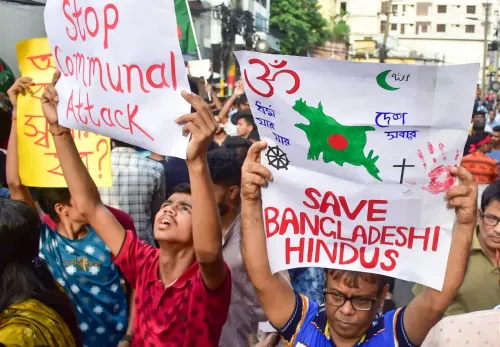
New Delhi, Jan 27 (NationPress) A scheme has been devised in Bangladesh to provoke violence against the Hindu minority as the country approaches the February elections. Numerous candidates are reportedly leveraging anti-Hindu sentiments as part of their electoral strategy.
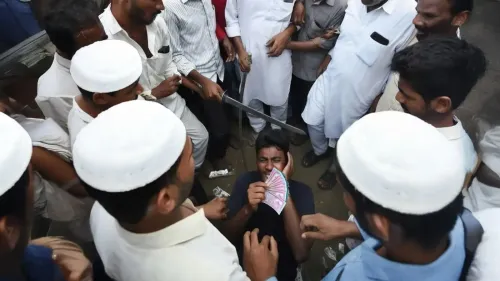
According to an Intelligence Bureau official, a meeting held last week saw various leaders plotting to incite violence against Hindus in Bangladesh. This gathering included radical figures who were enlisted to advance this agenda. The official expressed grave concerns regarding the state of minority communities in the nation, indicating that the prospects for escalating violence are increasing as elections near.
Observers of Bangladeshi politics assert that the upcoming elections will not focus on development issues. Instead, discussions will likely revolve around anti-Hindu and anti-India narratives, experts suggest.
Several leaders are inciting radicals against Hindus, claiming that India is offering refuge to the ousted leader, Sheikh Hasina. They suggest that Hindus support India and thus have no rightful place in Bangladesh.
Another official indicated that this scheme includes fabricating false narratives against the Hindu minority, alleging that they incite tensions. Claims of theft and other crimes will be directed at them to justify local violence against this community.
Sheikh Hasina's tenure will also be a focal point in the campaign. Many parties are portraying her as anti-Bangladesh and pro-India, despite the fact that Bangladesh seeks her extradition. Analysts believe the effectiveness of this tactic is uncertain, as a significant portion of Bangladeshis prefer maintaining positive relations with India rather than with Pakistan. Some leaders recognize this and believe that polarizing voters along religious lines may be beneficial for their campaigns.
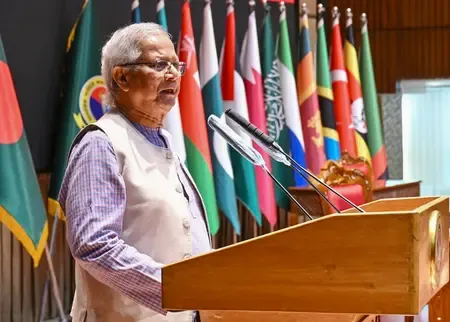
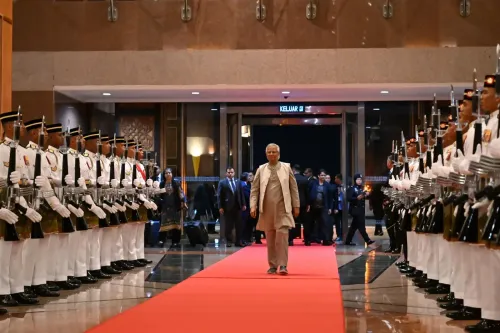
The official noted that this anti-India and anti-Hindu discourse is advantageous for many leaders, particularly the Jamaat-e-Islami, which appears to be profiting from this approach. Concerns are rising that the situation will deteriorate in the coming days. Many Hindus continue to live in fear, and if violence escalates, there may be a mass exodus, further straining already fragile borders, especially since the Jamaat-backed Muhammad Yunus assumed power.
The persecution of minorities is not a new phenomenon in Bangladesh. However, officials assert that this time the circumstances are different. This situation transcends mere persecution and has evolved into vote bank politics. Such systematic targeting of minorities coincides with calls from various leaders for establishing an Islamic state.
Many citizens oppose governance based on the Constitution, advocating for the implementation of Sharia law. Given the current charged environment, there are significant concerns for the safety of minorities residing in Bangladesh.
Officials predict that minority persecution will persist regardless of the political landscape, with expectations that tensions will escalate significantly until the elections conclude.
Point of View
It is imperative to highlight the concerning developments in Bangladesh. The political landscape is becoming increasingly polarized, with minority communities facing potential threats. Our commitment lies in reporting these issues with integrity and advocating for the protection of all citizens, emphasizing the importance of communal harmony.
NationPress
22 Sept 2026
Frequently Asked Questions
What is the current situation for Hindus in Bangladesh?
Hindus in Bangladesh are facing heightened risks of violence as elections approach, with political leaders leveraging anti-Hindu sentiments.
How are elections affecting minority communities?
Elections are exacerbating tensions, with leaders employing inflammatory rhetoric that threatens the safety and rights of minority communities, particularly Hindus.
What actions are being taken against the Hindu minority?
Reports indicate systematic targeting of Hindus, including the creation of false narratives and allegations aimed at inciting violence against them.
What is the potential impact of this situation?
If violence escalates, it could lead to significant displacement of Hindus, creating a humanitarian crisis and straining regional stability.
Is this a new development in Bangladesh?
While minority persecution is not new, the current context of electoral politics has intensified these threats, transforming them into a strategic political tool.