Are Hindus in Bangladesh the Key Swing Vote Amid Islamist Violence?
Synopsis
With the upcoming elections in Bangladesh, the Hindu minority finds themselves in a precarious position. Amid rising Islamist violence, their votes could determine the outcome. As political parties vie for their support, the stakes have never been higher for Bangladesh's Hindus.
Key Takeaways
Hindu votes are crucial in the upcoming Bangladesh elections.
Escalating violence against Hindus raises significant safety concerns.
Both BNP and Jamaat are actively courting Hindu voters to gain electoral advantage.
Trust issues exist between the Hindu community and the Jamaat.
The historical context of Hindu persecution plays a role in electoral decisions.
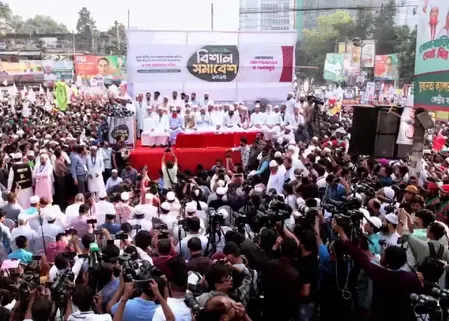
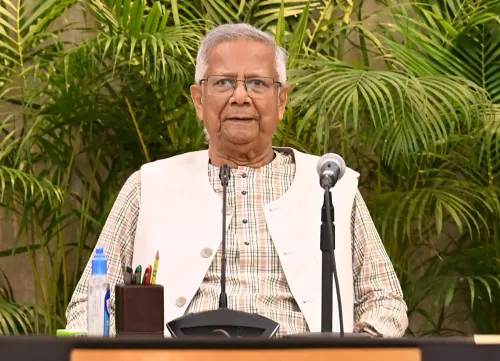
New Delhi, Feb 10 (NationPress) The final day of campaigning for the February 12 elections in Bangladesh is upon us. Following the removal of Sheikh Hasina, the nation has spiraled into turmoil, with the Hindu minority facing severe backlash from radical Islamist groups, now emboldened by the interim government led by Muhammad Yunus.
Interestingly, the Hindu electorate is proving to be pivotal in these elections. Both the Jamaat-e-Islami and the Bangladesh Nationalist Party (BNP) have made concerted efforts to appeal to Hindu voters. Experts suggest that the Hindu vote could very well be the decisive element in a tightly contested election.
For Hindus in Bangladesh, ensuring their safety is paramount. Over the past year, violence against them has escalated, with horrific acts being documented and shared online. Human rights organizations have raised alarms about the systematic nature of this violence, indicating that the Hindus, whose numbers have dwindled significantly due to persecution, are urgently seeking protection from the authorities. They are desperate to prevent the destruction or appropriation of their properties and to put an end to the heinous acts of violence against women and men alike.
Both the Jamaat and BNP recognize the significance of the Hindu vote and understand that in a closely fought contest, it could be the decisive factor. Early opinion polls suggested an easy win for the BNP, but the Jamaat, with support from Yunus, has made a notable comeback, closing the gap with their allies. During their campaigns, both parties have visited temples and expressed admiration for the Hindu community, attempting to win their favor.
Notably, the Jamaat has been particularly complimentary towards Hindus during the campaign, acknowledging their contributions to education and the establishment of educational institutions. They emphasized that the role of Hindus in promoting education in the region is undeniable. Both the BNP and Jamaat have also committed to safeguarding the Hindu community.
Observers of Bangladeshi politics suggest that while both parties are courting Hindu voters, the BNP is more likely to receive their support. The Jamaat has a reputation for extremism and is often viewed as anti-India, which could hinder their efforts to attract Hindu votes.
Additionally, the Hindu community tends to place greater trust in the BNP compared to the Jamaat. Many Hindus believe that the Jamaat has significantly contributed to their suffering, and there have been numerous instances where the Jamaat has either supported such persecution or remained silent about it.
Experts conclude that considering all these factors, the BNP holds a favorable position among Hindu voters. Furthermore, in 2013, several Jamaat members were indicted by the International Crimes Tribunal for war crimes committed against Hindus during the atrocities of 1971.
This outreach occurs amidst ongoing persecution faced by Hindus in Bangladesh, with neither political party having effectively addressed the issue. Therefore, the Hindu electorate is likely to approach the polls with caution.
According to the 2001 census, there were approximately 11.8 million Hindus in Bangladesh, making up 9.6% of the total population. The 2011 census recorded about 12.73 million Hindus in a population of 149.7 million. The most recent census from 2022 indicates that out of 164.5 million people, 13.1 million are Hindus, representing 7.95% of the population.
The Hindu community in Bangladesh is dispersed across various regions, except for Narayanganj, which hampers their ability to unite for political representation. However, Hindus have emerged as swing voters in multiple elections due to their historically high voter turnout. Previously, they have primarily supported the Awami League, but in the absence of Sheikh Hasina’s party, experts predict the Hindu vote may lean towards the BNP this time.
Point of View
I stand with the nation in ensuring that the voices of marginalized communities, like the Hindus in Bangladesh, are amplified. It's crucial to highlight their plight during this politically charged time, emphasizing the need for protection and representation in the face of ongoing violence and persecution.
NationPress
21 Sept 2026
Frequently Asked Questions
What challenges do Hindus face in Bangladesh?
Hindus in Bangladesh face significant persecution, including violence, property appropriation, and societal discrimination. This has escalated over the years, particularly since the rise of radical Islamist groups.
Why are Hindu votes critical in the upcoming elections?
The Hindu electorate is pivotal in closely contested elections, as their support could swing the results towards either the BNP or Jamaat, especially given their historical voting patterns.
How have political parties engaged with the Hindu community?
Both the BNP and Jamaat have actively campaigned to win over Hindu voters, visiting temples and acknowledging their contributions to education and society.
What is the historical context of Hindu persecution in Bangladesh?
The Hindu population in Bangladesh has faced persecution, especially during the 1971 war, with many historical incidents of violence and discrimination documented.
How can the Hindu community ensure their safety during elections?
The Hindu community must remain vigilant and engage with political parties that prioritize their safety and representation while also advocating for their rights.