US senators push bipartisan bill to fund election security permanently
Synopsis
Four US senators — two Democrats, two Republicans — want to repurpose a nearly obsolete presidential campaign fund into a permanent $200-million-a-year lifeline for election security. The move would end the cycle of ad hoc federal grants that have left local election offices scrambling to replace ageing voting machines and shore up cybersecurity.
Key Takeaways
The Election Infrastructure Security Act would redirect the federal income-tax presidential campaign checkbox from candidates to state and local election offices.
Individual contributions would rise from $3 to $5 ; joint-filer amounts from $6 to $10 , both inflation-adjusted.
The Bipartisan Policy Center estimates the changes could yield up to $200 million a year in election security grants — up from the current $21–$25 million .
States would receive at least $3 million annually; US territories at least $600,000 ; at least 67% would go to local jurisdictions.
The bill was introduced by Senators Mark Warner , Alex Padilla , Susan Collins , and Mitch McConnell and has the backing of 23 state and local election associations .
The legislation has not yet become law; 2008 was the last year a major-party nominee accepted a general election grant from the existing fund.
A bipartisan group of US senators has proposed converting a largely dormant presidential campaign fund into a permanent, dedicated source of financing for state and local election offices — to replace ageing voting equipment, safeguard voter registration databases, and bolster cybersecurity infrastructure across the country.
What the Bill Proposes
The Election Infrastructure Security Act would redirect money collected through a voluntary checkbox on federal income tax returns, which currently funnels contributions into the presidential campaign fund. Under the proposal, the individual contribution amount would rise from $3 to $5, and from $6 to $10 for married couples filing jointly, with both figures adjusted for inflation going forward. Crucially, taxpayers would retain the choice of whether to tick the box — the change does not increase anyone's tax bill or reduce any refund.
Who Is Behind It
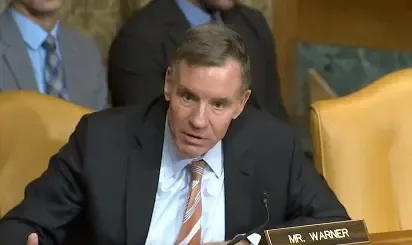
The legislation was introduced by Democratic Senators Mark Warner of Virginia and Alex Padilla of California, alongside Republican Senators Susan Collins of Maine and Mitch McConnell of Kentucky. The rare cross-party alignment underscores the shared concern about the fragility of election infrastructure funding. McConnell chairs the Senate Rules and Administration Committee, where Padilla serves as the senior Democrat — giving the bill significant procedural standing.
'Keeping our elections secure requires more than sporadic funding; it requires sustained investment,' Warner, vice-chair of the Senate Intelligence Committee, said in a statement.
How the Money Would Be Distributed
Under the bill's framework, each state would receive at least $3 million annually, while US territories would receive a minimum of $600,000. At least 67 per cent of total funding would flow directly to local election jurisdictions, except in states that administer federal elections centrally. The US Election Assistance Commission (EAC) — established under the Help America Vote Act of 2002 — would administer the fund.
Permissible uses would include replacing voting machines, securing computer systems, protecting election facilities, reducing polling-place queues, and reimbursing certain prior security investments. The bill explicitly bars using the grants to fund litigation.
Transparency and Oversight Measures
States would be required to publish spending plans and open them to public comment before disbursement. Annual reports detailing expenditure, equipment purchases, and outcomes achieved would be mandatory, and the EAC would conduct periodic audits to verify compliance.
Scale of Funding and Current Context
The existing presidential campaign tax checkbox has generated roughly $21 million to $25 million annually in recent years — a relatively modest sum. The sponsors cited a Bipartisan Policy Center estimate that the proposed changes could generate approximately $200 million a year in election security grants, though that figure is a projection, not an appropriation. The bill has not yet become law.
This comes amid a broader pattern of underfunding: election officials have long had to rely on unpredictable federal grants and strained state and local budgets to keep voting systems current. Notably, Congress had already redirected a combined $80 million from the presidential fund toward election security grants across fiscal years 2024, 2025, and 2026 — the new bill would make such redirection permanent rather than case-by-case. The last time a major-party presidential nominee accepted a general election grant from the fund was 2008, according to the Federal Election Commission (FEC). The bill has drawn endorsements from 23 state and local election associations as well as the Bipartisan Policy Center.
Point of View
And McConnell's committee chairmanship gives the bill a clearer path than most. Yet the $200 million projection is exactly that: a projection, not a budget line. The deeper structural question the bill leaves unanswered is whether a voluntary tax-return checkbox — whose uptake has been declining for decades — is a reliable fiscal foundation for infrastructure that is now squarely in the crosshairs of foreign interference operations. Sustainable election security may ultimately require a mandatory appropriation, not a repurposed relic of public campaign finance.
NationPress
22 Nov 2026
Frequently Asked Questions
What is the Election Infrastructure Security Act?
The Election Infrastructure Security Act is a bipartisan US Senate bill that would redirect funds raised through the federal income-tax presidential campaign checkbox to state and local election offices, providing a permanent funding stream for replacing voting equipment, protecting voter data, and strengthening cybersecurity. It has not yet become law.
How much money could the bill generate for election security?
The Bipartisan Policy Center estimates the proposed changes could generate approximately $200 million a year in election security grants, compared with the $21 million to $25 million the existing presidential fund currently collects annually. This is a projection based on higher contribution limits, not a guaranteed appropriation.
Who introduced the bill and why is it considered bipartisan?
The bill was introduced by Democratic Senators Mark Warner of Virginia and Alex Padilla of California, along with Republican Senators Susan Collins of Maine and Mitch McConnell of Kentucky. The cross-party sponsorship reflects shared concerns about underfunded election infrastructure and the absence of a stable, predictable funding source for local election offices.
How would the funds be distributed to states and local governments?
Each state would receive at least $3 million annually and US territories at least $600,000. At least 67 per cent of total funding would go directly to local election jurisdictions, except in states that run federal elections centrally. The US Election Assistance Commission would administer the grants.
Why is the existing presidential campaign fund considered underused?
The last time a major-party presidential nominee accepted a general election grant from the fund was 2008, as candidates have since preferred to raise private money, which typically far exceeds the public grant. The fund has effectively become a dormant pool, collecting $21–25 million a year with no meaningful outlet.