Multilingual AI can bridge India's healthcare language gap, says DIBD CEO
Synopsis
India's multilingual diversity has long been a blind spot in digital healthcare — BHASHINI's CEO made the case at GDHS 2026 that AI-powered language tools can close that gap, from Bodo to Maithili, by embedding language intelligence directly into clinical workflows and community health data initiatives.
Key Takeaways
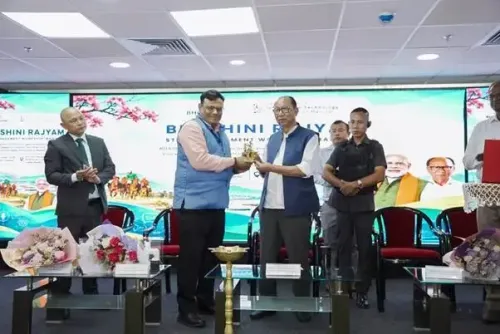
Amitabh Nag , CEO of Digital India BHASHINI Division (DIBD) , addressed the Global Digital Health Summit (GDHS) 2026 in New Delhi on 22 November 2026 .
He said multilingual AI can improve doctor-patient communication, simplify clinical documentation, and broaden access to medical information.
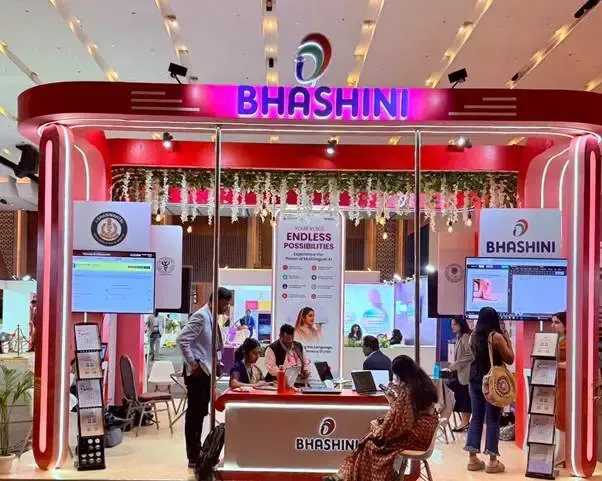
BHASHINI showcased its multilingual AI ecosystem across the two-day summit, demonstrating healthcare delivery applications.
BhashaDaan for Health invites community contributions to build language resources for medical and public health AI applications.
Data Daan for Health maps colloquial, regional symptom descriptions to formal medical terminology to build richer multilingual health datasets.
The initiative targets inclusive care delivery across Indian languages including Bodo , Marathi , Punjabi , and Maithili .
Amitabh Nag, Chief Executive Officer of the Digital India BHASHINI Division (DIBD), has said that multilingual artificial intelligence can significantly improve access to medical information, support doctor-patient communication, and simplify clinical documentation — underscoring a dimension of digital healthcare that policymakers have long underestimated.
Key Address at GDHS 2026
Nag made these remarks at the Global Digital Health Summit (GDHS) 2026 in New Delhi, where BHASHINI showcased its multilingual AI ecosystem across the two-day event. His keynote stressed that language is a critical yet frequently overlooked layer of digital healthcare infrastructure. The summit served as a platform to demonstrate how language technologies can strengthen healthcare delivery and facilitate clinical workflows at scale.
Why Language Matters in Healthcare
At the core of Nag's address was the argument that healing extends beyond diagnosis and medication — it encompasses the human connection between doctors, caregivers, and patients. When care is communicated in a patient's own language, whether Bodo, Marathi, Punjabi, or Maithili, it becomes more familiar, reassuring, and accessible, he said. The ability to express empathy in a language a patient naturally understands can, according to Nag, foster comfort, trust, and a stronger bond with healthcare professionals.
This matters particularly in a country like India, where hundreds of languages and dialects are spoken and a large share of patients may struggle to communicate symptoms accurately in Hindi or English — the two languages that dominate most digital health platforms today.
BhashaDaan and Data Daan for Health
The keynote also spotlighted two community-driven initiatives. BhashaDaan for Health focuses on building language resources for healthcare through public contributions, strengthening multilingual AI capabilities for medical and public health applications. Its companion initiative, Data Daan for Health, aims to build multilingual healthcare datasets by documenting colloquial expressions — regional phrases and everyday descriptions people use for symptoms and health conditions — and mapping them to corresponding formal medical terminology.
The significance of this lies in the gap between how patients describe their ailments and how clinicians document them. Bridging that gap through community-sourced language data could make AI-assisted diagnostics and health communication far more effective for underserved populations.
The Broader Vision: AI as an Enabling Layer
BHASHINI's demonstration at the summit moved beyond conventional translation to position multilingual AI as an enabling layer embedded across healthcare systems — not merely a conversion tool between languages, but a structural component that makes healthcare more inclusive and patient-centric. According to an official statement, the goal is to ensure patients can understand, communicate, and access healthcare services in their preferred languages at every touchpoint.
As India accelerates its digital health infrastructure under the Ayushman Bharat Digital Mission, the integration of language intelligence into that framework is emerging as one of the more consequential — and unresolved — design questions ahead.
Point of View
But language has remained its most glaring blind spot — one that disproportionately penalises rural and non-Hindi-speaking patients. BHASHINI's pitch at GDHS 2026 is timely, but the harder question is whether community-sourced datasets like Data Daan for Health will achieve the coverage and clinical accuracy needed for real-world triage, where a mistranslated symptom can carry consequences. The gap between demo-stage multilingual AI and deployment at PHC level across 700-plus districts remains vast. Progress will depend less on the technology and more on whether health ministries treat language integration as infrastructure — not a feature.
NationPress
22 Nov 2026
Frequently Asked Questions
What did DIBD CEO Amitabh Nag say about multilingual AI and healthcare?
Amitabh Nag said multilingual AI can support doctor-patient communication, simplify clinical documentation, and improve access to medical information across India's diverse language landscape. He made the remarks at the Global Digital Health Summit 2026 in New Delhi, emphasising that language is a critical but often overlooked layer of digital healthcare.
What is BHASHINI and what did it showcase at GDHS 2026?
BHASHINI, or the Digital India BHASHINI Division, is a government initiative focused on AI-powered language technology for Indian languages. At the two-day GDHS 2026 summit, it demonstrated how its multilingual AI ecosystem can strengthen healthcare delivery, facilitate clinical workflows, and enable more inclusive, patient-centric health experiences.
What is BhashaDaan for Health?
BhashaDaan for Health is a community-driven initiative under BHASHINI that invites public contributions to build language resources for healthcare, with the goal of strengthening multilingual AI capabilities for medical and public health applications.
What is Data Daan for Health?
Data Daan for Health is an initiative to build multilingual healthcare datasets by documenting colloquial and regional expressions people use to describe symptoms and health conditions, mapping them to formal medical terminology. The focus is on capturing how patients naturally communicate health concerns in their everyday language.
Why does language matter in India's digital healthcare system?
India has hundreds of languages and dialects, and many patients cannot accurately communicate symptoms in Hindi or English — the dominant languages in most digital health platforms. Multilingual AI, according to DIBD, can help ensure patients feel heard, understood, and able to access services in their preferred language, making care more effective and equitable.