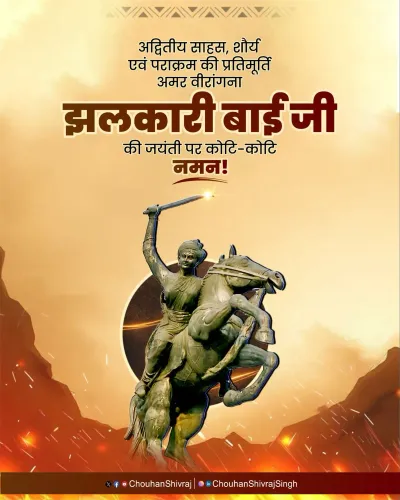
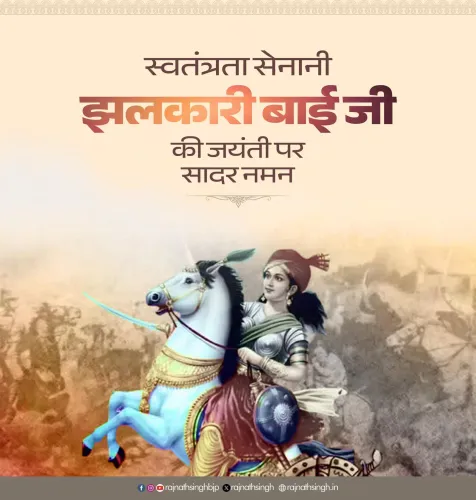
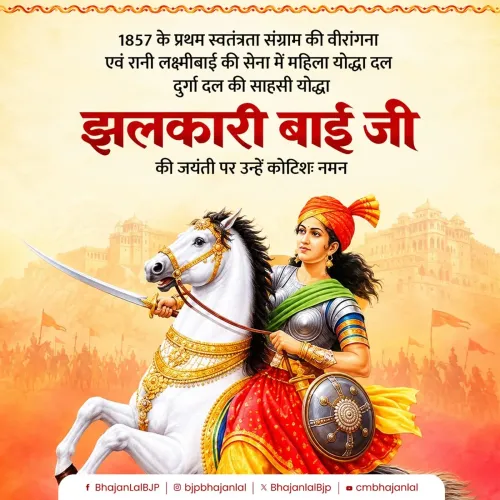
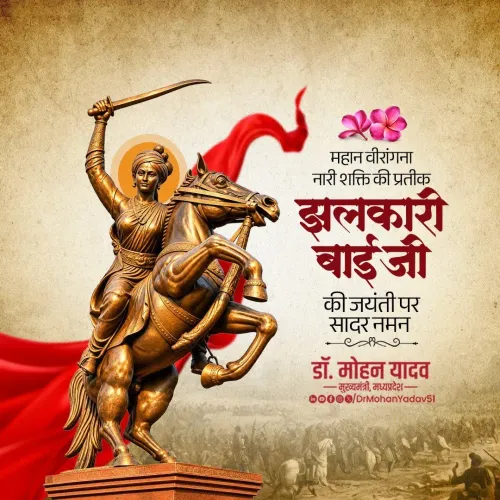
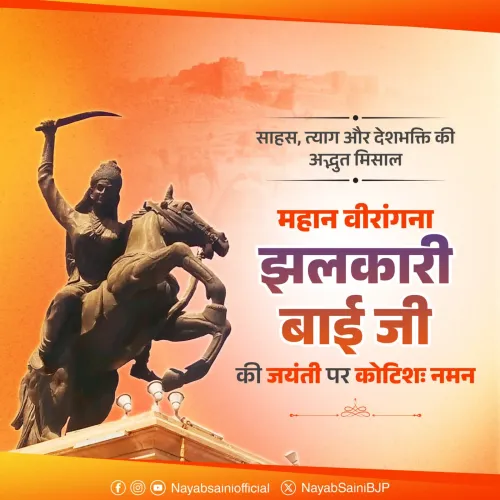
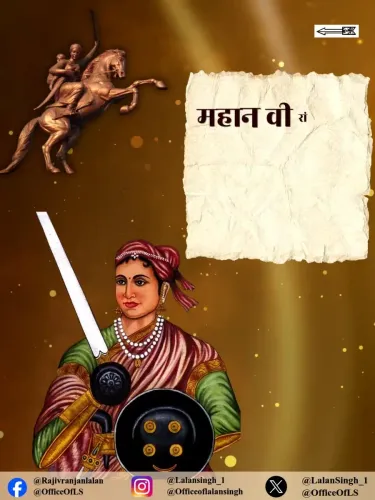
Lalan Singh pays tribute to Jhalkari Bai on her birth anniversary
Synopsis
Union Minister Rajiv Ranjan Singh, known as Lalan Singh, paid tribute to Jhalkari Bai on her birth anniversary on 22 November 2026, honouring the Dalit warrior who fought in Rani Lakshmibai's forces during the 1857 First War of Independence.
Key Takeaways
Union Minister Lalan Singh posted a tribute to Jhalkari Bai on her birth anniversary, 22 November 2026 .
Jhalkari Bai was a Dalit (Koli community) woman soldier who served in Rani Lakshmibai's army during the 1857 revolt .
She is remembered for reportedly impersonating Rani Lakshmibai to deceive British forces during the defence of Jhansi .
Annual tributes to Jhalkari Bai by Indian politicians reflect a broader effort to present an inclusive, caste-diverse account of the independence struggle.
The Government of India has honoured her with a postage stamp; states like Uttar Pradesh and Madhya Pradesh have named public spaces after her.
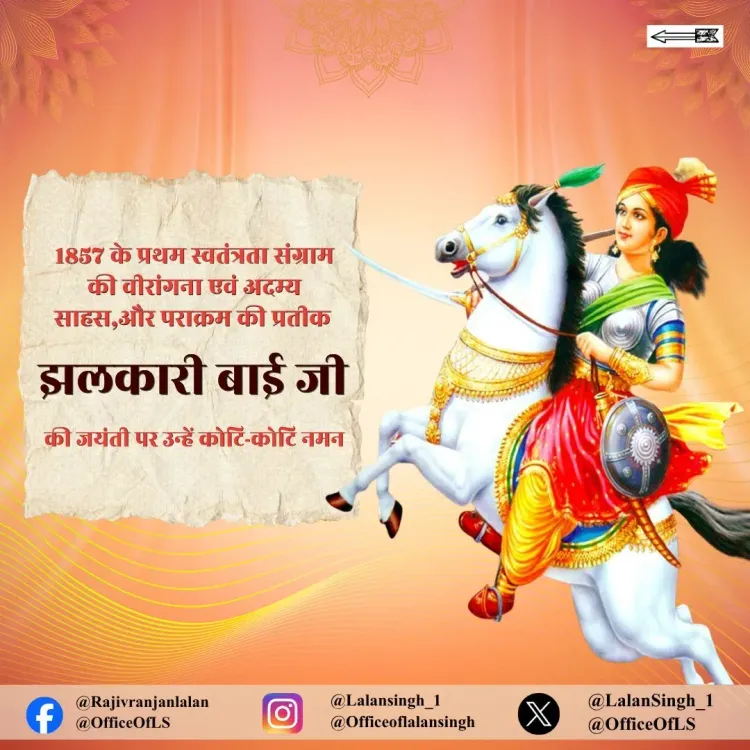
She fought in the shadow of a queen — and history nearly forgot her. On Sunday, 22 November 2026, Union Minister for Panchayati Raj, Fisheries, Animal Husbandry and Dairying Rajiv Ranjan Singh, popularly known as Lalan Singh, paid his respects to Jhalkari Bai on her birth anniversary, honouring the Dalit warrior who stood at the heart of the 1857 First War of Independence.
Posting on X in Hindi, the senior Janata Dal (United) leader wrote: '1857 ke pratham swatantrata sangram ki mahan virangana Jhalkari Bai ji ki jayanti par unhe shat-shat naman evam vinamra shraddhanjali' — 'On the birth anniversary of the great woman warrior Jhalkari Bai of the First War of Independence of 1857, I offer her a hundred salutations and humble homage.'Who was Jhalkari Bai — and why she still matters
Jhalkari Bai was a woman of the Koli community who rose to serve as a soldier in the army of Rani Lakshmibai of Jhansi. Accounts of the revolt describe her not merely as a rank-and-file fighter but as a trusted companion of the queen whose physical resemblance to Lakshmibai was used as a tactical ruse — she is said to have impersonated the queen before British forces, buying critical time during the final defence of Jhansi in 1858. Her story sits at the intersection of gender and caste: a Dalit woman who took up arms in a war dominated in memory by royalty.
A tribute that speaks to a larger reckoning
Lalan Singh's post is part of a wider, recurring political practice across party lines: each November, figures from the ruling coalition and the opposition alike mark Jhalkari Bai's birth anniversary as a signal of inclusive nationalism. The gesture carries particular resonance for Dalit communities, who see in her story a corrective to mainstream independence narratives that have historically centred princely and upper-caste figures. By invoking her name, political leaders signal an intent to broaden the canvas of the freedom struggle — placing ordinary, marginalised fighters alongside the celebrated icons of 1857.
India's retellings of 1857 have undergone a steady recalibration over decades, with historians and community organisations pushing to restore figures like Jhalkari Bai to their rightful place. State governments in Uttar Pradesh and Madhya Pradesh — the heartland of the revolt — have named public spaces, memorials, and welfare schemes after her. Her image appears on postage stamps issued by the Government of India. Each anniversary adds another layer to that institutional memory.
Courage, it turns out, does not require a throne — and India is still learning to say so out loud.
Point of View
Unfinished project of democratising its historical heroes: moving the story of 1857 from palaces to the battlefield ranks. Each anniversary tribute is a small but deliberate stitch in that larger rewriting.
NationPress
22 Nov 2026
Frequently Asked Questions
Who was Jhalkari Bai?
Jhalkari Bai was a Dalit woman from the Koli community who served as a soldier in Rani Lakshmibai's army during the 1857 First War of Indian Independence. She is celebrated for her bravery and for reportedly impersonating the queen to mislead British troops during the fall of Jhansi.
When is Jhalkari Bai's birth anniversary?
Jhalkari Bai's birth anniversary is observed on 22 November each year. Politicians, community leaders, and state governments across India mark the day with tributes and commemorative events.
Why did Lalan Singh pay tribute to Jhalkari Bai?
Union Minister Rajiv Ranjan Singh, known as Lalan Singh, posted a tribute on X on her birth anniversary as part of a wider practice among Indian political figures to honour women and Dalit participants in the 1857 independence struggle.
What is Jhalkari Bai's connection to Rani Lakshmibai?
Jhalkari Bai served in the personal guard of Rani Lakshmibai of Jhansi. Her close physical resemblance to the queen led to accounts of her impersonating Lakshmibai during the British siege to allow the queen to escape — an act celebrated as extraordinary personal sacrifice.
How has the Indian government honoured Jhalkari Bai?
The Government of India has issued a postage stamp in Jhalkari Bai's honour. State governments, particularly in Uttar Pradesh and Madhya Pradesh, have named public spaces, memorials, and welfare schemes after her.