What Are South Korea and the US Discussing in Their Security Talks?

Synopsis
In a crucial meeting, the defense leaders of South Korea and the US will discuss vital security issues, including the modernization of their alliance and strategic military capabilities. This week’s talks come at a critical time as regional tensions rise, making the outcomes of these discussions highly significant.
Key Takeaways
Defense chiefs from South Korea and the US meet for annual talks.
Key topics include strategic flexibility and OPCON transfer.
South Korea seeks to acquire a nuclear-powered submarine .
Meeting comes amid North Korea’s military advancements.
Both nations emphasize a modernized and strengthened alliance.
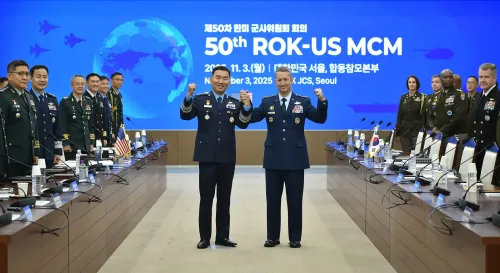
Seoul, Nov 3 (NationPress) The defense chiefs of South Korea and the United States are scheduled to commence their annual security discussions in Seoul this week, addressing a variety of security issues at a time when both nations aim to modernize their long-standing alliance in response to a shifting security environment.
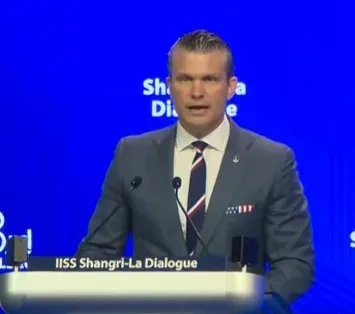
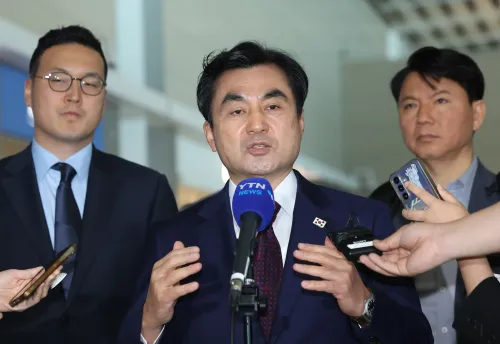
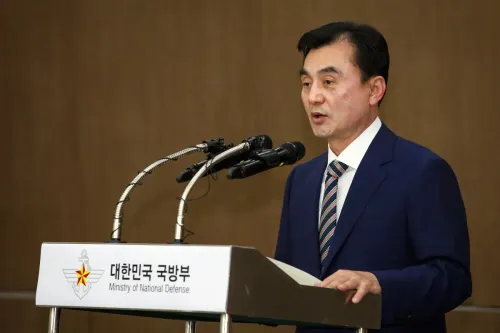
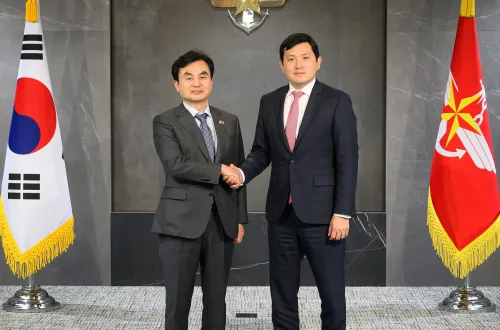
Defense Minister Ahn Gyu-back and US Defense Secretary Pete Hegseth are set to co-chair the 57th Security Consultative Meeting (SCM) at the defense ministry in Seoul on Tuesday, marking their inaugural joint presiding since taking office earlier this year.
This year’s discussions are anticipated to cover significant alliance and security matters, including the strategic flexibility of US forces stationed in South Korea, as well as Seoul's initiative to regain wartime operational command (OPCON) from Washington.
Both parties are also likely to converse about Seoul's ambition to obtain a nuclear-powered submarine, following pertinent talks between South Korean President Lee Jae Myung and US President Donald Trump during their summit last week.
South Korea has committed to reclaiming OPCON from Washington within President Lee Jae Myung’s five-year term, concluding in 2030.
Hegseth has lauded Seoul's push for the OPCON transfer as “great” and described South Korea as a “combat credible” partner, emphasizing the necessity for allies to take on increased security responsibilities.
In response, Ahn has assured he will make the “utmost” efforts to ensure the transfer of OPCON while preserving a strong alliance.
During their summit in Gyeongju on Wednesday, Lee explicitly urged Trump to permit South Korea to secure nuclear fuel supplies for conventionally armed submarines to enhance their capability in monitoring North Korean and Chinese vessels, which would alleviate the operational load on US forces.
Trump stated in a social media post the next day that he has granted South Korea the approval to build a nuclear-powered submarine at a shipyard in Philadelphia, operated by Hanwha Ocean of South Korea.
On the Korean Peninsula, this meeting occurs amidst North Korea's increasing military cooperation with Russia and its advancements in nuclear and missile technology, recently unveiling the Hwasong-20 intercontinental ballistic missile during a significant military parade last month.
Seoul's defense ministry has identified key topics for discussion in this year's bilateral talks, including policy coordination on North Korea, combined defense strategies, extended deterrence, and naval maintenance, repair, and overhaul, as reported by Yonhap news agency.
“Both parties aim to address overall pending issues to enhance the alliance in a forward-looking and mutually beneficial manner to counter the evolving security environment and threats,” the ministry previously stated in a release.
The US Department of War has confirmed Hegseth's participation in the SCM, indicating he will commend Seoul's willingness to increase defense spending and assume greater responsibility for the alliance’s deterrence and defense.
Hegseth is expected to arrive in South Korea later Monday for a two-day visit, the final segment of his Asia tour, which includes stops in Japan, Malaysia, and Vietnam. Upon arrival, he will visit the Joint Security Area (JSA) with Ahn, marking the first joint visit to the JSA by the defense chiefs of the allies in eight years.
Point of View
It is essential to recognize the importance of the South Korea-US defense talks in ensuring regional stability. The discussions highlight the commitment of both nations to adapt their military strategies in the face of evolving threats. It’s a critical moment for the alliance that emphasizes cooperation and shared responsibility in defense initiatives.
NationPress
15 Oct 2026
Frequently Asked Questions
What is the purpose of the Security Consultative Meeting?
The Security Consultative Meeting aims to discuss and address key alliance and security issues between South Korea and the US, focusing on modernizing their defense strategies amidst changing regional threats.
When is the SCM taking place?
The 57th Security Consultative Meeting is scheduled for Tuesday in Seoul.
Who are the primary leaders involved in the meeting?
The meeting will be led by South Korean Defense Minister Ahn Gyu-back and US Defense Secretary Pete Hegseth.
What key topics are expected to be discussed?
Expected topics include the strategic flexibility of US forces in South Korea, the transfer of wartime operational command to South Korea, and discussions on acquiring nuclear-powered submarines.
What is the significance of the OPCON transfer?
The OPCON transfer signifies South Korea's desire to take greater control over its military operations, reflecting its growing capabilities and responsibilities as a partner in regional security.