US Trade Rep Greer calls for new global trading order at G20 Milwaukee
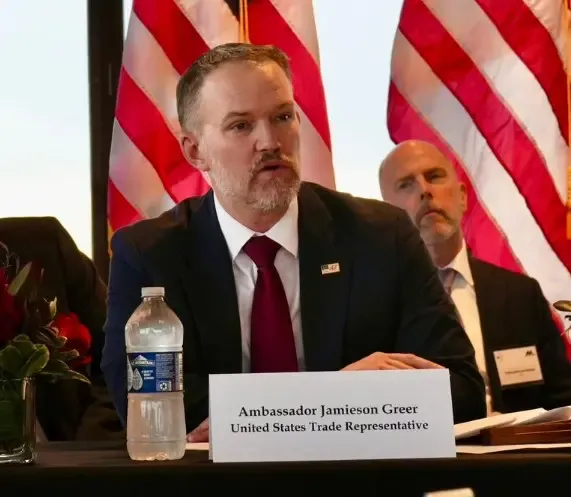
Synopsis
US Trade Representative Jamieson Greer used the G20 Trade Ministerial in Milwaukee to openly question the MFN principle and push G20 economies to stop deferring hard trade questions to the WTO — a direct signal that Washington wants to rewrite the rules of global commerce on its own terms, with bilateral deals and tariffs already in play.
Key Takeaways
US Trade Representative Jamieson Greer called for a 'new international economic order' at the G20 Trade Ministerial in Milwaukee on 1 October 2026 .
Greer flagged four priorities : weaponisation of food, structural excess capacity, the MFN principle , and forced labour in supply chains.
He questioned the unconditional application of the MFN principle , calling it a constraint on responding to distortive trade policies.
Greer urged G20 members not to refer difficult trade issues to the WTO in Geneva , pushing for direct G20 action instead.
He noted that G20 leaders committed to tackling excess capacity in 2016 , yet the problem has worsened over ten years .
India's Commerce Minister Piyush Goyal was cited informally; the ministerial is part of the US G20 presidency ahead of the Leaders' Summit.
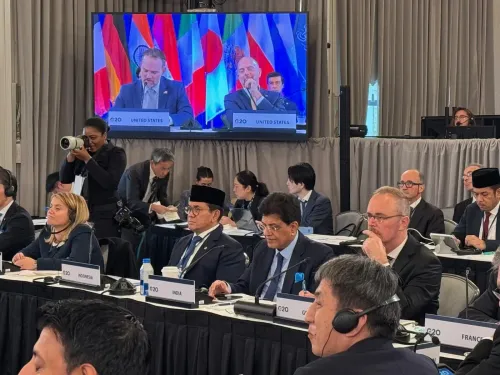
US Trade Representative Jamieson Greer on Wednesday, 1 October 2026, opened the G20 Trade Ministerial in Milwaukee with a sweeping call to reshape the international economic order, arguing that the global trading architecture built decades ago is no longer capable of addressing the challenges of the 21st century. Greer urged G20 economies to act as 'architects of a new international economic order' and resist deferring hard questions to existing multilateral bodies.
Four Priorities on the Milwaukee Agenda
Greer identified four core issues he wanted G20 trade ministers to address candidly: the weaponisation of food, structural excess capacity and production, the Most-Favoured-Nation (MFN) principle, and forced labour in global supply chains. He described these not as isolated concerns but as symptoms of a deeper systemic failure in the current trading framework.
'The topics we will talk about at our meetings — weaponisation of food, structural excess capacity and production, MFN and forced labour — are ongoing challenges, the solutions to which expose the overall problem: we are trying to meet 21st century challenges with an architecture designed for another era,' Greer told ministers and delegates.
MFN Principle Under Scrutiny
In a notably pointed passage, Greer questioned whether the unconditional application of the MFN principle — widely regarded as the cornerstone of the global trading system — still served contemporary needs. 'Even a cornerstone should be examined from time to time to ensure it is still supporting the structure we need,' he said. He argued that an unconditional MFN framework constrains economies from effectively responding to distortive policies and adapting to shifting market conditions — a position that signals potential US appetite for more conditional, reciprocal trade arrangements.
Excess Capacity and Forced Labour as Trade Distortions
On excess industrial capacity, Greer noted that non-market policies encouraging production well beyond domestic demand create cross-border consequences, placing pressure on producers and workers in other economies. He pointed out that G20 leaders had committed in 2016 to tackle excess industrial capacity, yet ten years on, the problem had grown into an even greater distortion. On forced labour, he framed it as both a humanitarian and trade issue, arguing that goods produced under such conditions enter global markets with an artificial price advantage, distorting fair competition.
A Push Away from Geneva
Greer explicitly pushed back against the reflex of redirecting difficult trade questions to the World Trade Organization (WTO) in Geneva. 'Typically, and too often, when difficult questions and topics arise in the G20, many around the room suggest that such discussions belong elsewhere. That they should take place in Geneva at the WTO. But Geneva is just another city on a lake. And so is Milwaukee. So, let's talk candidly and constructively here,' he said. The remark signals a continued US preference for bilateral and plurilateral deal-making over multilateral WTO-led processes — a posture consistent with the Trump administration's broader trade strategy of using tariffs and bilateral agreements to reduce the US trade deficit and rebalance supply chains.
India's Piyush Goyal Gets a Mention
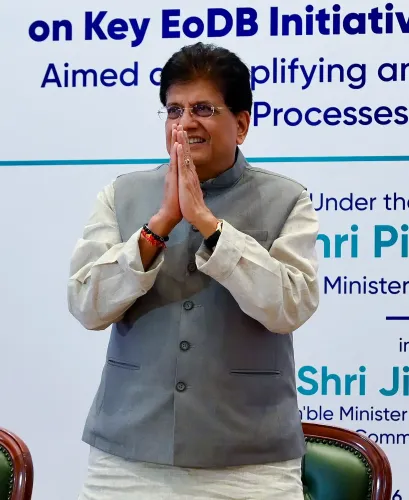
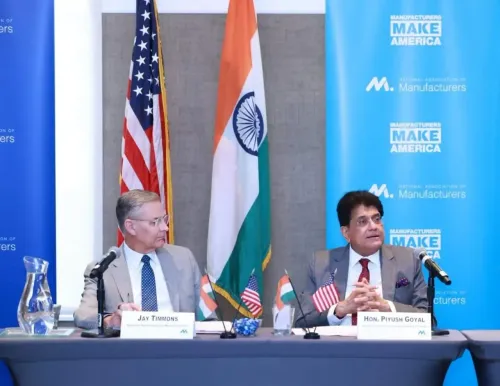
Greer drew a lighter moment by invoking India's Commerce and Industry Minister Piyush Goyal while making the point that trade reform is a generational undertaking. 'Just as Antonio Gaudi started the ongoing work to build the Sagrada Familia in Barcelona in 1883, work to establish a trading system that is more balanced and fair will continue long after our tenures in office — maybe except for Piyush who is trade minister for life!' Greer said. The remark drew attention to the longevity of Goyal's tenure in India's trade portfolio and underscored the informal diplomatic undercurrents running alongside formal G20 deliberations.
Milwaukee as a Symbol
Greer deliberately chose Milwaukee — a city historically associated with manufacturing — as a backdrop for the debate on production, trade fairness, and industrial policy. Delegates earlier visited a Rockwell Automation production facility, which Greer cited as an illustration of the production-oriented economy the Trump administration seeks to encourage. The two-day ministerial is part of the broader US G20 presidency, ahead of the G20 Leaders' Summit — the first to be hosted on American soil since 2009. Greer said the meeting was designed to create a greater sense of urgency among participating economies about the need for concrete action.
How G20 partners respond to Washington's push to revisit MFN norms and sideline the WTO will likely set the tone for trade diplomacy in the months leading up to the Leaders' Summit.
Point of View
Starting with MFN, and it wants to do so outside the WTO's slow multilateral machinery. The push to examine MFN 'unconditional' application is particularly consequential — it would give the US legal and political cover to offer preferential terms to allies while imposing higher barriers on rivals, effectively turning trade policy into an instrument of geopolitical alignment. For India, whose own trade negotiators have long guarded MFN norms, this creates a complex calculus: benefit from US bilateralism or defend a multilateral architecture that is already under strain. The excess capacity argument is squarely aimed at China, but the language is calibrated to avoid naming names — a rhetorical choice that gives G20 partners room to agree without publicly confronting Beijing.
NationPress
1 Oct 2026
Frequently Asked Questions
What did US Trade Representative Jamieson Greer say at the G20 Trade Ministerial in Milwaukee?
Greer called on G20 economies to build a 'new international economic order', arguing the current global trading system was designed for a different era and is ill-equipped to handle excess capacity, forced labour, food weaponisation, and the limits of the MFN principle. He urged ministers to hold candid discussions in Milwaukee rather than deferring issues to the WTO.
What is the MFN principle and why is Greer questioning it?
The Most-Favoured-Nation (MFN) principle requires WTO members to extend the same trade terms to all members that they offer to any one trading partner. Greer argued that unconditional MFN application prevents countries from effectively responding to distortive or non-market trade policies, and said even a cornerstone of the trading system should be periodically re-examined.
Why did Greer push back against referring issues to the WTO?
Greer said the G20 too often deflects difficult trade questions to the WTO in Geneva, and argued that direct, candid dialogue among G20 economies was more effective. His remarks reflect the Trump administration's broader preference for bilateral deals and tariff-based leverage over slower multilateral WTO-led processes.
What is the context of the G20 Trade Ministerial in Milwaukee?
The Milwaukee meeting is part of the US G20 presidency and serves as a preparatory forum ahead of the G20 Leaders' Summit, which will be the first hosted on American soil since 2009. The two-day ministerial was designed, in Greer's words, to build urgency among participating economies for concrete trade reform.
How does this affect India?
India's Commerce and Industry Minister Piyush Goyal was present at the Milwaukee ministerial and was mentioned informally by Greer. More substantively, a US push to revisit MFN norms and build bilateral trade arrangements raises strategic questions for India, which has historically defended multilateral WTO frameworks while simultaneously pursuing bilateral free trade agreements.