CM Himanta's Atmanirbhar Abhijan lifts Kokrajhar youth to 1,600-bird poultry farm
Synopsis
A young entrepreneur from Kokrajhar has scaled up to a 1,600-chicken poultry farm under Assam CM Himanta Biswa Sarma's Atmanirbhar Abhijan scheme, spotlighting grassroots economic empowerment in the Bodoland Territorial Region.
Key Takeaways
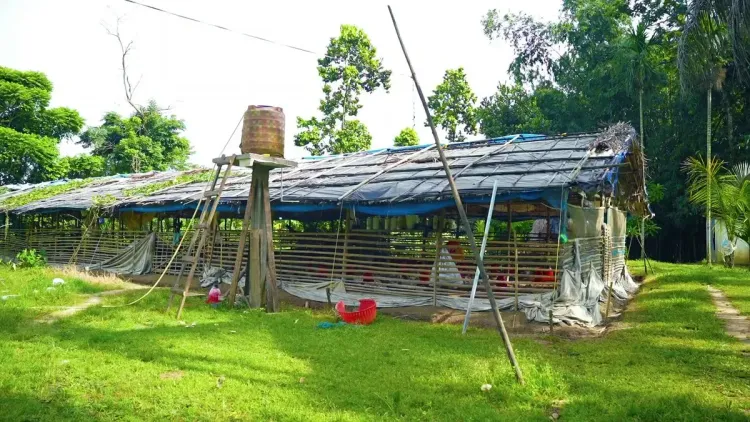
A young entrepreneur from Kokrajhar, Assam has built a poultry farm with 1,600 chickens through the scheme.
The Chief Minister's Atmanirbhar Abhijan is CM Himanta Biswa Sarma 's flagship programme to support grassroots entrepreneurs.
Kokrajhar is part of the Bodoland Territorial Region , historically under-served by formal credit and enterprise support systems.
The scheme covers sectors including animal husbandry, agriculture, small trade, and cottage industry across Assam .
CM Sarma highlighted the story on October 1, 2026 , framing it as a human-interest proof of the scheme's on-ground impact.
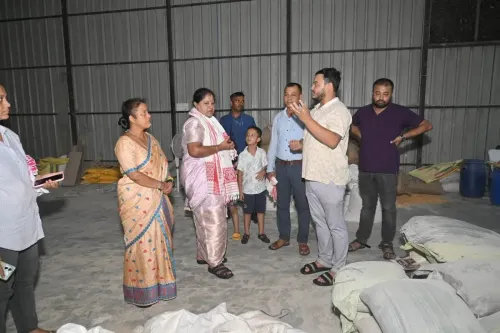
From a handful of birds to a thriving flock of 1,600 chickens — a young entrepreneur from Kokrajhar has turned a modest dream into a working business, powered by Assam Chief Minister Himanta Biswa Sarma's flagship grassroots-empowerment drive, the Chief Minister's Atmanirbhar Abhijan.
A Kokrajhar story the scheme was built for
Kokrajhar, the administrative headquarters of the Bodoland Territorial Region in western Assam, has long carried the scars of ethnic conflict and economic marginalisation. It is precisely the kind of district the Atmanirbhar Abhijan targets — areas where formal credit pipelines are thin and entrepreneurial ambition often has nowhere to go. This young poultry farmer's journey, from a small beginning to a commercially viable operation of 1,600 birds, is exactly the proof-of-concept the scheme stakes its reputation on.
What the Atmanirbhar Abhijan actually does
Launched under CM Himanta Biswa Sarma, the Chief Minister's Atmanirbhar Abhijan is designed to extend financial and institutional support directly to grassroots entrepreneurs who fall outside conventional banking safety nets. The scheme covers a range of livelihood sectors — agriculture, animal husbandry, small trade, and cottage industry — essentially betting that small-scale, locally rooted enterprise is the fastest route to durable rural employment in Assam. Poultry farming fits squarely within that vision: low land-requirement, relatively quick return cycles, and strong local demand for protein.
Why the poultry sector matters in Assam's northeast corridor
Assam and the broader Northeast India corridor have historically depended on poultry imports from states like Andhra Pradesh and West Bengal, leaving local consumers exposed to supply-chain disruptions and price volatility. A growing base of home-grown producers — even at the scale of 1,600 birds per farm — chips away at that dependence. Multiply that across dozens of beneficiaries in a single district and the aggregate impact on local food security and rural income becomes measurable. The Kokrajhar entrepreneur's farm is a small number with an outsized signal.
CM Sarma shared the story on October 1, 2026, framing it not as a government statistic but as a human arc — 'from a small beginning' to a functioning enterprise. That framing is deliberate: scheme success, in political communication, lands hardest when it has a face and a place.
The question now is whether stories like this one from Kokrajhar can be replicated at the scale Assam needs — and whether the Atmanirbhar Abhijan has the institutional bandwidth to turn individual wins into a district-wide pattern.
Point of View
Named success stories build more durable public trust in welfare schemes than statistics alone. The Bodoland Territorial Region has been a persistent political and developmental challenge for successive Assam governments, and embedding it in an economic-empowerment narrative shifts the dominant frame from conflict to aspiration. For the BJP, schemes like the Atmanirbhar Abhijan serve a dual purpose — genuine grassroots outreach and a counter-narrative to Opposition claims of governance deficit in peripheral districts. The poultry sector angle is also significant: northeast India's protein import dependency is a real structural issue, and local enterprise development here has tangible food-security implications beyond political optics.
NationPress
1 Oct 2026
Frequently Asked Questions
What is the Chief Minister's Atmanirbhar Abhijan scheme in Assam?
The Chief Minister's Atmanirbhar Abhijan is a flagship programme launched by Assam CM Himanta Biswa Sarma to provide financial and institutional support to grassroots entrepreneurs across sectors like agriculture, animal husbandry, small trade, and cottage industry, especially in underserved areas.
Who is the Kokrajhar poultry farmer mentioned by CM Himanta Sarma?
CM Himanta Biswa Sarma highlighted a young entrepreneur from Kokrajhar, Assam, who built a poultry farm with 1,600 chickens using support from the Atmanirbhar Abhijan scheme. Specific identity details were not disclosed in the post.
Where is Kokrajhar and why is it significant?
Kokrajhar is the administrative headquarters of the Bodoland Territorial Region in western Assam. It has historically faced ethnic conflict and economic marginalisation, making it a key target district for government grassroots employment schemes.
How does the Atmanirbhar Abhijan help poultry farmers in Assam?
The scheme extends credit and support to entrepreneurs — including poultry farmers — who typically lack access to formal banking channels. Poultry farming is eligible under the animal husbandry component of the programme.
What is the broader economic significance of poultry farming in Assam?
Assam and northeast India have traditionally relied on poultry imports from other states. Growing local production reduces supply-chain dependence, stabilises prices, and improves rural incomes — making schemes that back poultry entrepreneurs strategically important for the region.