Assam CM Himanta Biswa Sarma pushes 'Atmanirbhar Constituency' plan to end food import reliance
Synopsis
Assam CM Himanta Biswa Sarma has reframed the state's fight against syndicate networks as an agricultural self-sufficiency challenge — asking every MLA to turn their constituency into a local food producer. With Amul cited as the benchmark for dairy ambition, the 'Atmanirbhar Constituency' push is the most granular articulation yet of what Sarma's 'Atmanirbhar Assam' slogan means on the ground.
Key Takeaways
Assam CM Himanta Biswa Sarma on 15 July called for every Assembly constituency to become an 'Atmanirbhar Constituency' producing its own food.
Self-reliance in milk, fish, vegetables, potatoes and eggs is the stated goal, reducing imports from other states.
Sarma linked food self-sufficiency directly to dismantling the state's syndicate culture .
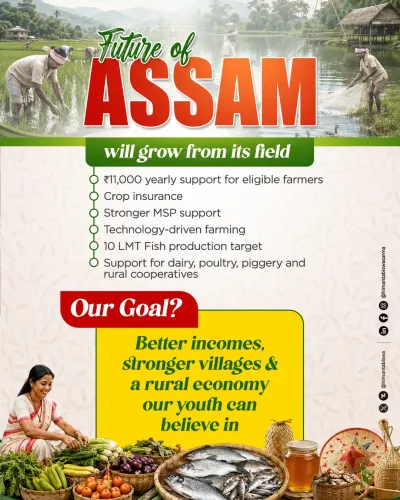
MLAs were urged to promote dairy cooperatives, fish farming, piggery and poultry under government schemes.
Amul's output of 80 lakh to 1 crore litres of milk daily was cited as the benchmark for Assam's dairy ambitions.
The Chief Minister also committed to placing a medical college in every district as part of long-term development.
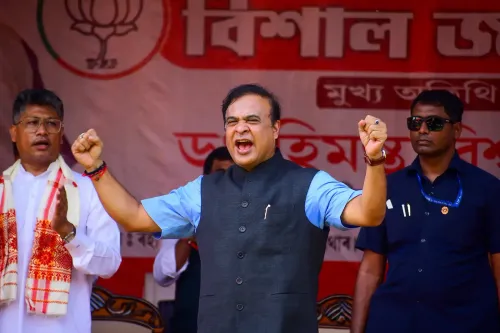
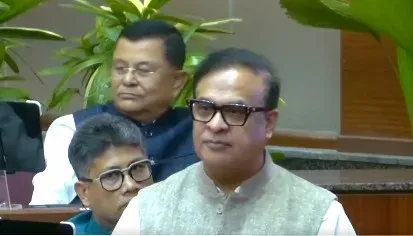
Assam Chief Minister Himanta Biswa Sarma on Wednesday, 15 July called on the state's legislators to transform their constituencies into self-sufficient economic units, urging a decisive shift away from dependence on food imports from other states. Speaking during an Assembly discussion on the state government's development agenda in Guwahati, Sarma said self-reliance in milk, fish, meat, vegetables and agricultural produce was both an economic imperative and the most effective antidote to entrenched syndicate networks.
The 'Atmanirbhar Constituency' Vision
Sarma called on every MLA to work toward making their constituency an 'Atmanirbhar Constituency' — one where essential commodities such as milk, fish, vegetables, potatoes and eggs are produced locally rather than sourced from neighbouring constituencies or outside Assam. 'We speak about Atmanirbhar Bharat and Atmanirbhar Assam. Now we must work towards creating Atmanirbhar constituencies. My constituency should not need milk, fish or vegetables from elsewhere,' he said.
Breaking the Syndicate Culture
The Chief Minister framed self-reliance explicitly as a structural solution to the state's syndicate problem. 'The answer to ending the syndicate system is self-reliance. Once Assam becomes self-reliant, there will be no need to depend on resources coming from outside the state,' Sarma said. Critics and civil society groups have long flagged syndicate networks — informal cartels controlling supply chains — as a drag on Assam's rural economy and a source of political patronage.
Dairy, Fisheries and Livestock Push
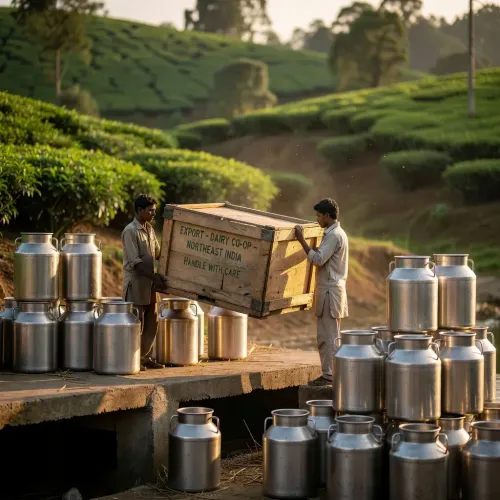
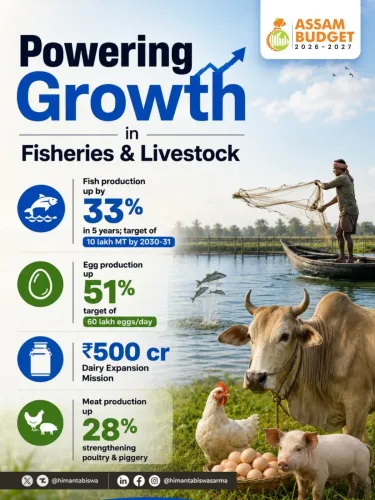
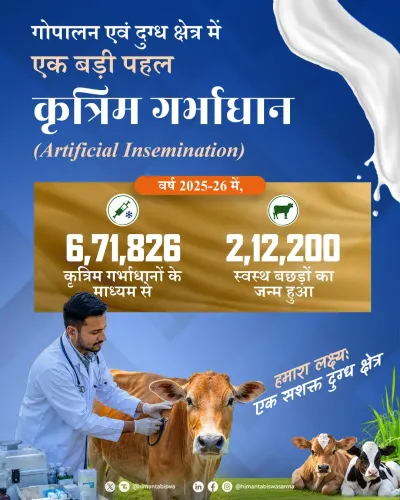
Sarma urged legislators to actively promote dairy cooperative societies, fish farming, piggery and poultry under existing government schemes, arguing these would simultaneously strengthen rural livelihoods and boost local production. Invoking dairy giant Amul as a benchmark, he set an ambitious target for the state. 'If Amul can produce between 80 lakh and over 1 crore litres of milk daily, there is no reason why Assam cannot build dozens of successful dairy cooperatives and emerge as a leading milk-producing state,' he said. Assam's current dairy output lags significantly behind national leaders, making the comparison a high bar — but one the Chief Minister described as achievable.
Land Acquisition and Public Cooperation
Sarma also urged MLAs to ensure public cooperation in implementing government projects, particularly where land acquisition is involved. He stressed that landowners must receive fair compensation and adequate participation in the development process — a signal that the government is aware of friction points that have stalled infrastructure projects in the past.
Long-Term Development Targets
The Chief Minister described the next five years as critical for Assam's growth trajectory, noting that the previous term had laid a strong foundation but that the pace of development now needed to accelerate. He reiterated the government's commitment to expanding healthcare infrastructure, stating that every district in Assam would eventually have a medical college as part of the state's long-term strategy. With assembly-level campaigns now expected to follow, the real measure of this push will be whether constituency-level production data improves in the years ahead.
Point of View
Cooperative density and veterinary services remain underdeveloped relative to the Amul benchmark Sarma invoked. The real test is whether constituency-level production dashboards, procurement guarantees and cooperative seed funding follow the speech — or whether 'Atmanirbhar Constituency' joins a long list of slogans that energised the Assembly floor but not the farm.
NationPress
14 Oct 2026
Frequently Asked Questions
What is the 'Atmanirbhar Constituency' concept proposed by Assam CM Himanta Biswa Sarma?
It is a constituency-level self-sufficiency model where each Assembly segment produces its own essential food items — milk, fish, vegetables, potatoes and eggs — rather than sourcing them from other constituencies or states. Sarma announced the concept during an Assembly session on 15 July, asking every MLA to champion the model in their area.
Why did Sarma link food self-reliance to ending the syndicate culture in Assam?
Sarma argued that syndicate networks thrive on inter-state supply dependencies, and that local production would eliminate the leverage these networks hold. 'The answer to ending the syndicate system is self-reliance,' he said, framing agricultural sufficiency as a governance reform, not just an economic one.
Which sectors did Sarma ask MLAs to focus on?
He urged legislators to promote dairy cooperative societies, fish farming, piggery and poultry under existing government schemes, alongside broader agricultural and vegetable production at the constituency level.
How did Sarma use Amul as a benchmark for Assam's dairy ambitions?
Sarma pointed out that Amul produces between 80 lakh and over 1 crore litres of milk daily and argued there was no structural reason Assam could not build dozens of comparable dairy cooperatives to become a leading milk-producing state.
What other development commitments did Sarma make in the Assembly session?
He described the next five years as critical for Assam's growth, stressed fair compensation for land acquisition in development projects, and reiterated the government's goal of establishing a medical college in every district of the state.