US visa bonds up to $20,000 cover 50 countries; India excluded, Bangladesh and Nepal on list
Synopsis
The US has put 50 countries on a visa bond list — demanding up to $20,000 in collateral before granting B1/B2 tourist and business visas. India is spared, but Bangladesh, Nepal, and Bhutan are not. With the rule now fully operative since August, it marks one of the most aggressive financial barriers the US has erected against visa overstays, and its impact on South Asian travel to America could be significant.
Key Takeaways
The US State Department has listed 50 countries whose nationals must post visa bonds of $10,000 to $20,000 for B1/B2 visas .
India is explicitly excluded from the requirement; Bangladesh , Bhutan , and Nepal are among South Asian nations covered.
Bangladesh and Nepal have been subject to the bond since 21 January ; Bhutan since 1 January .
The programme is based on DHS visa overstay data and operates under Section 221(g)(3) of the Immigration and Nationality Act .
Bonded travellers must enter and exit via commercial airports only — charter, land, and sea crossings are barred.
Paying the bond does not guarantee visa issuance; the bond is refunded only if all conditions are met.
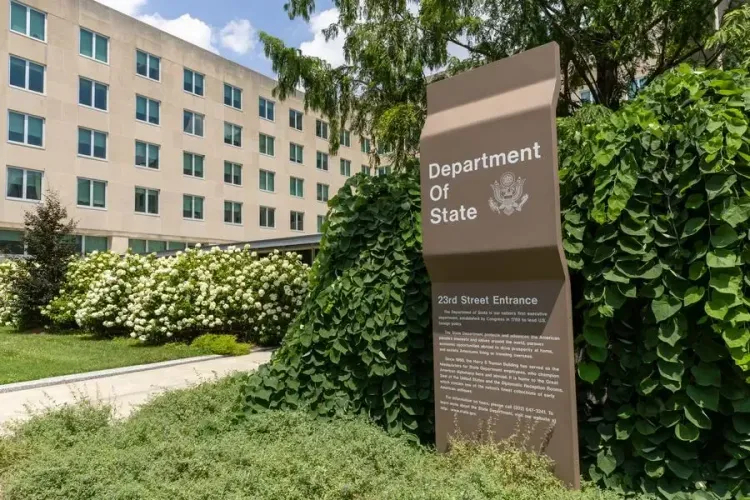
The United States has formally identified 50 countries whose nationals must post visa bonds of up to $20,000 to qualify for B1/B2 business and tourist visas, with India notably excluded from the requirement. Among the South Asian nations covered are Bangladesh, Bhutan, and Nepal, according to an updated list published by the US State Department on 3 October 2026.
How the Visa Bond Programme Works
Under the programme, an applicant travelling on a passport issued by one of the listed countries must post a bond of $10,000, $15,000, or $20,000. The exact amount is determined by a consular officer during the visa interview. The requirement operates under Section 221(g)(3) of the Immigration and Nationality Act, which authorises a consular officer to demand a bond before issuing a visa.
The current programme was established under a final rule that took effect on 3 August 2026. Countries are selected based on B1/B2 visa overstay rates contained in the Department of Homeland Security's (DHS) Entry/Exit Overstay Report — meaning the higher a nationality's rate of overstaying temporary visas, the more likely its nationals are to face this requirement.
South Asian Countries on the List
Bangladesh and Nepal have been subject to the bond requirement since 21 January, while Bhutan has been covered since 1 January, according to the State Department list. The broader list spans several countries in Africa, the Caribbean, Central Asia, and the Pacific. Indian passport holders are explicitly exempt, a significant distinction given India's status as one of the largest sources of US visa applicants.
Application Process and Payment Rules
Applicants subject to the bond must submit DHS Form I-352 and agree to the bond terms through Pay.gov, the Treasury Department's online payment platform. The State Department has cautioned applicants against making payments before receiving instructions from a consular officer: 'Applicants should submit Form I-352 to post a bond only after a consular officer directs them to do so,' the department said.
A bond can be posted by the visa applicant or a third party — including a friend, relative, or business associate. The person who posts the money receives a refund if the bond conditions are met. Critically, the State Department stressed that payment of a bond does not guarantee that a visa will be issued.
Travel Restrictions Under the Bond
Travellers who have posted a visa bond face additional restrictions on entry and exit. They must use commercial airports, including Customs and Border Protection preclearance locations, and are barred from using charter aircraft, general aviation, land crossings, or seaports. Possible violations are referred to US Citizenship and Immigration Services (USCIS) to determine whether the bond has been breached.
Broader Context and What It Means
The visa bond initiative is the Trump-era administration's sharpest tool yet to curb visa overstays — a longstanding compliance gap in US immigration enforcement. Notably, this is a departure from conventional visa denial: applicants who are otherwise eligible for a B1/B2 visa are still permitted to travel, but only after posting significant financial collateral. For countries like Bangladesh and Nepal, whose diaspora populations include significant numbers of temporary workers and visitors to the US, the financial barrier could meaningfully suppress visa applications. India's exclusion will be welcomed in New Delhi and by the large Indian-American community, particularly given the already lengthy wait times and scrutiny Indian applicants face.
Point of View
000-$20,000 bond demand. India's exemption reflects both its lower overstay rate and its outsized diplomatic and economic weight with Washington. But for Bangladesh and Nepal — countries with significant labour migration flows and fewer financial cushions — the bond creates a de facto filter that wealthy applicants can navigate and poorer ones cannot. That raises a question mainstream coverage often skips: is this a compliance tool or a class filter masquerading as one?
NationPress
3 Oct 2026
Frequently Asked Questions
Which countries are subject to the US visa bond requirement?
The US State Department has listed 50 countries whose nationals must post bonds of $10,000 to $20,000 for B1/B2 business and tourist visas. The list includes nations in South Asia (Bangladesh, Bhutan, Nepal), Africa, the Caribbean, Central Asia, and the Pacific.
Is India on the US visa bond list?
No. Indian passport holders are explicitly excluded from the visa bond requirement. India's exclusion is notable given the large volume of Indian nationals applying for US business and tourist visas each year.
How much is the US visa bond and how is it determined?
The bond amount is either $10,000, $15,000, or $20,000, set by a consular officer during the visa interview based on individual circumstances. The selection is informed by DHS overstay data for the applicant's nationality.
Does paying the visa bond guarantee a US visa?
No. The State Department has explicitly stated that payment of a bond does not guarantee visa issuance. The bond is a precondition for eligibility consideration, not a guarantee of approval.
What happens if a bonded traveller violates the terms?
Possible violations are referred to US Citizenship and Immigration Services (USCIS) for a determination on whether the bond has been breached. Bonded travellers are also restricted to commercial airport entry and exit — they cannot use charter aircraft, general aviation, land crossings, or seaports.