Uyghur pastor in Xinjiang faces church closure under China's crackdown
Synopsis
A Uyghur pastor in Xinjiang is on the verge of losing his church after Communist officials demanded a 'compliance deposit' and documentation his congregation says it cannot produce. The case is unfolding just weeks after China's sweeping Ethnic Unity Law — condemned by over 50 Uyghur civil society groups as a 'legislative instrument of forced assimilation' — came into force on 1 July 2026.
Key Takeaways
A Uyghur pastor, identified as 'Pastor A' , faces forced closure of his house church in Xinjiang after failing to meet new Communist Party administrative demands.
Authorities have demanded a 'compliance deposit' and documentation; church leaders say the requirements are impossible to fulfil.
Pastor A's son was reportedly arrested and questioned about the church and subsequently faced movement restrictions .
China's Ethnic Unity Law entered into force on 1 July 2026 , mandating 'sinicisation' of religion and entrenching Mandarin over minority languages.
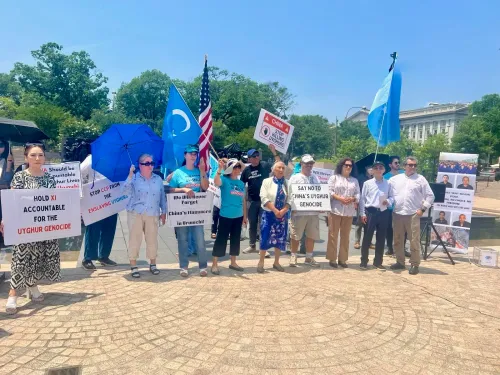
More than 50 Uyghur civil society organisations jointly condemned the law on 21 July 2026 , calling it a tool of forced assimilation.
The organisations have called on the UN , Special Rapporteurs , and CERD to monitor the law and press Beijing to repeal it.
A Uyghur pastor in China's Xinjiang region is facing the forced shutdown of his small house church after Communist Party officials intensified administrative pressure on his congregation in recent months, according to a report by International Christian Concern. The pastor, identified only as 'Pastor A' to shield his identity, leads one of the few remaining independent Christian congregations in the heavily surveilled region.
What Officials Are Demanding
Authorities have cited alleged violations tied to religious activities and have imposed new administrative requirements that church leaders say are impossible to meet. Among the demands, the congregation has been asked to pay a 'compliance deposit' and submit detailed documentation of its activities. According to International Christian Concern, church leaders fear that failure to comply will result in permanent closure.
Pastor A has also claimed that his son was arrested and questioned about the church's operations, and subsequently faced restrictions on movement — a tactic that rights groups describe as a form of indirect coercion against religious communities.
Broader Context: China's Ethnic Unity Law
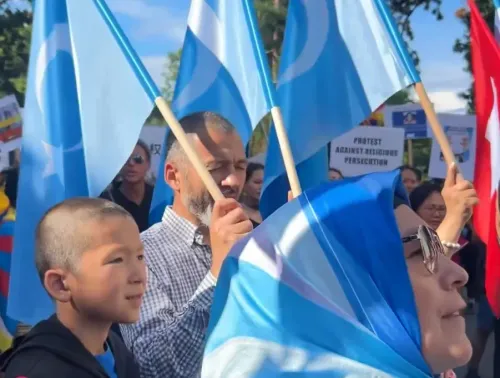
The pressure on Pastor A's church comes amid a sweeping legislative push by Beijing. On 1 July 2026, China's Law on the Promotion of Ethnic Unity and Progress — widely referred to as the Ethnic Unity Law — came into force. On 21 July 2026, more than 50 Uyghur civil society organisations jointly condemned the legislation, urging the international community to take meaningful action to repeal it.
In their joint statement, the organisations characterised the law not as a routine administrative measure but as a 'legislative instrument of forced assimilation'. They argued that the legislation explicitly conflates the Chinese nation with the Chinese Communist Party (CCP) and compels ethnic minorities to abandon distinct identities in favour of loyalty to the Party, the Han-defined 'motherland', and 'Socialism with Chinese Characteristics'.
What the Law Mandates
According to the joint statement, the law's reach is far-reaching. It entrenches Mandarin as the sole language of education, displacing Uyghur, Tibetan, and Southern Mongolian languages from classrooms and public life. It mandates the 'sinicisation' of religion, subordinating faith to Party ideology, and instructs parents and teachers to raise children in loyalty to the CCP rather than to their own culture, religion, or language.
The organisations stated: 'These are not incidental effects; they are the law's stated purpose, and they build directly on policies that have already devastated our communities — mass internment, cultural and religious destruction, and the forced separation of children from their families.'
Notably, the law also contains extraterritorial provisions: individuals and organisations outside mainland China who are deemed to 'undermine ethnic unity and progress' could be held legally responsible under Chinese law — a clause that has alarmed diaspora communities and international rights groups.
International Response and Calls for Action
The 50-plus civil society organisations have called on UN human rights experts and mechanisms — including Special Rapporteurs on freedom of religion or belief, on the situation of human rights defenders, and on minority issues — as well as the Committee on the Elimination of Racial Discrimination (CERD) and other treaty bodies to formally monitor the law's implementation and its extraterritorial application, and to press Beijing to repeal it.
Under the law's framework, the organisations warned, Uyghur, Tibetan, Mongolian, and other non-Han identities are permitted to exist only insofar as they are absorbed into a single, CCP-defined Chinese nation. Rights advocates say this is the legislative codification of a policy trajectory that has been building for over a decade in Xinjiang.
What Happens Next
Pastor A's congregation remains in limbo, awaiting a compliance determination by local authorities. Should officials declare the church non-compliant, a permanent closure order could follow. International rights groups are monitoring the case closely, and it is expected to be cited in forthcoming UN reviews of China's religious freedom record.
Point of View
Effectively enabling closure on administrative rather than overtly religious grounds. The extraterritorial clause of the law is particularly alarming: it signals Beijing's intent to extend its enforcement reach beyond its borders, which raises direct implications for diaspora advocacy and international civil society. The UN mechanisms being invoked have historically had limited leverage over China, but the coordinated condemnation by over 50 organisations on 21 July represents an unusually broad coalition — one that may carry more weight in Geneva than individual case filings have in the past.
NationPress
27 Jul 2026
Frequently Asked Questions
Who is Pastor A and why is his church facing closure in Xinjiang?
Pastor A is a Uyghur Christian pastor who leads a small house church in Xinjiang, China. His identity has been withheld to protect him from further reprisals. Communist Party officials have cited alleged regulatory violations and demanded a 'compliance deposit' plus documentation that church leaders say they cannot produce, putting the congregation at risk of permanent closure.
What is China's Ethnic Unity Law and when did it come into force?
China's Law on the Promotion of Ethnic Unity and Progress, known as the Ethnic Unity Law, came into force on 1 July 2026. More than 50 Uyghur civil society organisations have condemned it as a 'legislative instrument of forced assimilation', arguing it mandates the sinicisation of religion, displaces minority languages from education, and demands loyalty to the CCP over ethnic or religious identity.
What are the extraterritorial provisions of the Ethnic Unity Law?
The law contains clauses stipulating that individuals and organisations outside mainland China who are deemed to 'undermine ethnic unity and progress' can be held legally responsible under Chinese law. Rights groups say this is designed to silence diaspora advocacy and international civil society organisations that document abuses in Xinjiang.
Which international bodies have been called upon to act?
More than 50 Uyghur civil society organisations have called on UN Special Rapporteurs on freedom of religion or belief, on the situation of human rights defenders, and on minority issues, as well as the Committee on the Elimination of Racial Discrimination (CERD), to formally monitor the Ethnic Unity Law and press Beijing to repeal it.
What happened to Pastor A's son?
According to reports citing International Christian Concern, Pastor A's son was arrested and questioned by authorities about the church's activities. He was subsequently released but placed under movement restrictions — a form of indirect pressure that rights advocates say is commonly used to coerce religious communities in Xinjiang.