Vance casts doubt on 2028 White House run, cites family and wife Usha's reservations
Synopsis
The sitting US Vice President — widely seen as the GOP's heir apparent — has publicly said there is 'of course' a chance he won't run for president in 2028, pointing to four young children and a wife who 'has never loved politics.' It is the first crack in what many Republicans assumed was an inevitable succession plan, and it lands just weeks before midterms that Vance himself says must come first.
Key Takeaways
Vance said at a CBS News town hall in Flat Rock, Michigan on 18 October 2026 that there is 'of course' a chance he will not run for president in 2028 .
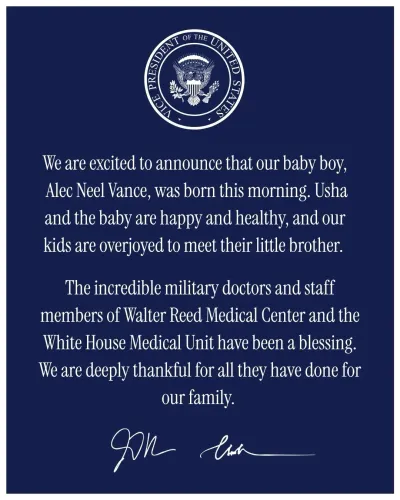
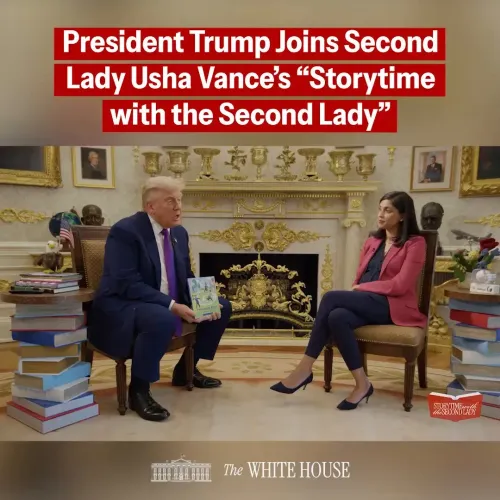
Vance cited raising four young children and his wife Usha Vance 's reservations about electoral politics as key personal factors.
He said he would not seriously consider the 2028 question until after the November midterm elections .
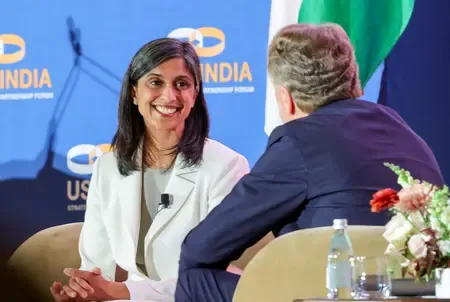
Usha Vance 's parents immigrated to the United States from South India ; her views on politics have drawn attention in India and among Indian-Americans.
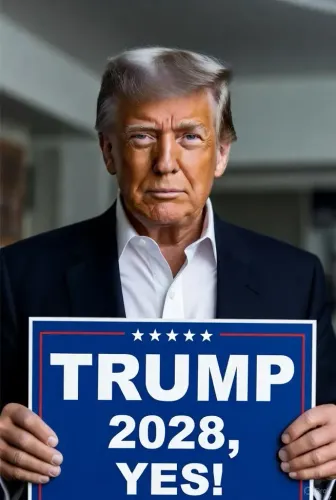
Vance remains widely viewed as the leading contender for the Republican presidential nomination given that President Trump cannot seek a third consecutive term.
Vance campaigned at the town hall for Republican Senate candidate Mike Rogers in Michigan's closely watched Senate race against Democrat Abdul El-Sayed .
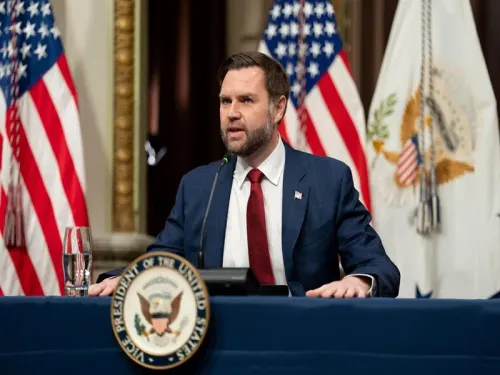
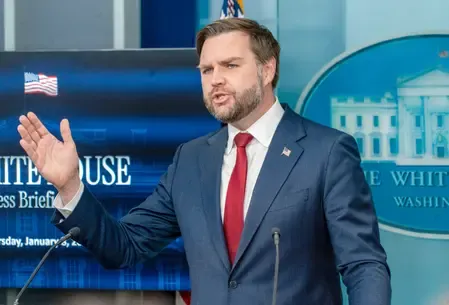
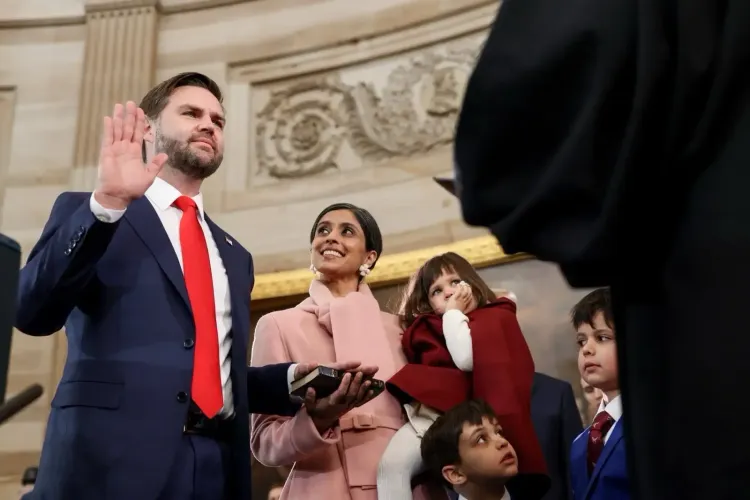
US Vice President J.D. Vance has publicly raised the possibility that he may not seek the presidency in 2028, citing the demands of raising four young children and his wife Usha Vance's ambivalence toward electoral politics — even as he remains widely regarded as the frontrunner for the Republican presidential nomination once President Donald Trump's second term concludes.
What Vance Said at the CBS Town Hall
Speaking at a CBS News town hall in Flat Rock, Michigan, Vance told moderator Tony Dokoupil that no decision had been made and that he would only weigh his presidential future after the November midterm elections. Asked directly whether there was a chance he would not run, Vance replied: 'Of course there's a chance.'
He was candid about the personal calculus involved. 'Yeah, man, we've got four little kids. My wife has never loved politics. She loves public service,' Vance said, describing himself as a self-confessed procrastinator on big life decisions. When pressed by Dokoupil on whether he and Usha were already discussing 2028, Vance pushed back: 'Real, we're really not, though. We're really not. It's, it's what, whenever it comes up, it's always, let's figure it out after the midterms.'
Why This Matters for Republican Politics
The remarks carry unusual weight because Trump is constitutionally barred from seeking a third consecutive term, creating an open succession question at the top of the Republican Party. Vance, who was elected to the US Senate from Ohio in 2022 before becoming Trump's running mate in 2024, has been widely assumed to be the natural heir apparent. His public hedging — however tentative — is the first notable signal that the path is not inevitable.
Notably, Vance resisted the framing that his vice presidency made a presidential run automatic. He acknowledged that people routinely assumed he would enter the race but said he had not yet engaged seriously with the question.
The Usha Vance Factor
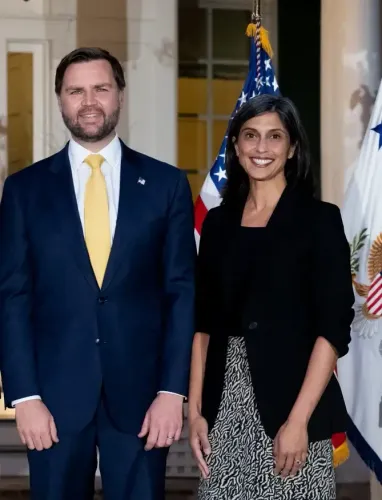
Usha Vance, whose parents immigrated to the United States from South India, has emerged as a prominent figure in American public life since her husband's election to the vice presidency. Her family's Indian roots have drawn significant attention in India and among the Indian-American community. Vance's reference to her reservations about politics — as distinct from public service — added a personal dimension rarely aired by sitting vice presidents.
Midterms First: Vance's Immediate Focus
Vance made clear that his current priority is helping Republicans retain control of Congress in the approaching midterms. He repeatedly urged Michigan voters to back Republican Senate candidate Mike Rogers against Democrat Abdul El-Sayed — one of the closely watched contests that could determine Senate control. Vance praised Rogers as a candidate of character, arguing personal integrity was essential for effective public service.
The town hall also covered the economy, immigration, the Iran war, and technology — but it was Vance's offhand remark about 2028 that dominated post-event coverage. 'But, you know, anything could happen, man. Anyway,' he said, in a line that encapsulated the studied ambiguity of his position. With the midterms weeks away and the 2028 presidential primary cycle still distant, Vance's next move remains one of the most consequential open questions in American politics.
Point of View
Yet prominent enough to manage expectations and humanise a figure who can read as ideologically sharp-edged. The 'family first' framing is a well-worn political device, but Usha Vance's Indian immigrant heritage and her publicly stated discomfort with politics adds genuine texture here. The deeper question mainstream coverage underplays is structural: with no other Republican of comparable national stature yet declared, every Vance equivocation creates a vacuum that rivals — Ron DeSantis, Glenn Youngkin, or an as-yet-unnamed figure — will move to fill. The midterms will test Vance's coattail reach; how that goes will do more to settle the 2028 question than any town hall remark.
NationPress
18 Oct 2026
Frequently Asked Questions
Has J.D. Vance ruled out running for president in 2028?
No, Vance has not ruled out a 2028 presidential run, but he has publicly acknowledged the possibility he may not enter the race. At a CBS News town hall in Michigan, he said 'of course there's a chance' he would not run, while adding that he would only consider the question after the November midterm elections.
Why is Vance uncertain about the 2028 race?
Vance cited two main personal factors: the demands of raising four young children, and his wife Usha Vance's reservations about electoral politics. He described himself as a 'procrastinator' on major life decisions and said the question of 2028 has not yet been seriously discussed at home.
Who is Usha Vance and why is her view significant?
Usha Vance is the Vice President's wife and the daughter of immigrants from South India. She has become a prominent public figure since J.D. Vance's election to the vice presidency in 2024. Her distinction between 'loving politics' and 'loving public service' — as relayed by Vance — signals a personal reservation that could weigh on his 2028 calculus.
Why does Vance's 2028 decision matter so much for the Republican Party?
President Donald Trump is constitutionally barred from seeking a third consecutive term, leaving the Republican presidential nomination wide open after 2028. As a sitting vice president and Trump's chosen running mate in 2024, Vance has been widely regarded as the natural frontrunner, making any public ambiguity about his intentions a significant signal for the party's future direction.
What is Vance focused on right now?
Vance's stated immediate priority is helping Republicans retain control of Congress in the November midterm elections. At the Michigan town hall he campaigned for Republican Senate candidate Mike Rogers, who faces Democrat Abdul El-Sayed in one of the key races that could determine Senate control.