Vance warns of tariffs on firms sending US jobs overseas or hiring legal immigrants
Synopsis
JD Vance went further than usual at a Lima, Ohio rally — explicitly warning that companies replacing American workers with legal immigrants, not just offshore moves, could face steep tariffs. With no concrete policy mechanism announced, the remarks signal the Trump administration is expanding its workforce-protection rhetoric into legally contentious territory, with major implications for US immigration and trade policy.
Key Takeaways
US Vice President JD Vance warned on 10 October 2026 that companies offshoring jobs or replacing US workers with legal immigrants could face steep tariffs.
Vance cited a $400 million Stellantis auto investment, an $850 million aerospace project, and a $2.2 billion pharmaceutical investment in Ohio as policy wins.
No specific tariff measure targeting employers of legal immigrants was announced or explained.
The remarks came at a Republican midterm rally in Lima, Ohio , backing candidates including Vivek Ramaswamy for governor and Senator Jon Husted .
Vance framed the administration's approach as reversing decades of American industrial decline.
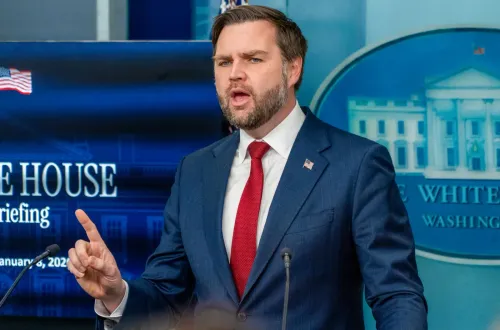
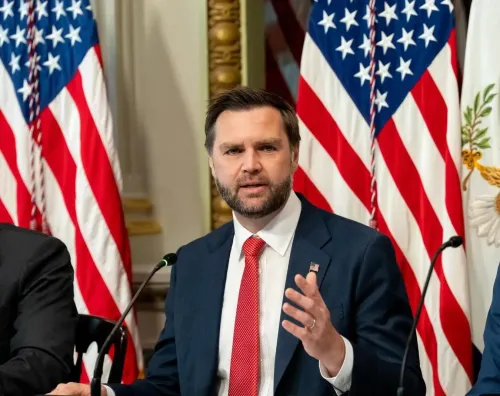
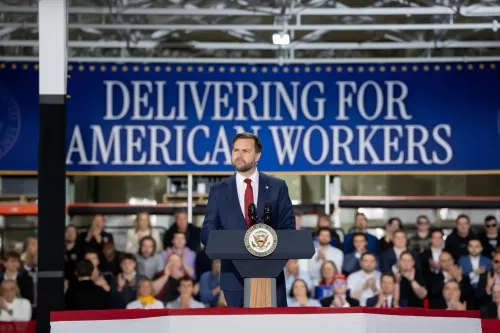
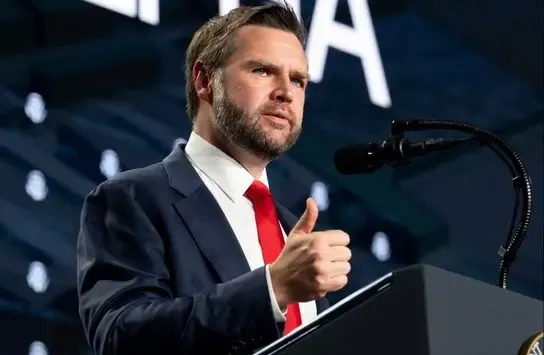
US Vice President JD Vance on 10 October 2026 warned that companies shifting American jobs overseas or replacing US workers with legal immigrants could face steep tariffs, spelling out the Trump administration's approach to protecting domestic employment at a Republican midterm election rally in Lima, Ohio. The remarks drew immediate attention for their explicit reference to legal immigrants as part of a workforce-protection argument — a notable extension of the administration's usual focus on undocumented immigration.
What Vance Said
Addressing supporters, Vance laid out a binary framework: companies that manufacture in the United States and employ American citizens would be rewarded, while those that move production or jobs abroad would face penalties.
“If you’re making things in America and you’re employing American citizens to do it, great. We’re gonna give you a big fat tax cut and we’re gonna reward you for building and expanding production,” he told the crowd.
“But if you’re sending American jobs overseas, if you’re trying to ship your factory to a foreign corporation or you’re trying to replace American workers with a legal immigrant later, you know what you’re gonna get? A big fat tariff,” he added.
The Legal-Immigrant Caveat
Vance did not identify any new tariff measure specifically targeting employers of legal immigrants, nor did he explain how such a penalty would be implemented under existing law. Despite the absence of a concrete policy mechanism, the remarks are being closely watched: they signal that the administration is prepared to frame even lawful immigration as a threat to American employment — a position that goes beyond the enforcement-focused rhetoric of prior immigration debates.
Ohio Investments Cited as Wins
The Vice President pointed to a clutch of announced investments in Ohio as evidence that the administration's economic policies had already attracted significant domestic manufacturing commitments. He cited a $400 million investment by automaker Stellantis in automobile manufacturing, an $850 million aerospace project, and a $2.2 billion pharmaceutical manufacturing investment as examples of companies expanding American operations. Vance claimed the administration's broader policies had attracted “trillions of dollars” in investment nationwide, though he did not provide a sourced figure for that claim.
Campaign Context and Key Endorsements
The Lima rally formed part of a wider midterm campaign effort supporting Republican candidates in Ohio, including Indian-American entrepreneur Vivek Ramaswamy, who is running for Ohio governor, and incumbent Senator Jon Husted. Vance also criticised the previous Biden administration over immigration and employment policies, accusing it of allowing illegal immigration to suppress wages and reduce job opportunities for American workers. Drawing on his upbringing in Middletown, Ohio, he invoked personal experience to underscore the human cost of deindustrialisation. “I know what it does to families when mom or dad loses their job,” he said.
Broader Implications
This comes amid a wider push by the Trump administration to use tariffs as a behavioural lever — not just a trade-balance tool — compelling companies to keep or expand domestic operations. Vance framed the policy as reversing “decades of industrial decline.” Critics are likely to question both the legal basis for tariffs tied to domestic hiring decisions and the practical enforceability of any measure targeting employers of legal immigrants. The administration has yet to offer legislative or executive-order detail to back up the threat.
Point of View
Ohio, with Vivek Ramaswamy on the ticket, shows the Trump coalition is actively trying to square the circle between its nativist base and its Indian-American outreach — a tension that the legal-immigrant tariff threat makes harder, not easier, to manage.
NationPress
10 Oct 2026
Frequently Asked Questions
What did JD Vance say about tariffs and legal immigrants?
Vance warned that companies replacing American workers with legal immigrants could face steep tariffs, alongside businesses that offshore jobs. He made the remarks at a Republican midterm rally in Lima, Ohio, on 10 October 2026, though he did not announce any specific new tariff measure or explain how it would be enforced.
Has the Trump administration announced any new tariff targeting employers of legal immigrants?
No. Vance did not identify a specific tariff measure or policy mechanism targeting employers of legal immigrants during his remarks. The threat remained rhetorical, with no accompanying executive order or legislative proposal.
What investments did Vance cite as evidence of his administration’s economic record?
Vance highlighted a $400 million Stellantis automobile manufacturing investment, an $850 million aerospace project, and a $2.2 billion pharmaceutical manufacturing investment, all in Ohio, as examples of domestic production expansion under the administration’s policies.
Who was Vance campaigning for at the Lima, Ohio rally?
Vance was supporting Republican candidates including Vivek Ramaswamy, an Indian-American entrepreneur running for Ohio governor, and Senator Jon Husted at the midterm election rally.
Why are Vance’s remarks about legal immigrants significant?
The explicit reference to legal immigrants — not just undocumented workers — as a potential basis for tariff penalties represents a notable escalation in the administration’s workforce-protection framing. It signals a willingness to extend trade policy instruments into domestic hiring decisions, raising both legal and political questions about enforceability and intent.