India at UN demands Pakistan end PoK human rights abuses amid revolt
Synopsis
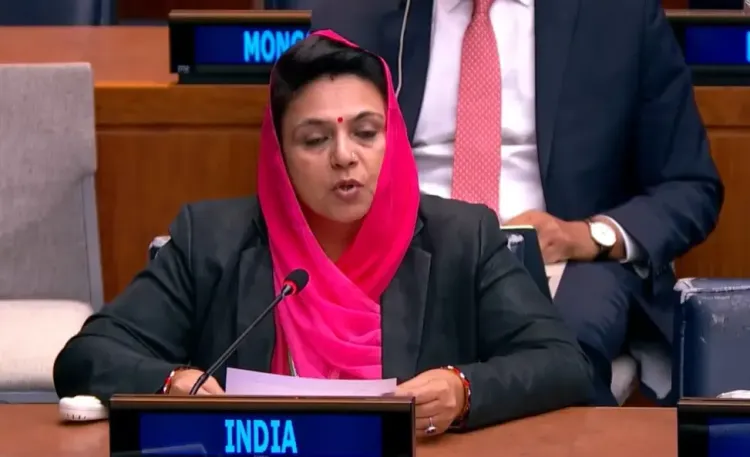
India used the UN General Assembly's Fourth Committee to turn Pakistan's Kashmir gambit back on Islamabad — pointing to over 90 civilians reportedly killed by Pakistani security forces in a live PoK uprising. BJP MP Mahima Kumari Mewar's right-of-reply statement framed the situation as an active human rights crisis and colonial occupation, a calculated escalation of India's diplomatic counter-offensive.
Key Takeaways
India's delegation at the UN General Assembly Fourth Committee on 10 October 2026 demanded Pakistan halt military human rights violations in Pakistan-occupied Kashmir (PoK) .
BJP MP Mahima Kumari Mewar said Pakistani armed forces and proxies have killed dozens of innocent civilians agitating for basic rights in recent months.
Reports indicate more than 90 people have been killed by Pakistan's security forces since protests began over alleged electoral manipulation by Islamabad.
The Jammu Kashmir Joint Awami Action Committee (JAAC) has led the broader civilian uprising, driven by anger over resource exploitation, poor living conditions, and rising prices.
Mewar reaffirmed that Jammu and Kashmir is an 'integral and inalienable part of India' and called Pakistan unfit to raise the issue internationally given its record of military rule and state-sponsored terrorism.
India also reaffirmed its commitment to global decolonisation, noting 17 non-self-governing territories remain on the committee's agenda.
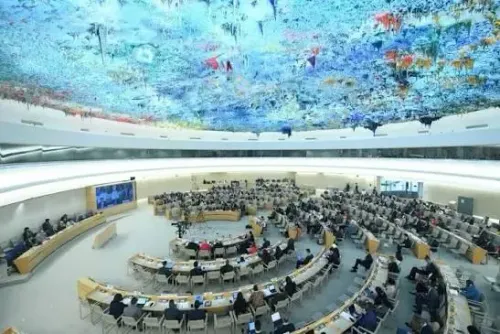
India on 10 October 2026 issued a sharp demand at the United Nations General Assembly in New York, calling on Pakistan to halt what it described as grave human rights violations by the Pakistani military in the territories it illegally occupies in Kashmir, where a widening civilian uprising has drawn international attention.
India's Statement at the Fourth Committee
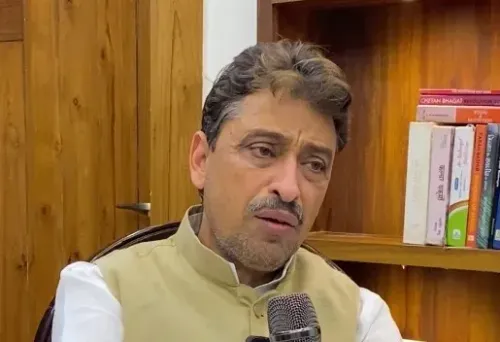
Bharatiya Janata Party (BJP) Member of Parliament Mahima Kumari Mewar, representing Rajasthan's Rajsamand constituency in the Lok Sabha and serving as part of India's delegation to the General Assembly, delivered the rebuke at the Fourth Committee — the body tasked with decolonisation matters. She exercised India's right of reply after Pakistan's Acting Permanent Representative Usman Jadoon attempted to draw the Kashmir issue into the committee's debate.
'In the last few months, the Pakistani armed forces and their proxies have killed dozens of innocent civilians who were agitating for their basic rights and freedoms and basic necessities,' Mewar said.
She went further, stating: 'We call upon Pakistan to stop the grave and ongoing human rights violations in the areas illegally occupied by it, where the population is in open revolt against Pakistan, its military occupation, repression, brutality, and illegal exploitation of resources.'
The Scale of the Unrest in Pakistan-Occupied Kashmir
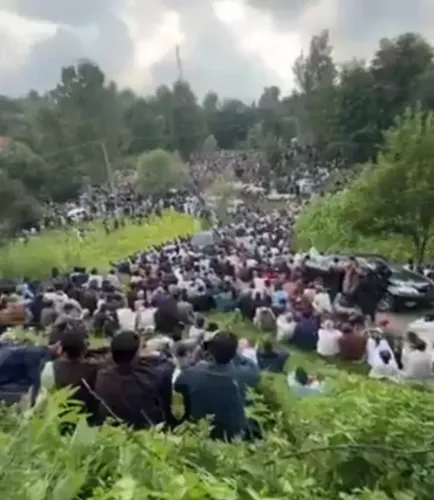
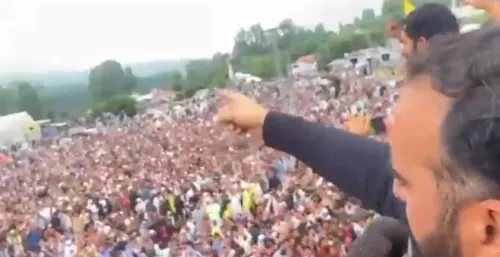
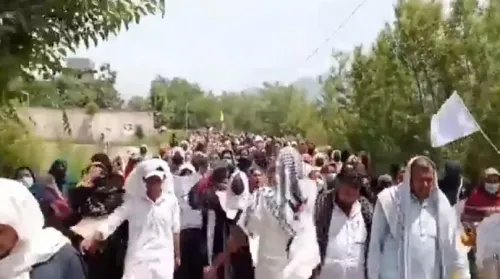
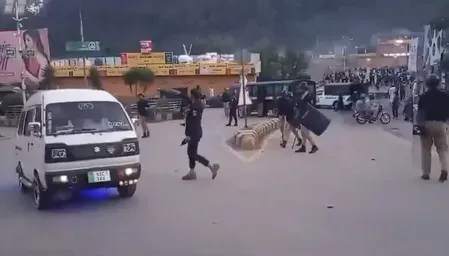
According to reports, more than 90 people have been killed by Pakistan's security forces, which reportedly put down protests that initially erupted over Islamabad's decision to send outsiders into the region to influence elections. The unrest has since broadened, fuelled by public anger over the exploitation of natural resources, deteriorating living conditions, and rising prices.
A civil society coalition, the Jammu Kashmir Joint Awami Action Committee (JAAC), has emerged as a leading organiser of the broader protest movement. The demonstrations mark one of the most sustained episodes of civilian resistance in Pakistan-occupied Kashmir (PoK) in recent memory.
India's Rebuke of Pakistan's Record
Mewar delivered a pointed rebuke of Pakistan's standing to raise the Kashmir issue internationally. 'A country like Pakistan, with an established record of military dictatorship, sham elections, incarceration of popular elected leaders, religious extremism, and sponsoring terrorism as an instrument of state policy, should, in future, refrain from preaching homilies of this sort at this platform,' she said.
She concluded India's position with an unambiguous assertion: 'Jammu and Kashmir is and always remains an integral and inalienable part of India.'
India's Broader Decolonisation Stand
In her earlier substantive statement to the committee, Mewar reaffirmed India's commitment to the global cause of decolonisation. She noted that while more than 80 countries have broken free of colonial rule, the process 'remains unfinished,' with 17 non-self-governing territories still on the Fourth Committee's agenda. Among the most contentious is the status of the Falkland Islands — also claimed as the Malvinas by Argentina — which produced heated exchanges between Britain and Argentina and its supporters during the session.
What This Signals
India's decision to use the UN decolonisation forum to spotlight conditions in PoK represents a deliberate diplomatic escalation, framing the situation not merely as a bilateral dispute but as an ongoing human rights and colonial-occupation crisis before an international audience. This comes amid a broader Indian diplomatic effort to counter Pakistan's attempts to internationalise the Kashmir question on its own terms. The next General Assembly plenary and committee sessions will be closely watched for any Pakistani response.
Point of View
Precisely on the multilateral stage Pakistan favours. The reported death toll of over 90 civilians, if independently verified, would represent a serious indictment at a body that has historically been more receptive to Pakistan's framing. What mainstream coverage underplays is the role of JAAC: a homegrown civil society coalition that has sustained the PoK protests, lending the uprising an organic credibility that is difficult for Islamabad to dismiss as Indian interference. The real test for India's diplomacy is whether it can convert this rhetorical advantage into a sustained multilateral accountability mechanism — something New Delhi has rarely followed through on at the UN.
NationPress
10 Oct 2026
Frequently Asked Questions
What did India say about Pakistan at the UN General Assembly?
India demanded at the UN General Assembly's Fourth Committee on 10 October 2026 that Pakistan stop military human rights violations in Pakistan-occupied Kashmir, where a civilian uprising is ongoing. BJP MP Mahima Kumari Mewar said Pakistani armed forces and their proxies have killed dozens of innocent civilians agitating for basic rights in recent months.
Why are people protesting in Pakistan-occupied Kashmir?
Protests in PoK reportedly began after Pakistan allegedly sent outsiders to manipulate local elections. They have since widened into a broader uprising fuelled by anger over the exploitation of natural resources, worsening living conditions, and rising prices, according to reports.
Who is the Jammu Kashmir Joint Awami Action Committee (JAAC)?
The JAAC is a civil society coalition based in Pakistan-occupied Kashmir that has led the broader civilian protest movement in the region. It has emerged as the primary organising force behind demonstrations that have reportedly resulted in the killing of more than 90 people by Pakistani security forces.
Who represented India at the UN Fourth Committee session?
BJP MP Mahima Kumari Mewar, who represents Rajasthan's Rajsamand constituency in the Lok Sabha, delivered India's statements at the Fourth Committee as part of India's delegation to the UN General Assembly.
What is the UN Fourth Committee's role in this context?
The Fourth Committee of the UN General Assembly deals with decolonisation and special political matters, overseeing 17 non-self-governing territories. India used the committee session to exercise its right of reply against Pakistan's attempt to raise the Kashmir issue in the decolonisation debate.