PoK, PoGB human rights abuses raised at UNHRC 63rd Session in Geneva
Synopsis
At the UNHRC's 63rd Session in Geneva, two separate civil society voices — UKPNP Chairman Sardar Shaukat Ali Kashmiri and activist Harleen Kour — placed damning allegations of Pakistani crackdowns in PoK and PoGB before the international community. With reports of deaths, disappearances and communications blackouts since June 2026, the push for an independent UN monitoring mechanism is gaining momentum at the world's foremost human rights forum.
Key Takeaways
The UKPNP addressed the 63rd UNHRC Session in Geneva on 29 September 2026 , raising human rights concerns in PoK and PoGB .
Sardar Shaukat Ali Kashmiri cited escalating repression since 5 June 2026 , including deaths, arbitrary arrests, enforced disappearances and communications blackouts.
He demanded Pakistan release all arbitrarily detained individuals, restore internet access and allow an independent international investigation.
Activist Harleen Kour had separately alleged extrajudicial killings, mass detentions and use of anti-terror laws against peaceful protesters at the same session the previous week.
Both speakers urged the UNHRC to establish an independent fact-finding or monitoring mechanism for the occupied territories.
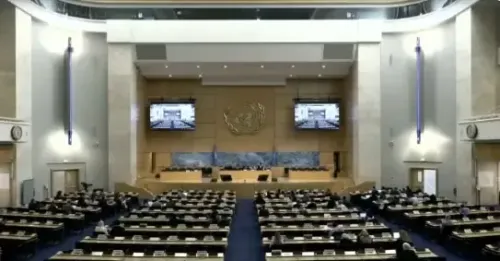
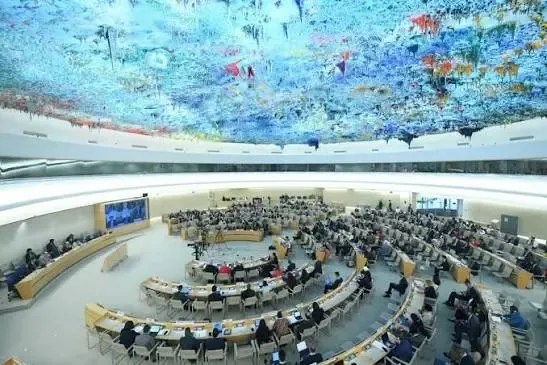
The United Kashmir People's National Party (UKPNP) placed the deteriorating human rights situation in Pakistani-occupied Kashmir (PoK) and Pakistan-occupied Gilgit-Baltistan (PoGB) before the international community at the ongoing 63rd Session of the United Nations Human Rights Council (UNHRC) in Geneva on 29 September 2026. The intervention marks a sustained effort by civil society voices to bring accountability for alleged abuses in the contested territories.
Key Allegations Raised at the UNHRC
Sardar Shaukat Ali Kashmiri, Representative of the African Development Association (ADA) and Chairman of the UKPNP, told the Council that Pakistani authorities have escalated repression in PoK since 5 June 2026. He cited reports of deaths, injuries, arbitrary arrests, enforced disappearances, restrictions on peaceful assembly, communications blackouts, and the increasing militarisation of civilian life in the occupied territory.
Kashmiri demanded an immediate, independent and impartial investigation into the alleged violations and urged the international community to press Pakistan to ensure accountability and protection for civilians. 'Peaceful dissent is not terrorism, and demanding rights is not a crime,' he told the Council.
Demands Placed Before the Council
Kashmiri called on Pakistan to immediately end the use of force against peaceful demonstrators, release all individuals reportedly held in arbitrary detention, establish the fate and whereabouts of missing persons, and restore unrestricted internet and mobile communications throughout PoK. On PoGB, he highlighted longstanding concerns regarding political representation, land ownership and the rights of local communities over natural resources. He also urged the Council to establish independent monitoring mechanisms to examine reported abuses and protect civic space in both occupied territories.
Earlier Intervention by Social Activist Harleen Kour
The UKPNP address follows a separate intervention at the same 63rd UNHRC Session the previous week, when social activist Harleen Kour delivered an oral statement on human rights violations and socio-economic deprivation in PoK. Kour said that people in the region have been on the streets for months demanding food, electricity, employment, better infrastructure and political representation.
She alleged that peaceful protests have been met with excessive force, arbitrary detentions, communication blackouts and the application of anti-terror laws against peaceful groups. 'This Council cannot remain silent while fundamental human rights are violently suppressed,' she told the session, also alleging extrajudicial killings and mass detentions.
Kour further alleged that resources extracted from the region benefit external interests while locals face acute inflation, unemployment and poor infrastructure. She urged the UNHRC to set up an independent fact-finding mission on civilian deaths, unlawful detentions and use of excessive force, and called for the immediate restoration of full communications and digital access.
Broader Context and What Comes Next
The repeated interventions at the ongoing UNHRC session reflect a coordinated push by diaspora and civil society organisations to internationalise the situation in PoK and PoGB. Notably, this is the second such address within a week at the same Geneva session, suggesting a sustained lobbying effort. Pakistan has historically denied allegations of human rights abuses in the territories it administers and has not publicly responded to these specific UNHRC interventions, according to available reports. The Council's next steps — whether it formally takes up a monitoring mechanism or fact-finding mission — will be closely watched by advocacy groups and regional observers.
Point of View
Coordinated strategy by Kashmir-focused diaspora organisations to build an international record of alleged Pakistani abuses before the Council's formal deliberations conclude. What is notable is the specificity: a date anchor of 5 June 2026 for the alleged escalation, named categories of abuse, and a concrete demand for a monitoring mechanism. Whether the UNHRC acts or files the interventions under 'noted' depends heavily on member-state politics, where Pakistan retains allies capable of blocking formal scrutiny. India, which contests Pakistan's administration of both PoK and PoGB as illegal occupation, benefits diplomatically from such interventions but has not been named as a driver — a distinction the Council's procedures require. The real test is whether these oral statements translate into a formal agenda item, which would represent a qualitative escalation in international pressure.
NationPress
29 Sept 2026
Frequently Asked Questions
What was raised at the UNHRC 63rd Session regarding PoK?
The UKPNP and social activists raised allegations of escalating human rights abuses in Pakistani-occupied Kashmir (PoK) and Pakistan-occupied Gilgit-Baltistan (PoGB) at the 63rd UNHRC Session in Geneva. Reported violations cited include deaths, arbitrary arrests, enforced disappearances, communications blackouts and the use of anti-terror laws against peaceful protesters, with the situation said to have worsened since 5 June 2026.
Who is Sardar Shaukat Ali Kashmiri and what did he demand?
Sardar Shaukat Ali Kashmiri is the Chairman of the United Kashmir People's National Party (UKPNP) and Representative of the African Development Association (ADA). He demanded that Pakistan end the use of force against peaceful demonstrators, release arbitrarily detained individuals, account for missing persons, restore internet and mobile communications, and allow an independent international investigation into reported abuses.
What did activist Harleen Kour allege at the UNHRC?
Harleen Kour alleged extrajudicial killings, mass detentions and the application of anti-terror laws against peaceful protesters in PoK. She said residents have been protesting for months over food, electricity, employment, infrastructure and political representation, and called for an independent UNHRC fact-finding mission to investigate civilian deaths and unlawful detentions.
What is the UNHRC and why does it matter in this context?
The United Nations Human Rights Council (UNHRC) is the UN's principal intergovernmental body responsible for promoting and protecting human rights globally. Interventions at its sessions place allegations formally on the international record, and a Council-mandated fact-finding mission or monitoring mechanism would represent significant international scrutiny of Pakistan's conduct in the disputed territories.
What are the concerns specific to Pakistan-occupied Gilgit-Baltistan?
In Gilgit-Baltistan (PoGB), the UKPNP highlighted longstanding concerns over political representation, land ownership disputes and the rights of local communities over natural resources. Activists allege that resources extracted from the region primarily benefit external interests while local populations face inflation, unemployment and inadequate infrastructure.