White House Outlines Five-Point Policy Agenda on Voting and Gender
Synopsis
The White House on June 24, 2026, laid out five policy priorities: mandatory voter photo ID, citizenship proof at polls, near-total mail-in ballot ban, exclusion of transgender athletes from women's sports, and a ban on gender-affirming surgery for minors — consolidating long-standing Republican positions into a single public statement.
Key Takeaways
The White House posted a five-point policy agenda on June 24, 2026 , covering both election administration and gender policy.
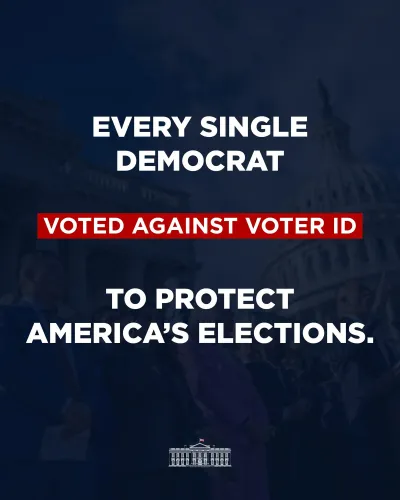
The post demands mandatory photo ID and proof of citizenship for all voters at the polls.
Mail-in ballots would be banned except for illness, disability, military service, or travel.
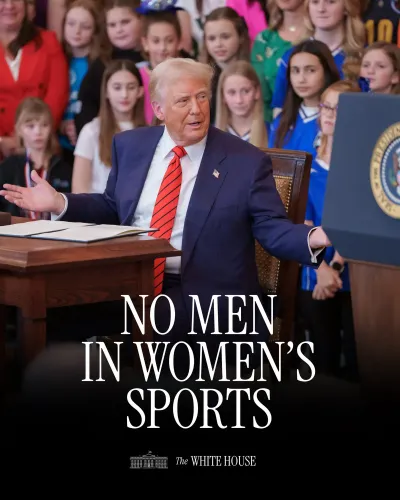
The post calls for no men in women's sports and bars what it terms 'transgender mutilization surgery' on children.
The Supreme Court upheld photo-ID voting laws in 2008 ; more than twenty states have already enacted related restrictions since 2021.
Federal legislation or executive action implementing these measures would face significant legal and legislative challenges.
The White House, the official communications account of the Executive Office of the President of the United States, posted a five-point policy agenda on Wednesday, June 24, 2026, outlining positions on voter identification, mail-in ballots, citizenship verification, transgender athletes in women's sports, and gender-affirming medical procedures for minors.
Context
The post lists five numbered demands, each framed in capital letters for emphasis. The first three concern election administration: mandatory photo identification for all voters, proof of citizenship at the polls, and a near-total ban on mail-in ballots — with exceptions carved out for illness, disability, military service, and travel. The final two concern gender policy: barring men from women's sports and prohibiting what the post calls 'transgender mutilization surgery' on children.
The language is directive rather than descriptive, suggesting these are active policy priorities of the current administration rather than legislative proposals still under deliberation.
Policy Backdrop
Voter photo-ID requirements have a long legal history in the United States. The Supreme Court upheld Indiana's photo-ID law in Crawford v. Marion County Election Board in 2008, establishing a precedent that such requirements do not inherently violate the Constitution. The Help America Vote Act of 2002 had earlier set federal baseline standards for voter identification following the disputed 2000 presidential election.
Mail-in voting expanded sharply during the 2020 election cycle as states accommodated voters during the COVID-19 pandemic. After that election, more than twenty states passed legislation tightening voter ID rules, citizenship verification requirements, and restrictions on absentee ballots. A federal citizenship-proof mandate would represent a significant escalation beyond existing state-level measures.
On gender policy, Title IX — the 1972 federal law barring sex discrimination in federally funded education programmes, including athletics — has been at the centre of debates over transgender athletes. Since 2021, more than twenty states have enacted laws restricting transgender athletes from competing in women's sports categories. Restrictions on gender-affirming medical care for minors, including surgical procedures, have similarly been enacted across multiple states and challenged in federal courts.
Stakeholders and Impact
The proposed election measures would affect eligible voters across the country, particularly those who lack government-issued photo ID or citizenship documentation — groups that advocacy organisations argue skew toward lower-income, elderly, and minority communities. Proponents argue the measures are necessary to ensure election integrity and prevent fraud.
The sports and healthcare provisions directly affect transgender minors and their families, as well as female athletes who supporters of such bans say deserve protected competitive categories. Medical and paediatric associations have publicly opposed restrictions on gender-affirming care, while conservative and parental-rights groups have backed them.
State election officials would bear the administrative burden of implementing any new federal identification or citizenship-verification mandates, which could require significant changes to existing voter registration infrastructure.
What's Next
The five-point post signals that these issues remain central to the administration's domestic agenda heading into the legislative calendar. Congressional action on federal election standards — particularly a citizenship-proof requirement — would face procedural hurdles in the Senate and near-certain legal challenges.
On the gender front, pending Supreme Court cases on Title IX enforcement and state bans on paediatric gender-affirming care are expected to shape the legal landscape. The administration's public restatement of these positions may be intended to build momentum for federal legislation or executive action that codifies them nationally, superseding the current patchwork of state laws.
Point of View
Shareable directive. By framing each point as a non-negotiable demand in capital letters, the administration signals these are political commitments rather than opening negotiating positions. The bundling of voting rules with transgender restrictions follows a pattern seen in state-level 'omnibus' culture-war legislation since 2021, designed to mobilise a broad conservative coalition simultaneously. Whether Congress can translate these priorities into federal law remains the central test, given the Senate's procedural dynamics and a federal judiciary that has split on related cases.
NationPress
23 Sept 2026
Frequently Asked Questions
What did the White House post about voting rules on June 24 2026?
The White House listed three voting demands: mandatory photo ID for all voters, proof of citizenship at the polls, and a near-total ban on mail-in ballots with exceptions for illness, disability, military service, and travel.
Is proof of citizenship required to vote in the United States?
As of existing federal law, proof of citizenship is not universally required to vote; the White House post advocates making it mandatory, which would require new federal legislation and would face legal challenges.
What is the White House's position on transgender athletes in women's sports?
The White House post states 'no men in women's sports,' reflecting the administration's support for restricting transgender athletes from competing in female sports categories, a position already enacted in law in more than twenty US states.
What does the White House mean by 'transgender mutilization surgery on children'?
The post uses this phrase to refer to gender-affirming surgical procedures performed on minors, calling for a federal ban; the term is contested — medical bodies use the term 'gender-affirming care' and generally oppose legislative restrictions on such treatment.
Can the White House ban mail-in voting without Congress?
A nationwide ban on mail-in voting would require an act of Congress, as election administration is primarily governed by federal statute and state law; an executive order alone could not override existing statutory mail-in ballot rights.