White House Backs Alaska, Invoking Trump's Energy Legacy
Synopsis
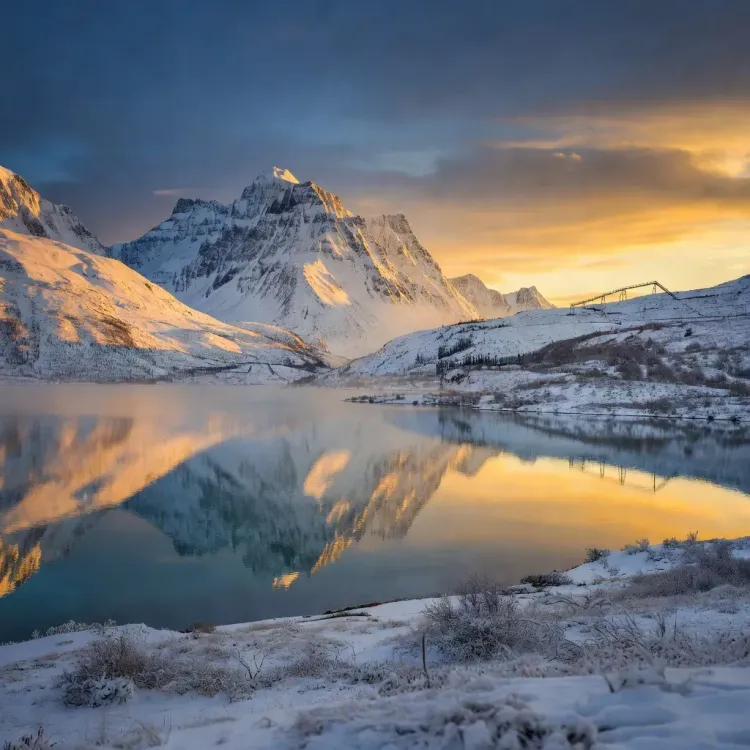
The White House on October 14, 2026 reaffirmed President Trump's commitment to Alaska — nicknamed 'The Last Frontier' — in a post echoing his administration's long-standing push for energy development and Arctic strategic interests, most visibly anchored by the 2017 ANWR leasing provision.
Key Takeaways
The White House posted on October 14, 2026 declaring President Trump will 'always fight' for Alaska .
Alaska, nicknamed 'The Last Frontier,' holds some of the US's largest untapped oil, gas, and mineral reserves.
The 2017 Tax Cuts and Jobs Act opened the Arctic National Wildlife Refuge (ANWR) to oil and gas leasing under Trump's first term.
Presidential statements on Alaska historically precede or accompany federal leasing, pipeline, or Arctic defense decisions.
The energy sector and Alaskan residents will watch for follow-up executive or Interior Department actions on resource development.
Alaska — the Last Frontier — has always sat at the intersection of American ambition and political will, and on Wednesday, October 14, 2026, the White House made clear that calculus has not changed. The official White House account posted a pointed declaration of federal loyalty to the state, pairing the words 'President Trump will always fight for the great state of Alaska' with the American flag and a linked image.
What 'The Last Frontier' Has Come to Mean in Washington
Alaska's famous nickname is not merely geography — it is a political shorthand. The state holds some of the world's largest untapped oil and gas reserves, a strategically irreplaceable Arctic coastline, and vast mineral wealth that successive Republican administrations have cast as a national economic asset waiting to be unlocked.
The clearest legislative marker of that agenda came during Trump's first term: the 2017 Tax Cuts and Jobs Act included a provision opening the Arctic National Wildlife Refuge (ANWR) to oil and gas leasing — a goal that Alaskan Republicans had pursued for decades and that environmental groups had blocked through federal courts and shifting administration priorities.
A Pattern Deeper Than One Post
Presidential affirmations of support for Alaska rarely land in a vacuum. Historically they have preceded — or followed — consequential federal actions: Interior Department leasing decisions, pipeline approvals, Arctic defense posture reviews, or infrastructure funding allocations. The White House post offers no specific policy detail, but it arrives in a broader context where federal land-use policy, energy independence rhetoric, and Arctic geopolitics all converge on this single state.
Alaska accounts for a disproportionate share of US domestic oil production and sits astride sea lanes that grow more commercially and militarily significant with each passing year as Arctic ice recedes. For an administration that has consistently framed energy extraction as both economic and strategic, Alaska is the argument made tangible.
What Alaskans — and the Energy Sector — Will Watch For
Beyond the rhetoric, the signal that will matter most to Alaskan residents and the energy industry is what follows in policy terms — any executive orders from the Interior Department on new leasing rounds, pipeline right-of-way decisions, or Arctic military infrastructure. A declaration of loyalty is the opening note; the policy sequencing is the full score.
For now, the White House has planted a flag — figuratively and, with the emoji, literally — on one of the most resource-rich and strategically vital stretches of American soil.
Point of View
Not merely a regional issue. The absence of specific policy detail is itself a choice: the statement functions as a political commitment that can be cashed in through administrative action — leasing rounds, pipeline approvals, Arctic military investment — at a time of the administration's choosing. For observers tracking US energy and Arctic strategy, the question is not whether this rhetoric will translate into policy, but how quickly.
NationPress
14 Oct 2026
Frequently Asked Questions
Why does Trump keep talking about Alaska?
Alaska is central to Republican energy and Arctic strategy. The state holds vast oil, gas, and mineral reserves, and Trump's administration has consistently prioritised opening federal Alaskan lands to resource development, most notably by including ANWR leasing in the 2017 tax law.
What is the Arctic National Wildlife Refuge and why does it matter?
The Arctic National Wildlife Refuge (ANWR) is a federally protected area in northeastern Alaska believed to sit atop significant oil and gas deposits. The 2017 Tax Cuts and Jobs Act opened it to leasing for the first time, fulfilling a decades-long Republican priority.
What does 'The Last Frontier' mean for Alaska?
'The Last Frontier' is Alaska's official state nickname, reflecting its vast, largely undeveloped wilderness. In political discourse it has become shorthand for debates over federal land use, resource extraction, and the balance between economic development and environmental protection.
What policy actions could follow the White House's Alaska statement?
Based on historical patterns, presidential affirmations of support for Alaska often precede Interior Department leasing decisions, pipeline approvals, or Arctic defence posture reviews. Analysts will watch for executive orders or agency actions in the months following such statements.
How important is Alaska to US energy production?
Alaska accounts for a significant share of US domestic oil production and hosts infrastructure including the Trans-Alaska Pipeline System . Its Arctic coastline is also growing in strategic importance as sea lanes open up with changing ice conditions.