White House Promotes 'Fastest Growing Non-AI App' for Children
Synopsis
The White House promoted what it called the 'fastest growing non-AI app' on 29 May 2026, sharing download links and urging parents to use it to set their children up for success — signalling the administration's stance on AI versus non-AI tools in early learning.
Key Takeaways
The White House officially promoted an app on 29 May 2026 via its X account, describing it as 'THE FASTEST GROWING NON-AI APP.' The post was directed at parents , with the message to 'set your children up for success.' Two separate download links were shared, suggesting availability on multiple platforms.
The explicit 'non-AI' label reflects growing federal sensitivity around AI tools in children's education.
No formal endorsement language or app name appeared in the post text; the White House did not specify vetting criteria.
Child data privacy advocates are expected to scrutinise any follow-up administration guidance on endorsed edtech tools.
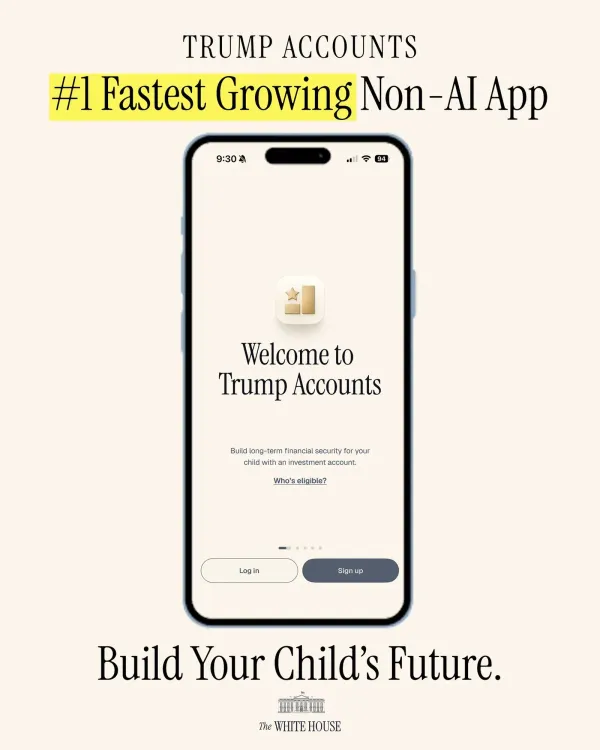
The White House, the official communications account of the Executive Office of the President of the United States, on Friday, 29 May 2026, took to X to promote what it described as 'THE FASTEST GROWING NON-AI APP', urging parents to download it to 'set your children up for success.'
Context
The post, shared with a rocket emoji and direct download links, positions the application explicitly as a non-AI tool — a distinction that has become increasingly significant in federal education policy conversations. The White House did not name the app in the post text itself, but directed followers to two separate download links accompanied by an image.
The framing — 'set your children up for success' — signals a clear alignment with early learning and family engagement priorities that have been a recurring theme across executive branch communications on education technology.
Policy Backdrop
Federal agencies and the Executive Office have periodically amplified educational technology resources as part of broader digital access and early learning initiatives. The explicit 'non-AI' label in the post reflects a live policy tension: as artificial intelligence tools proliferate in classrooms, regulators and parents alike have raised questions about age-appropriateness, data privacy, and pedagogical value.
Legislation and executive guidance around children's data privacy — including frameworks governing how apps may collect and use data from minors — have shaped the edtech landscape significantly. By highlighting a non-AI credential, the White House appears to be signalling comfort with the app's compliance posture, though no formal endorsement language was used in the post.
Stakeholders and Impact
The primary audience for this communication is American parents and caregivers of school-age children. A White House amplification — even an informal social-media post — carries institutional weight and can drive substantial download volumes for a consumer app.
For the broader edtech sector, the post is notable: being publicly promoted by the Executive Office's official channel, and specifically labelled the 'fastest growing non-AI app', is a significant market signal. Rival AI-powered learning platforms may face renewed scrutiny from parents sensitised to the non-AI framing.
Child advocacy groups and digital-rights organisations are likely to watch any follow-up communications closely, particularly regarding data privacy safeguards for the app's young user base.
What's Next
The White House's foray into direct app promotion raises questions about whether further administration statements on edtech integration, vetting criteria for endorsed tools, or updated data-privacy rules for children's applications are forthcoming. If the post is part of a coordinated education-technology push, formal policy announcements or interagency guidance could follow.
Parents and educators in India and globally who follow the White House's digital channels may also explore the app, given the reach of U.S. executive communications on international platforms. The broader pattern of governments using social media to steer families toward approved learning tools is one that education ministries worldwide are watching closely.
Point of View
The administration is implicitly drawing a line between acceptable and suspect classroom technology, ahead of any formal regulatory framework. For Indian policymakers and edtech investors watching U.S. federal cues, this post is a bellwether: governments are beginning to use their social reach as a soft-endorsement mechanism, with consequences for market dynamics and parental choice. The absence of transparency around vetting criteria, however, leaves the move open to criticism from digital-rights advocates.
NationPress
14 Oct 2026
Frequently Asked Questions
What app did the White House promote on 29 May 2026?
The White House did not name the app in its post; it described it only as 'THE FASTEST GROWING NON-AI APP' and shared two download links for parents to access it.
Why did the White House call it a 'non-AI' app?
The 'non-AI' label reflects ongoing federal policy debates about the appropriateness of artificial intelligence tools for children, signalling the administration's preference for non-AI edtech in early learning.
Is the White House app endorsement official government policy?
The post used informal social-media language and did not include formal endorsement language; it represents a communication from the Executive Office's official channel but not a codified policy directive.
What are the data privacy concerns around apps promoted for children by the government?
Child advocacy and digital-rights groups typically scrutinise government-promoted children's apps for compliance with laws governing data collection from minors, and experts expect similar scrutiny here.
How does the White House edtech post affect Indian parents or students?
While the post targets American families, U.S. executive communications reach a global audience; Indian parents and educators may explore the app, and Indian policymakers often monitor U.S. federal edtech cues when shaping domestic digital-learning policy.