Melania Trump Urges Young Americans to Lead in Tech
Synopsis
First Lady Melania Trump, in a message shared by The White House on June 9, 2026, called on young Americans to pursue their dreams and safeguard US dominance in global technology — echoing a long-standing national-security and economic priority across administrations.
Key Takeaways
Melania Trump urged young Americans to 'build boldly' and protect America's leading position in global technology in a June 9, 2026 message.
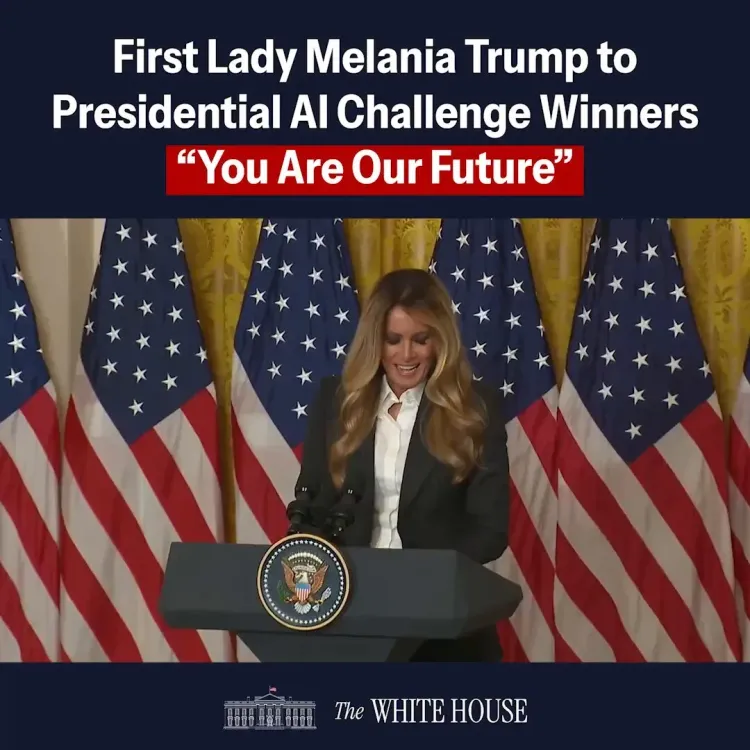
The White House shared the quote on X alongside a video, suggesting it was part of a formal public address.
The message aligns with a 2019 executive order directing federal agencies to prioritise AI research, workforce development, and international standards-setting.
Successive US administrations have treated technological supremacy — across semiconductors, AI, and quantum computing — as a core national-security objective.
Melania Trump's Be Best initiative, launched during her 2017–2021 tenure, previously addressed child well-being and online safety, areas closely linked to the digital economy.
Future White House actions on technology workforce programmes and related Congressional legislation will be closely watched.
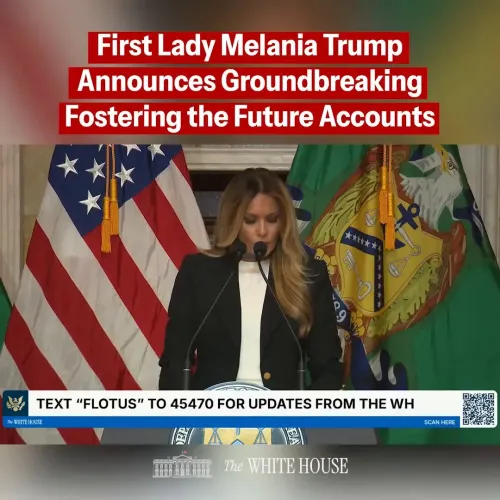
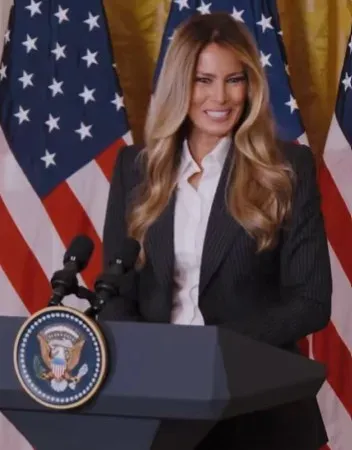
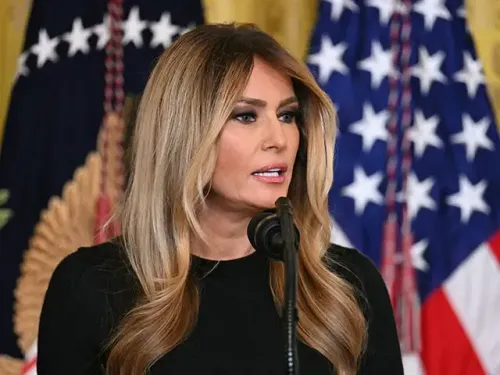
First Lady Melania Trump on Tuesday, June 9, 2026, called on young Americans to pursue their ambitions boldly and help secure the United States' dominant position in global technology, in a message shared by The White House on X.
Context
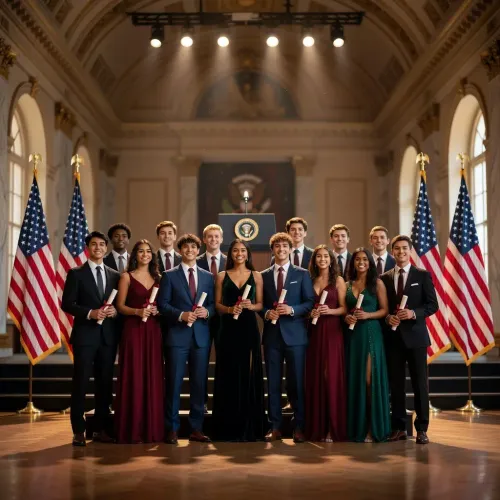
In the post, Melania Trump was quoted as saying: 'Use this chapter of your life to sail away with your dreams. To continue to build boldly and importantly, to safeguard America's leading position in the world of technology.' The message, directed at young Americans, frames technological ambition as both a personal opportunity and a national responsibility.
The White House shared the quote alongside a video, signalling that the remarks were part of a formal address or public engagement, though the precise occasion has not been independently confirmed.
Policy Backdrop
The call to 'safeguard America's leading position' in technology echoes a policy posture that successive administrations have maintained as a core national-security and economic priority. In 2019, an executive order directed federal agencies to prioritise research and development, workforce development, and international standards-setting in artificial intelligence.
Broader efforts across administrations have included export controls on advanced semiconductors, increased federal research funding, and public-private partnerships designed to reduce dependence on foreign technology supply chains. Messaging aimed at students and early-career professionals is a consistent feature of these longer-term strategies to expand the domestic STEM talent base.
Melania Trump is also known for her Be Best initiative, launched during her earlier tenure as First Lady from 2017 to 2021, which focused on child well-being and online safety — areas that intersect with the broader digital and technology agenda.
Stakeholders and Impact
The message is aimed most directly at young Americans — students, graduates, and early-career professionals — who are seen as the foundation of the country's future technological workforce. The tech industry, which has long advocated for stronger domestic talent pipelines, stands to benefit from sustained political messaging that frames careers in technology as patriotic as well as professionally rewarding.
For India, which supplies a significant share of technology talent to the United States through student and skilled-worker visa pathways, any policy shift that accelerates domestic STEM investment in the US carries implications for bilateral labour mobility and the broader Indian-American professional community.
What's Next
Observers will watch for follow-up White House statements or executive actions tied to technology workforce programmes, as well as any related legislation advancing through Congress. Whether this message precedes a formal policy announcement — such as a new initiative on STEM education or technology competitiveness — remains to be seen. The framing of technological leadership as a generational mission suggests the White House intends to keep this theme prominent in its public communications.
Point of View
Apolitical audience that may be less receptive to hard-edged policy rhetoric. It fits a broader pattern in which First Ladies are deployed to humanise and broaden the reach of administration priorities. The explicit framing of technology as something to be 'safeguarded' rather than merely developed signals a defensive, competitive posture — consistent with ongoing US-China rivalry in semiconductors and AI. For India, which is deeply embedded in the US technology ecosystem, this kind of messaging is worth tracking as a precursor to potential workforce and immigration policy shifts.
NationPress
15 Sept 2026
Frequently Asked Questions
What did Melania Trump say about technology in June 2026?
Melania Trump said: 'Use this chapter of your life to sail away with your dreams. To continue to build boldly and importantly, to safeguard America's leading position in the world of technology.' The quote was shared by The White House on June 9, 2026 .
What is Melania Trump's Be Best initiative?
Be Best was an initiative launched by Melania Trump during her first tenure as First Lady from 2017 to 2021 , focused on child well-being, online safety, and combating opioid abuse — areas that intersect with the digital and technology agenda.
Why is the US focused on maintaining technology leadership?
The United States has treated technological supremacy as a core national-security and economic objective across administrations, particularly in AI, semiconductors, and quantum computing , amid intensifying global competition, especially with China.
What was the 2019 executive order on AI?
The 2019 Executive Order on Maintaining American Leadership in Artificial Intelligence directed federal agencies to prioritise R&D, workforce development, and international standards-setting in AI to keep the US ahead in the global technology race.
How does Melania Trump's technology message affect India?
India supplies a significant share of technology talent to the United States through student and skilled-worker visa pathways. Increased US domestic investment in STEM talent, driven by political messaging like this, could influence bilateral labour mobility and opportunities for Indian-American technology professionals.