White House Signals US-Philippines Alliance Solidarity
Synopsis
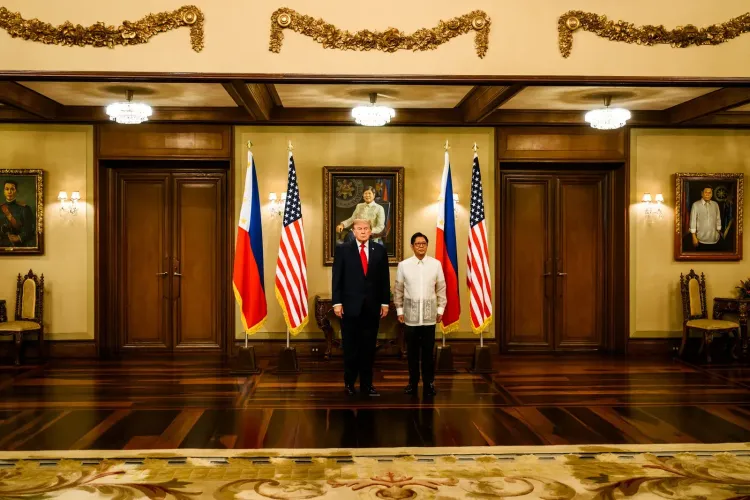
The White House signalled solidarity with the Philippines on November 18, 2026, with a flag-handshake post echoing the 1951 Mutual Defense Treaty and the 2014 EDCA — cornerstones of US Indo-Pacific strategy amid persistent South China Sea tensions.
Key Takeaways
The White House posted a US-Philippines flag-handshake symbol on November 18, 2026 , signalling bilateral alliance solidarity.
The 1951 US-Philippines Mutual Defense Treaty is the legal foundation of the alliance, obligating mutual defence against armed attack in the Pacific.
The 2014 Enhanced Defense Cooperation Agreement (EDCA) expanded US rotational military presence and joint exercises across Philippine sites.
The Philippines is a critical node in US Indo-Pacific strategy , positioned adjacent to contested South China Sea waters.
Analysts watch for follow-on announcements on EDCA site implementation, joint exercises, or high-level bilateral meetings after such White House signals.
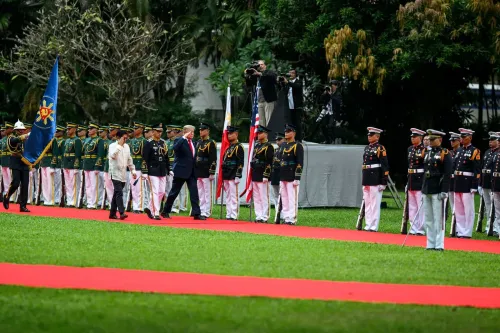
The White House posted a flag-handshake emoji pairing the United States and the Philippines on Wednesday, November 18, 2026, a crisp diplomatic signal reaffirming one of Washington's most consequential treaty alliances in the Indo-Pacific.
Two flags, one handshake emoji — it is a minimal post, but in the grammar of official White House communications, that combination carries deliberate weight. The US-Philippines alliance is treaty-bound, legally anchored in the 1951 Mutual Defense Treaty, and has only grown in strategic density over the past decade.
A Treaty Alliance Deepened by the 2014 EDCA
The modern architecture of the relationship rests on two pillars. The 1951 Mutual Defense Treaty obligates both nations to respond to armed attacks on either party in the Pacific. The 2014 Enhanced Defense Cooperation Agreement (EDCA) then layered operational muscle onto that legal foundation, authorising US rotational military presence and expanded joint exercises across agreed Philippine sites. That combination — a defence treaty plus a rotational-access agreement — makes the Philippines one of the most strategically positioned US partners in Southeast Asia, sitting astride the South China Sea and the critical sea lanes connecting the Pacific and Indian Oceans.Why the South China Sea Makes This Alliance Indispensable
Successive US administrations, regardless of party, have treated the Philippines as a cornerstone of their Indo-Pacific strategy. The reason is geography: the Philippine archipelago lies directly adjacent to contested waters where tensions over maritime boundaries, artificial island construction, and freedom-of-navigation have remained persistently high. For Manila, the alliance offers a security guarantee and diplomatic backing. For Washington, the Philippines provides forward basing options and a democratic partner willing to anchor a rules-based regional order. The mutual dependency makes this relationship durable across political cycles on both sides. Watch for follow-on announcements — EDCA implementation updates, new joint-exercise schedules, or a high-level bilateral meeting — that often accompany these brief but pointed White House signals.Point of View
High-visibility alliance signalling — a tool Washington deploys to reassure partners and remind rivals of treaty commitments without committing to a specific action. For the Philippines, such public affirmations carry real diplomatic currency, particularly in periods of South China Sea friction. The post also fits a broader pattern in which successive US administrations treat the Indo-Pacific alliance network as a structural counterweight to Chinese maritime assertiveness. The critical question for analysts is whether this signal presages a concrete deliverable — an EDCA site activation, a joint patrol announcement, or a bilateral summit — or remains in the register of routine diplomatic maintenance.
NationPress
18 Nov 2026
Frequently Asked Questions
What is the US-Philippines Mutual Defense Treaty?
The US-Philippines Mutual Defense Treaty , signed in 1951 , is a bilateral security pact obligating both nations to respond to armed attacks on either party in the Pacific. It remains the legal cornerstone of the alliance.
What is the Enhanced Defense Cooperation Agreement (EDCA)?
The EDCA , signed in 2014 , is an agreement that expanded US rotational military presence and joint exercises in the Philippines, building operational depth on top of the 1951 treaty framework.
Why is the Philippines important to US Indo-Pacific strategy?
The Philippines sits adjacent to the South China Sea and vital Pacific-Indian Ocean sea lanes, giving the US forward positioning and a democratic treaty ally at a strategically critical chokepoint.
What does the White House US-Philippines handshake post mean?
The post is an official diplomatic signal reaffirming the enduring US-Philippines alliance. Such gestures from the White House account typically accompany or precede substantive bilateral engagements.
What should we watch after the White House Philippines post?
Analysts recommend watching for EDCA site implementation updates , new joint-exercise announcements, or a high-level bilateral meeting that often follow these kinds of White House alliance-solidarity signals.