White House Holds Cabinet Meeting at Camp David
Synopsis
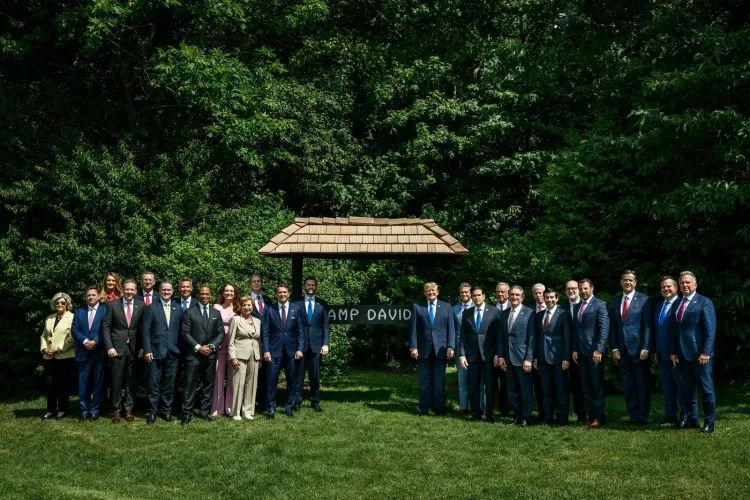
The White House held a Cabinet meeting at Camp David on August 1, 2026, describing it as historic. The retreat follows a long presidential tradition of using the Maryland facility for high-level strategy sessions away from Washington.
Key Takeaways
The White House convened a Cabinet meeting at Camp David on August 1, 2026 .
Camp David, located in Catoctin Mountain Park, Maryland , has been a presidential retreat since the 1940s .
The administration described the gathering as 'historic' and its Cabinet as 'the most successful, transformational.' US presidents have historically used Camp David retreats to project internal cohesion and align on policy priorities.
No specific agenda, outcomes, or policy announcements have been confirmed from the meeting.
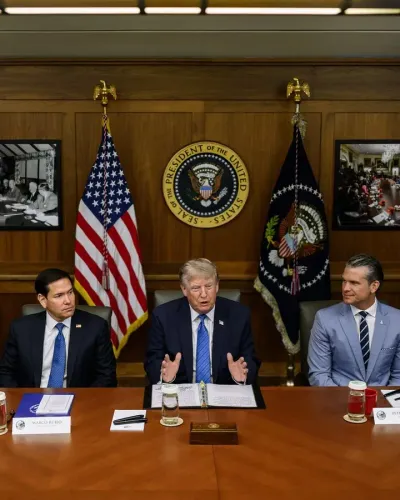
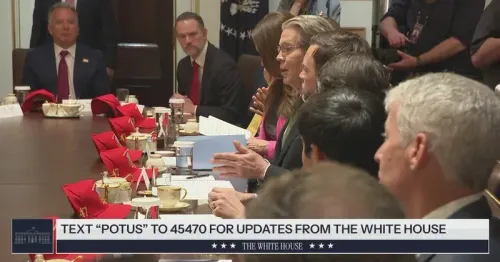
A Cabinet meeting at Camp David — the storied presidential retreat tucked into Maryland's Catoctin Mountain Park — signals that the administration is taking its inner-circle strategy session out of the West Wing and into the mountains. The White House called it 'a historic Cabinet meeting with the most successful, transformational Cabinet,' posting on Saturday, August 1, 2026.
Camp David as a Stage for Presidential Cohesion
Camp David has served as a presidential retreat since the 1940s, hosting everything from wartime strategy sessions to landmark diplomatic summits. When a president convenes the full Cabinet there rather than in the Situation Room or the Cabinet Room, the choice of venue is itself a message — one of gravity, focus, and deliberate distance from the daily churn of Washington. US administrations have periodically used the retreat to project internal unity and reset priorities.The Pattern Behind the Framing
The White House's characterisation of its own Cabinet as 'the most successful, transformational' follows a well-worn playbook: executive offices routinely use official social media to frame recurring or routine gatherings in superlative terms. What matters more than the language is what follows — whether the retreat produces joint policy statements, new executive actions, or personnel shifts. Those downstream signals will tell the fuller story of what was actually decided in the mountains. For now, the administration has drawn the curtain on a meeting it is clearly proud to show off. The kicker is what emerges from behind it.Point of View
But the venue lends it a ceremonial weight that a routine Cabinet Room session would not. Historically, such retreats have preceded major policy pivots or personnel reshuffles, making the absence of any announced outcome the most important detail to track. Indian observers watching US governance closely will note that the administration is investing in a cohesion narrative heading into what is likely a politically charged policy calendar.
NationPress
15 Sept 2026
Frequently Asked Questions
What is Camp David and why is it significant?
Camp David is the official presidential retreat located in Catoctin Mountain Park, Maryland. It has been used since the 1940s for high-level strategy sessions, diplomatic summits, and Cabinet meetings, lending any gathering there a sense of historic gravity.
Why did the White House hold a Cabinet meeting at Camp David?
The White House described it as a 'historic' gathering of its 'most transformational Cabinet,' using the retreat to project internal unity and strategic focus outside the daily environment of Washington DC.
What was decided at the Camp David Cabinet meeting?
No specific agenda items, policy decisions, or outcomes have been officially announced following the August 1, 2026 meeting.
How often do US presidents hold Cabinet meetings at Camp David?
Full Cabinet retreats at Camp David are periodic but not routine — they are typically used to signal a reset of priorities or project cohesion, and are less common than standard West Wing Cabinet sessions.
What should we watch for after this Camp David Cabinet meeting?
Key signals to follow include any joint policy statements, new executive orders, or personnel announcements that emerge in the days after the retreat, which would indicate what was actually decided.