White House Touts Trump's Press Access as 'Unprecedented'

Synopsis
The White House amplified a Breitbart News argument on September 24, 2026, claiming Trump offers 'unprecedented' press access surpassing all prior presidents — a self-assessment that fits the administration's long-running strategy of framing its communications record as a political asset.
Key Takeaways
The White House official X account posted 'TRUMP THE TRANSPARENT' on September 24, 2026 , amplifying a Breitbart News claim about press access.
The quoted passage argues Trump's access to his administration's work and policy opinions 'far surpasses' that granted by other presidents.
The parenthetical 'whether or not they choose to cover it' signals continued administration frustration with mainstream media coverage choices.
Trump's direct-to-public communications strategy via social media dates to 2017 and has been a consistent feature across his terms in office.
Critics distinguish between high volume of access — off-the-cuff remarks, social posts — and substantive depth of access, including document disclosure and structured briefings.
The White House's use of a friendly outlet's framing as institutional evidence reflects a long-established pattern in its media engagement strategy.
The White House is pushing back — loudly — against narratives of an opaque administration. On Thursday, September 24, 2026, the official White House account on X amplified a claim that President Donald Trump has offered the press a level of direct access to his administration's work and policy thinking that surpasses any of his predecessors.
The post, captioned 'TRUMP THE TRANSPARENT,' quoted a piece from Breitbart News arguing that 'the unprecedented access to his admin's work and his policy and political opinions Trump has offered to the press — whether or not they choose to cover it — far surpasses access granted by other presidents.' The parenthetical dig — 'whether or not they choose to cover it' — signals the administration's long-running frustration with what it regards as selective reporting by mainstream outlets.
A Communications Strategy Built on Selective Openness
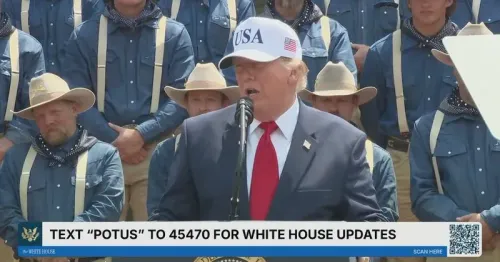
This is not a new posture for the Trump White House. Since 2017, the administration has made a signature of direct-to-public communication — using social media platforms to bypass traditional press gatekeepers and announce policy in real time. Frequent unscripted interactions with reporters on the White House lawn, extended press gaggles, and direct social media posts on consequential matters became defining features of Trump's communications style across terms.
The strategy, however, has always carried a sharp edge: access has tended to flow more freely toward outlets aligned with the administration's worldview, while relations with the broader press pool have oscillated between tense and openly adversarial. The Breitbart quote amplified here fits neatly into that pattern — a friendly outlet's framing, promoted by the official executive account as institutional fact.
The 'Transparency' Framing and Its Critics
The White House's self-assessment of 'unprecedented' transparency is a contested one. Presidential communications scholars and press freedom advocates have long drawn a distinction between volume of access — frequent off-the-cuff remarks, social media activity — and depth of access, which includes structured briefings, document disclosure, and consistent press secretary availability. Whether the Trump model satisfies both dimensions remains a live debate among media observers.
What is clear is that the administration continues to frame its own communications record as a political asset, positioning any critical coverage not as journalism but as a choice not to report what is freely available. That framing, repeated across years and platforms, has become as central to the Trump brand as any specific policy.
The question now is whether that argument — however familiar — is landing with the audiences that matter most heading into the next news cycle. If the White House keeps amplifying it, it clearly believes the answer is yes.
Point of View
Consistent since 2017, reflects a deliberate effort to shift the terms of the press-access debate from institutional norms to raw volume of engagement. For Indian observers tracking US soft power and media relations, the episode underscores how executive communications in Washington have become inseparable from political brand management — a model that has influenced political communication strategies globally.
NationPress
24 Sept 2026
Frequently Asked Questions
What did the White House post about Trump and press access?
The White House posted 'TRUMP THE TRANSPARENT' on September 24, 2026, quoting a Breitbart News argument that Trump has offered the press 'unprecedented' access to his administration's work and policy opinions, surpassing all prior presidents.
What is Breitbart News and why did the White House quote it?
Breitbart News is a conservative media organisation that has consistently covered and supported Trump administration messaging. The White House quoting it fits a pattern of amplifying allied outlets' framing as evidence of its own communications record.
Has Trump always given the press this kind of access?
Since 2017, the Trump White House has used frequent unscripted interactions, social media posts, and direct policy announcements as its communications model. However, access has historically flowed more freely toward outlets aligned with the administration.
What is the difference between press access volume and press access depth?
Volume refers to the frequency of interactions — remarks, social media posts, gaggles — while depth refers to substantive access such as document disclosure, structured briefings, and consistent press secretary availability. Critics argue the Trump model excels at volume but is less consistent on depth.
Why does the White House keep making the 'transparency' argument?
The administration has consistently framed its communications record as a political asset, positioning critical coverage as a media choice rather than a reflection of limited access. Repeating this argument reinforces the Trump brand narrative with its core audience.