White House Hosts GCC at UNGA in New York for Middle East Talks
Synopsis
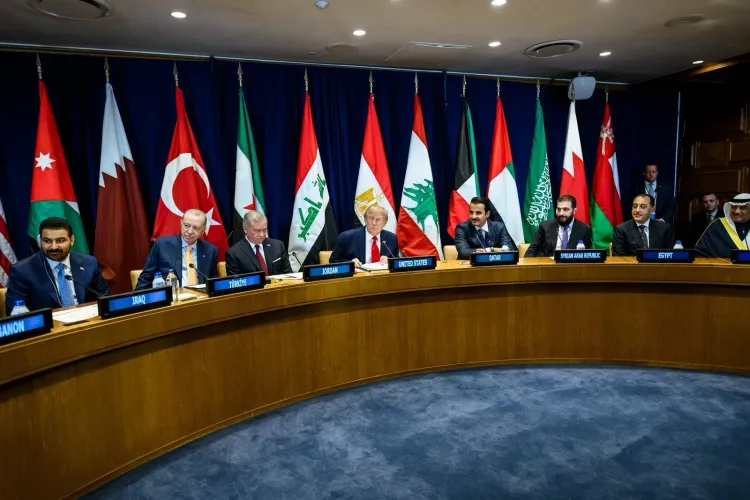
The White House met with the Gulf Cooperation Council in New York City on September 22, 2026, on the sidelines of UNGA, framing the engagement as part of ongoing efforts to advance a safer and more prosperous Middle East. The GCC groups Bahrain, Kuwait, Oman, Qatar, Saudi Arabia and the UAE.
Key Takeaways
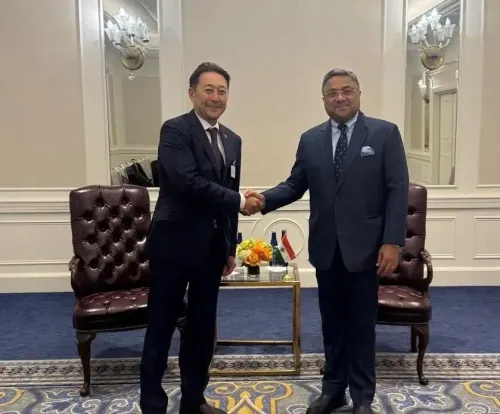
The White House convened a meeting with the Gulf Cooperation Council in New York City on September 22, 2026 .
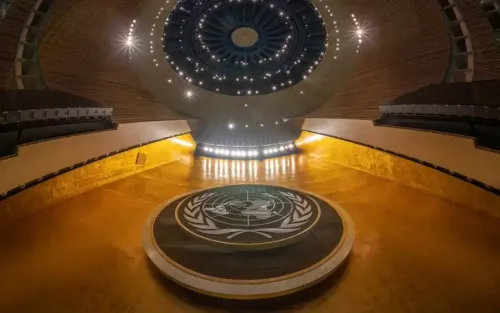
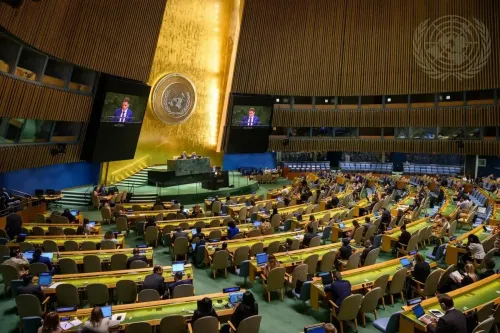
The meeting took place on the sidelines of the annual UN General Assembly , a traditional venue for high-level US-GCC consultations.
The GCC , founded in 1981 , comprises Bahrain, Kuwait, Oman, Qatar, Saudi Arabia and the United Arab Emirates .
The White House framed the engagement around advancing 'a safer, more prosperous Middle East.' US administrations have held strategic dialogues with GCC partners since the 1980s , covering security, energy and counterterrorism.
Specific agenda items and outcomes of the September 2026 session have not been confirmed.
On the sidelines of the United Nations General Assembly in New York City, the White House signalled a fresh push for regional stability as it convened a meeting with the Gulf Cooperation Council on Tuesday, September 22, 2026 — a high-stakes diplomatic huddle framed around building 'a safer, more prosperous Middle East.'
Why New York, Why Now
Every September, the UN General Assembly transforms New York City into the world's most crowded diplomatic calendar. Heads of state and foreign ministers converge on Turtle Bay, and the margins of UNGA become as consequential as the plenary floor itself. The GCC-US meeting is a textbook example: a regional grouping using the world's most visible multilateral moment to press its agenda directly with Washington.
The Gulf Cooperation Council, founded in 1981, brings together Bahrain, Kuwait, Oman, Qatar, Saudi Arabia and the United Arab Emirates — six Gulf monarchies that collectively sit atop some of the world's most critical energy reserves and sea lanes. Their alignment with the United States on security architecture has been a cornerstone of American Middle East policy for over four decades.
A Decades-Long Strategic Rhythm
US administrations have used the UNGA window for GCC consultations since the 1980s, typically to synchronise positions on counterterrorism, energy cooperation, and the twin pressure points of Iran and Yemen. The pattern is deliberate: multilateral settings lower the diplomatic temperature while allowing bilateral grievances to be aired quietly in the corridors.
The White House's framing — 'advancing efforts' — signals continuity rather than crisis, a calibrated message that Washington and its Gulf partners are moving in the same direction on regional stability. What specific agenda items or joint commitments emerged from the September 2026 session has not been confirmed.
What the Gulf Watches Closely
For the GCC states, every US engagement carries a subtext: how firmly does Washington anchor its security commitments in the Gulf? Questions around Iran's regional posture, the status of Yemen's conflict, and the pace of broader Middle East normalisation efforts all feed into what Gulf foreign ministers bring to a table with American counterparts. The stakes are rarely abstract — they are measured in defence agreements, energy flows, and the stability of governments that sit on the world's most strategic waterway.
Subsequent joint statements or follow-on consultations emerging from this UNGA session will signal how much ground the two sides actually covered — and what they have agreed to do next.
Point of View
Measured enough to avoid escalatory optics. For the GCC states, the meeting is a public affirmation that US security commitments in the Gulf remain active, even as broader regional dynamics — Iran's posture, Yemen's conflict, normalisation diplomacy — continue to evolve. The framing of 'prosperity' alongside 'safety' also hints at an economic dimension, likely touching on energy cooperation and investment flows that underpin the US-Gulf relationship beyond pure security.
NationPress
23 Sept 2026
Frequently Asked Questions
What is the Gulf Cooperation Council?
The Gulf Cooperation Council (GCC) is a regional intergovernmental organisation founded in 1981, comprising Bahrain, Kuwait, Oman, Qatar, Saudi Arabia and the United Arab Emirates, established to foster economic, security and political coordination among Gulf states.
Why did the White House meet the GCC in New York?
The meeting took place on the sidelines of the UN General Assembly in New York City in September 2026, a traditional venue where US officials hold strategic consultations with regional groupings including the GCC.
What is the US relationship with the GCC?
The United States has maintained strategic dialogues and security partnerships with GCC member states since the 1980s, covering counterterrorism, energy cooperation, and regional stability efforts related to Iran and Yemen.
What was the agenda of the White House GCC meeting in September 2026?
The White House framed the meeting around advancing a safer and more prosperous Middle East, but specific agenda items and outcomes from the September 2026 session have not been officially confirmed.
When does the UN General Assembly take place?
The UN General Assembly's high-level general debate typically takes place each September at UN headquarters in New York City, drawing world leaders and serving as a hub for bilateral and multilateral diplomatic meetings.