White House calls India 'dynamic, resilient economy' after 7.8% GDP growth
Synopsis
At the G20 finance ministers' summit in Asheville, the White House didn't just praise India's 7.8% GDP growth — it framed the bilateral trade deal as moving from handshake to hard detail. With technical teams now working through tariff schedules, the India-US economic partnership is entering its most consequential phase yet.
Key Takeaways
The White House described India as a 'dynamic, strong, and resilient economy' on 31 August , citing 7.8% GDP growth .
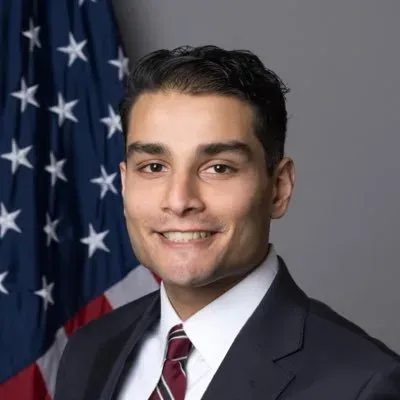
Kush Desai , White House Senior Deputy Press Secretary, made the remarks at the G20 finance ministers' meeting in Asheville, North Carolina .
The Trump administration is working to encourage American companies to invest in India and vice versa.
The proposed India-US trade agreement has moved from leader-level consensus to detailed technical negotiations, including Harmonised Tariff Schedule (HTS) discussions.
US Treasury Secretary Scott Bessent was expected to engage on the India-US economic relationship at the summit.
Restoring global economic growth as the 'north star of the G20' was flagged as a central theme of the Asheville meeting.
The White House on Monday, 31 August described India as a dynamic, strong, and resilient economy, following official data showing the country's gross domestic product (GDP) grew by 7.8 per cent. The remarks came on the sidelines of the G20 finance ministers' meeting in Asheville, North Carolina, and signal the Trump administration's continued emphasis on deepening economic ties with New Delhi.
What the White House Said
Kush Desai, White House Senior Deputy Press Secretary, said the GDP figures reinforced the administration's view of India as a fast-growing economic power. 'India's a very dynamic and very strong and resilient economy,' Desai said in an interview on the sidelines of the Asheville summit.
Desai called India's economic trajectory 'a very exciting story' for the US government and the American business community, adding that India's size and rapid expansion offered 'a lot of opportunities' for American and global industries.
Bilateral Trade and Investment in Focus
The White House official said the Trump administration was actively working to encourage American companies to invest in India while simultaneously seeking greater Indian investment in the United States. 'The president and administration are very keen to grow and develop that bilateral trade and economic relationship,' Desai said.
Desai also highlighted the personal dimension of the relationship, noting that President Donald Trump places high importance on ties with India and has frequently spoken of his personal friendship with Prime Minister Narendra Modi. 'The American Indo-Indian relationship is of very high importance to him,' Desai said.
India-US Trade Deal: From Leaders to Technical Teams
On the proposed India-US trade agreement, Desai indicated that negotiations have moved beyond the political level and are now in detailed technical discussions. 'There's obviously broad agreement at the leader-to-leader level,' he said, adding that it is now up to technical teams to resolve finer details, including classification issues under the Harmonised Tariff Schedule (HTS) — the US system for classifying imported goods and determining applicable customs duties.
'We're very optimistic about that,' Desai said, noting that Trump 'wants a strong partnership, both economic and political' with India.
G20 Agenda: Restoring Growth as the 'North Star'
Desai said the Asheville meeting would place economic growth at the centre of the G20 agenda. 'A big topic of discussion is going to be restoring economic growth as the north star of the G20,' he said, adding that discussions would examine steps to 'turbocharge global economic growth' and raise wages and living standards worldwide.
US Treasury Secretary Scott Bessent and other finance ministers attending the summit were also expected to discuss the India-US economic relationship. Desai said Bessent and his international counterparts remained in regular communication ahead of the formal sessions.
Context: India-US Economic Relationship
India and the United States have built a broad economic relationship spanning trade, investment, energy, manufacturing, and emerging technologies. The two countries also engage through the G20 and other multilateral forums on financial stability and global development. The White House's remarks at Asheville suggest that momentum on the bilateral trade deal is building, even as the technical groundwork remains in progress. How quickly the two sides can resolve tariff classification and other technical disputes will likely determine whether a formal agreement takes shape in the months ahead.
Point of View
And Desai's optimism, while genuine in tone, papers over the complexity of aligning two very different tariff regimes. India's negotiators will need to hold firm on sensitive sectors while the US side manages domestic industry lobbying. The personal Modi-Trump dynamic is real, but trade deals are ultimately won or lost in the fine print.
NationPress
16 Oct 2026
Frequently Asked Questions
Why did the White House praise India's economy at the G20 meeting?
The White House praised India's economy after official data showed GDP growth of 7.8 per cent, which the Trump administration said reinforced its view of India as a rapidly growing economic power. The remarks were made by Senior Deputy Press Secretary Kush Desai on the sidelines of the G20 finance ministers' meeting in Asheville, North Carolina.
What is the current status of the India-US trade deal?
The proposed India-US trade agreement has moved beyond political-level agreement and is now in detailed technical negotiations. The two sides are working through specifics such as Harmonised Tariff Schedule (HTS) classifications, which determine how imported goods are categorised and taxed.
What is the Harmonised Tariff Schedule and why does it matter for the India-US deal?
The Harmonised Tariff Schedule (HTS) is the system the United States uses to classify imported goods and determine applicable customs duties. Resolving HTS classifications is a key technical step in finalising any bilateral trade agreement, as it directly affects which products face tariffs and at what rates.
Who is Kush Desai and what did he say about India?
Kush Desai is the White House Senior Deputy Press Secretary. He described India as 'a very dynamic and very strong and resilient economy' and called its growth trajectory 'a very exciting story' for the US government and American businesses, while also noting President Trump's personal friendship with Prime Minister Narendra Modi.
What was the main theme of the G20 finance ministers' meeting in Asheville?
According to Desai, restoring economic growth as the 'north star of the G20' was a central theme of the Asheville meeting. Discussions were expected to focus on steps to accelerate global economic growth and raise wages and living standards worldwide.