White House Launches $6B+ Science Push Under Trump
Synopsis
The Trump White House announced more than $6 billion in science initiatives on October 8, 2026 — spanning federal agencies, industry, academia, and philanthropy — calling it the largest science push in decades and declaring a 'New Golden Age of Science.'
Key Takeaways
The White House announced over $6 billion in science initiatives on October 8, 2026 .
The package spans four pillars: government agencies, private industry, academic institutions, and philanthropy .
The Trump administration called it 'the biggest set of science initiatives in decades.' The announcement carries geopolitical significance, signalling US intent to contest global technological leadership through major investment.
Indian institutions engaged in US-India science collaborations — including under the iCET framework — could see expanded grant and research opportunities.
Specific agency allocations and programme details were not disclosed in the initial announcement; budget specifics are expected to follow.
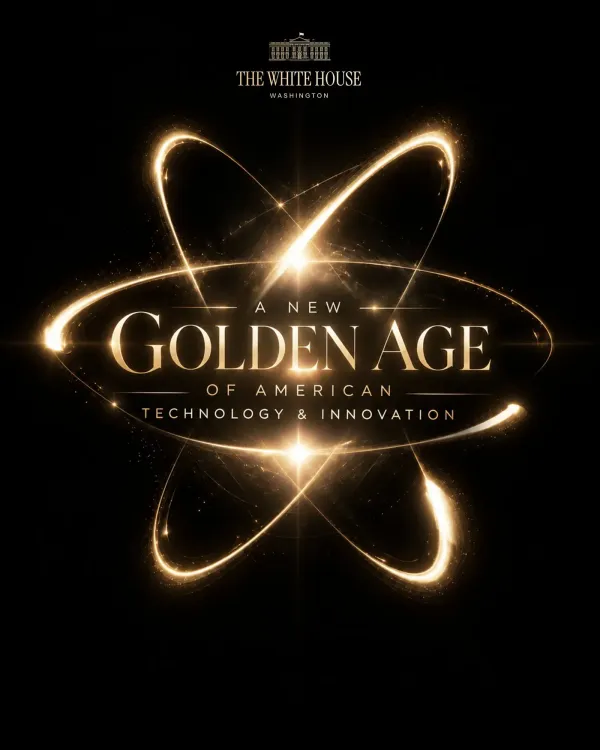
A single rocket emoji and a nine-figure number: The White House on Thursday, October 8, 2026, declared the arrival of what it calls a 'New Golden Age of Science,' announcing the largest coordinated package of science initiatives the United States government says it has assembled in decades — more than $6 billion flowing across government agencies, private industry, academic institutions, and philanthropic organisations.
What the $6 Billion Science Blitz Covers
The Trump administration framed the announcement as a sweeping, cross-sector mobilisation. The package spans federal government investment, industry partnerships, university research funding, and philanthropic commitments — a four-pillar structure designed to signal that scientific ambition is back at the centre of American statecraft. The White House described it as 'the biggest set of science initiatives in decades,' a framing that positions the effort as a generational reset rather than routine budget allocation.
The breadth of the coalition — from federal agencies to philanthropy — suggests an effort to crowd in private capital alongside public dollars, a model that has gained traction in advanced manufacturing and space policy. No single agency or initiative was named in the announcement; the White House presented the $6 billion-plus figure as an aggregate commitment across the full ecosystem.
Why This Lands as a Big-Stakes Signal
For rival capitals — and for science and technology ministries in countries like India, China, and across Europe — a headline number of this scale from Washington DC carries geopolitical weight. Science funding at this volume, positioned explicitly as a 'golden age' pivot, is as much a message to strategic competitors as it is a domestic research agenda. It signals that the administration intends to contest technological leadership through investment, not just regulation or trade policy.
For Indian researchers, startups, and institutions that collaborate with American universities and federal labs — from NASA joint programmes to NSF-funded academic exchanges — a surge in US science spending typically expands the pool of collaborative grants, joint research calls, and bilateral innovation frameworks available under the iCET (Initiative on Critical and Emerging Technologies) partnership and similar mechanisms.
The Political Architecture of the Announcement
Branding a science package as a 'golden age' is a deliberate rhetorical move, one that echoes the post-Sputnik surge of the late 1950s and the Apollo-era ambition of the 1960s. The Trump White House is consciously reaching for that register — urgency, national pride, civilisational stakes. Whether the downstream allocation matches the headline figure, and which agencies and research domains receive the largest tranches, will be the test that scientists and budget-watchers will demand in the weeks ahead.
The announcement carries the weight of a policy directional, not yet a signed appropriations bill. But as a signal of executive intent — and as a mobilising frame for industry and academia — the October 8 declaration sets a high bar that the administration has now publicly committed to meeting.
Point of View
Brussels, and New Delhi that Washington intends to compete for technological supremacy through investment at scale. The cross-sector structure, pulling in philanthropy and industry alongside federal dollars, mirrors the approach used in the CHIPS Act ecosystem and suggests the administration is trying to replicate that model for broader science. For India, the announcement matters both as a signal of a powerful partner's ambition and as a potential expansion of collaborative research capital under existing bilateral frameworks. The real test will be whether the headline figure survives the appropriations process and translates into sustained, multi-year programme commitments.
NationPress
9 Oct 2026
Frequently Asked Questions
How much money did the Trump administration announce for science in 2026?
The Trump administration announced more than $6 billion in science initiatives on October 8, 2026 , spread across government, industry, academia, and philanthropy.
What is the White House 'New Golden Age of Science' initiative?
It is a broad science investment package announced by the White House in October 2026, described as the largest coordinated set of science initiatives the US has launched in decades, designed to advance American scientific leadership across multiple sectors.
Does the US science funding announcement affect India?
Yes, indirectly. Indian researchers and institutions engaged in US collaborations — including under the iCET bilateral framework — could benefit from an expanded pool of joint research grants and innovation partnerships as US science spending increases.
Which agencies or programmes are funded under the Trump science initiative?
The White House announced the aggregate figure of over $6 billion but did not specify individual agency allocations in the initial announcement; detailed programme breakdowns are expected to follow.
Why is the US science funding announcement geopolitically significant?
A commitment of this scale signals US intent to contest technological leadership against rivals such as China. It positions science investment as a strategic instrument of national power, not merely a domestic research priority.