White House Claims Massive Drop in US Drug Overdose Deaths
Synopsis
The White House credited border security, counter-cartel operations, and law-and-order policies for a claimed massive decline in US drug overdose deaths from their Biden-era peak, reigniting debate over supply-side versus treatment-focused approaches to the opioid crisis.
Key Takeaways
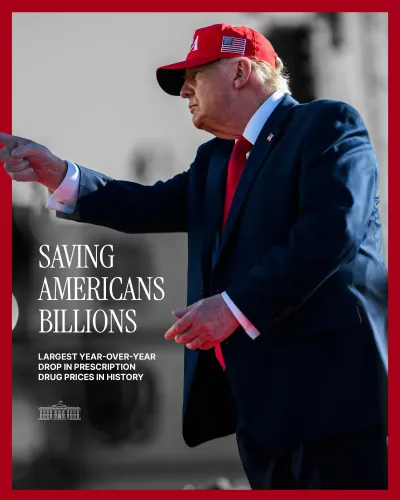
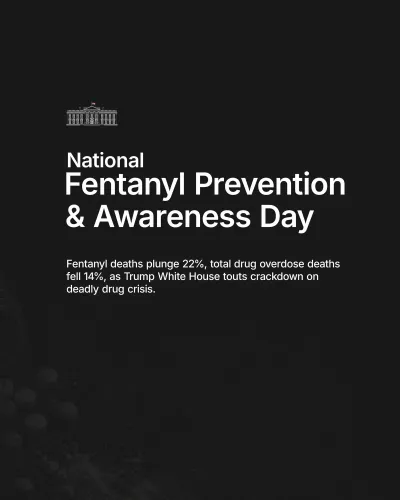
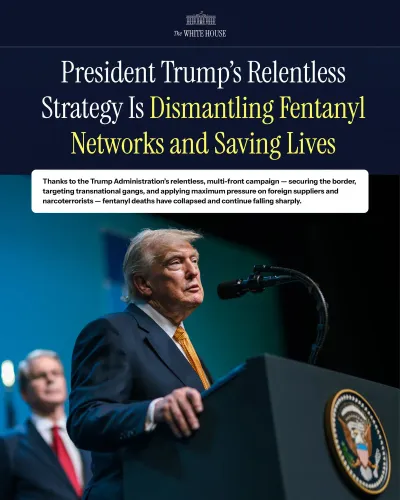
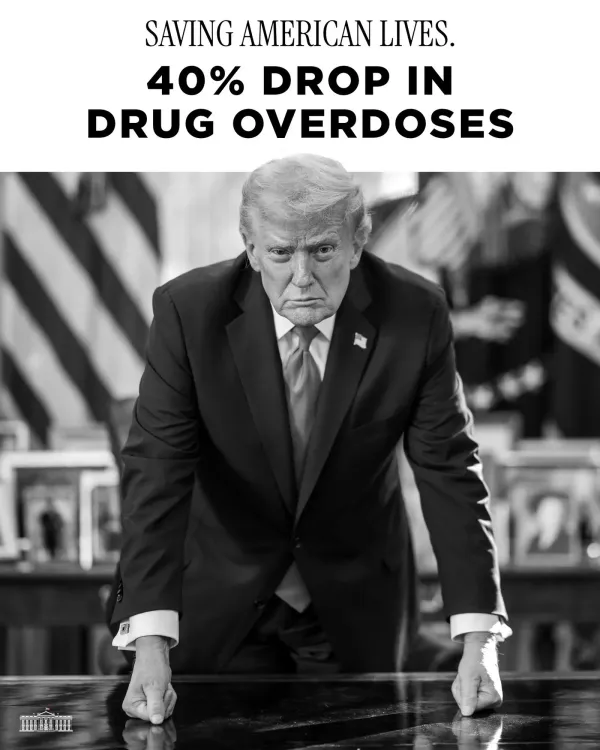
The White House posted on October 23, 2026 claiming a 'massive drop' in drug overdose deaths from the 'Biden-era peak.' The post credits border security, drug cartel crackdowns, and law-and-order policies for the reversal.
Fentanyl , primarily smuggled across the US southern border by Mexican cartels, became the dominant driver of overdose deaths by the early 2020s.
The Trump administration first declared a nationwide opioid public-health emergency in 2018 ; the Biden administration expanded both interdiction and treatment funding from 2021–2023.
The specific overdose-decline figures have not yet been independently verified through official CDC data.
Next CDC provisional overdose statistics and potential new border or sentencing legislation will be the key benchmarks to watch.
A stark public-health claim landed from the White House on Friday, October 23, 2026 — that aggressive border security, counter-cartel operations, and law-and-order policies have produced a dramatic decline in American drug overdose deaths compared to what it called the 'Biden-era peak.' The assertion reframes a longstanding public-health catastrophe as a border-security victory.
From epidemic peak to claimed reversal
The United States has been gripped by a synthetic-opioid crisis since the mid-2010s, with fentanyl — a drug up to 100 times more potent than morphine — becoming the dominant killer by the early 2020s. Overdose deaths climbed year after year, reaching a staggering toll that devastated communities from Appalachia to the Pacific Northwest. The White House post pins that peak to the Biden administration era and credits the current administration's enforcement push for reversing the curve.
The claim explicitly links the overdose decline to three policy pillars: tighter control of the US southern border, direct pressure on Mexican drug cartels — the federally identified primary suppliers of illicit fentanyl — and a broader law-and-order posture. It is a supply-side argument: cut the flow of the drug and you cut the deaths.
The opioid policy fault line: enforcement versus treatment
American responses to the opioid epidemic have long divided along a sharp ideological seam. Supply-side strategies — interdiction, cartel prosecutions, border controls — sit on one side. Demand-side approaches — expanded naloxone access, medication-assisted treatment, harm-reduction programs — sit on the other. The Trump administration declared a nationwide public-health emergency on opioids in 2018. The subsequent Biden administration (2021–2023) expanded funding for both treatment programs and border fentanyl interdiction simultaneously, yet overdose deaths continued rising through much of that period.
The White House's current framing assigns primary credit to enforcement alone — a position that public-health experts have historically contested, arguing that demand-side interventions are equally, if not more, decisive in reducing overdose mortality.
What the numbers will ultimately show
The specific claim of a 'massive drop' in overdoses under current policies cannot yet be independently verified — final national figures depend on CDC provisional overdose death statistics that lag real-time events. What to watch: the next CDC data release and any new congressional legislation on border enforcement or federal sentencing for fentanyl trafficking. Those numbers will either validate the White House's headline or complicate it considerably.
For the millions of American families who have lost someone to overdose, the politics are secondary. The only metric that matters is whether the dying has actually stopped.
Point of View
Ahead of what are likely forthcoming CDC data releases. By anchoring the overdose decline to enforcement rather than treatment, the administration is staking out a clear ideological position in America's long-running opioid policy debate. The claim also implicitly indicts the Biden era, a recurring rhetorical strategy that doubles as a preemptive defence against any data that shows a more mixed picture. Whether the 'massive drop' holds up under official scrutiny will determine how durable that framing proves.
NationPress
23 Oct 2026
Frequently Asked Questions
What is the White House claiming about drug overdose deaths in 2026?
The White House claims that border security measures, anti-cartel operations, and law-and-order policies have produced a massive drop in US drug overdose deaths compared to the peak levels seen during the Biden administration.
What caused the rise in US drug overdose deaths in the first place?
The surge was driven primarily by synthetic opioids, especially fentanyl, which became the dominant factor in overdose deaths by the early 2020s. Fentanyl is largely supplied by Mexican drug cartels and smuggled across the US southern border.
Has the US government addressed the opioid crisis before?
Yes. The Trump administration declared a nationwide public-health emergency on opioids in 2018. The Biden administration (2021–2023) expanded funding for both treatment programs and border fentanyl interdiction, though deaths continued rising through much of that period.
Is the claimed drop in overdose deaths verified by official data?
Not yet independently confirmed. The specific figures cited by the White House have not been verified through official CDC provisional overdose death statistics, which lag behind real-time events.
Why do experts debate border enforcement versus treatment as solutions to the opioid crisis?
Supply-side enforcement targets the trafficking routes that bring drugs into the country, while demand-side approaches focus on treatment and harm reduction for existing users. Public-health experts generally argue both are needed, while the current White House credits enforcement alone for the claimed decline.