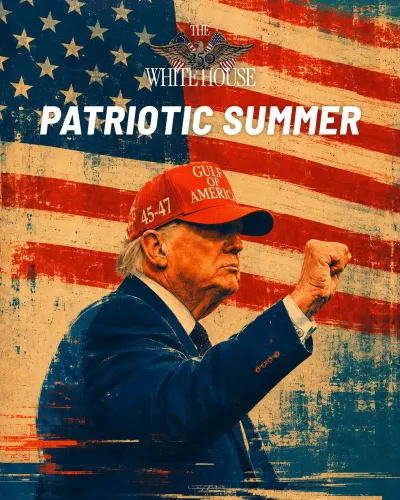
White House Posts 'It's Okay to Love America' in National Pride Message

Synopsis
The White House posted 'It's okay to love America' on X on 16 July 2026, accompanied by an image. The brief statement from the U.S. executive office signals an affirmation of national pride amid ongoing domestic debates over American identity and patriotism.
Key Takeaways
The White House posted 'It's okay to love America' on X on 16 July 2026 .
The post came with 1 image and no video, amplifying the visual impact of the message.
The statement is a cultural affirmation from the U.S. executive branch , not a policy or legislative announcement.
White House social media accounts have a history of using brief, declarative posts to signal positions on national identity.
The message is being watched by domestic and international audiences, including the Indian-American diaspora .
Observers will monitor whether additional White House posts follow on the theme of American patriotism and identity.
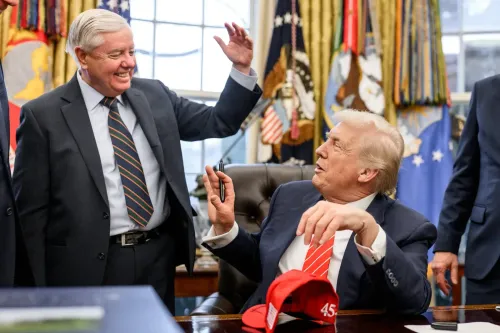
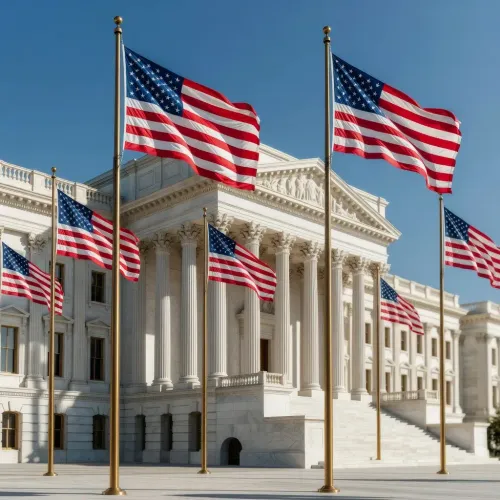
The White House, the official communications account of the Executive Office of the President of the United States, posted a brief but pointed message on X (formerly Twitter) on Thursday, 16 July 2026, stating: 'It's okay to love America.' The post was accompanied by an image and quickly drew attention as a statement of national affirmation from the highest office in the country.
Context
The message, though short, carries the weight of its source — the official digital voice of the U.S. executive branch. White House social media accounts have historically used brief, declarative posts to signal cultural and political positioning to a broad domestic and international audience. The phrase 'It's okay to love America' reads as a deliberate, confident affirmation of patriotism rather than a policy announcement.
Such messaging often surfaces during periods of heightened domestic debate around national identity, cultural values, and the meaning of patriotism in a diverse society. The White House has used its social platforms to anchor these conversations from the executive's perspective.
Policy Backdrop
The U.S. executive branch has a long tradition of issuing public communications that affirm American identity and values — from formal addresses to brief social media posts. These messages are distinct from legislative or regulatory action but serve a clear function: shaping the cultural and emotional tone of national discourse.
In recent years, the question of what it means to love or critique one's country has become a significant flashpoint in American public life. Posts of this nature from official government accounts are read by supporters as reassuring and by critics as politically coded. The White House's choice to frame patriotism as something that requires explicit permission — 'it's okay' — suggests an awareness of that contested landscape.
Stakeholders and Impact
U.S. citizens across the political spectrum are the primary audience for this message. For many Americans, a simple affirmation of national love is uncontroversial and welcome. For others, the framing implies a pushback against those who express dissent or criticism as a form of civic engagement.
Internationally, messages from the White House are closely watched, including in India, where the United States remains a key strategic and cultural reference point. Indian audiences — particularly the large Indian-American diaspora — often engage with shifts in U.S. political messaging as it relates to identity, belonging, and the immigrant experience in America.
What's Next
Observers will watch whether this post marks the beginning of a broader White House communications push around national identity themes in the coming weeks. Additional posts, speeches, or executive actions framed around American pride and cultural values would indicate a sustained messaging strategy rather than a one-off statement.
As the United States continues to navigate deep internal debates over history, identity, and civic belonging, official affirmations of patriotism from the White House are likely to remain both politically significant and closely scrutinised by domestic and global audiences alike.
Point of View
Loaded enough to be debated. The phrase 'it's okay' is doing significant rhetorical work, implying that loving one's country has somehow become contested and that the executive branch is here to grant permission. This fits a broader pattern in which the U.S. presidency uses social media not just to announce policy but to set the emotional and cultural tone of national discourse. For Indian observers, it is a reminder that identity politics in the world's oldest democracy is as charged as anywhere else.
NationPress
16 Jul 2026
Frequently Asked Questions
What did the White House post on X on 16 July 2026?
The White House posted 'It's okay to love America' on X on 16 July 2026, along with an image, as a national pride affirmation from the U.S. executive office.
Why did the White House say 'It's okay to love America'?
The White House has not provided a detailed explanation. The post appears to be a cultural affirmation of patriotism, consistent with the executive branch's practice of using social media to signal positions on national identity during periods of domestic debate.
Is this a new U.S. government policy on patriotism?
No. This is a social media communication, not a policy or legislative announcement. White House accounts have historically posted such affirmations as part of routine public communications around national identity themes.
How does this White House post affect India or Indian Americans?
While the post is directed at a U.S. domestic audience, Indian Americans and observers in India closely follow White House messaging on identity and belonging, as it can reflect the cultural climate for immigrants and diaspora communities in the United States.
What should we watch for after this White House post?
Analysts will monitor whether the White House follows up with additional posts, speeches, or actions centred on American pride and cultural values, which would suggest a sustained communications strategy rather than a standalone statement.