White House Issues 'Patriot Guidelines' in New Security Directive
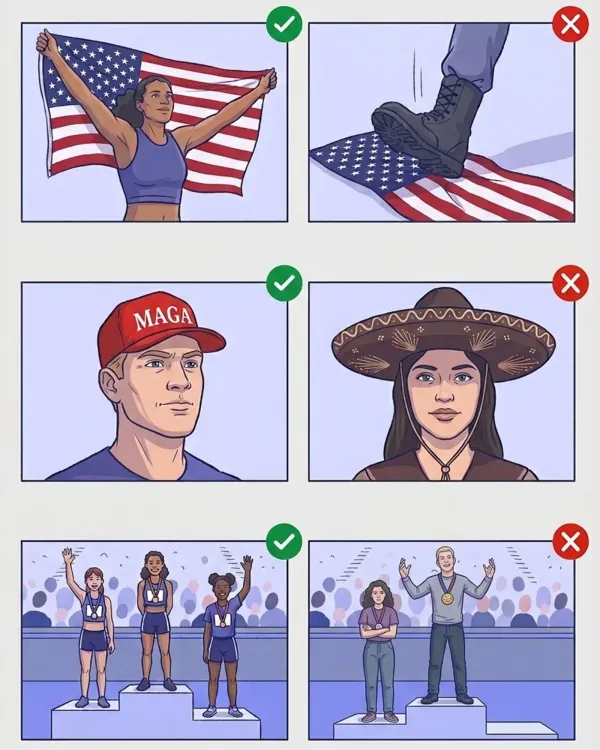
Synopsis
The White House on 14 July 2026 shared a link to a document titled 'Patriot Guidelines,' evoking the post-9/11 USA PATRIOT Act framework. The directive's full scope remains unconfirmed, but it signals a new administrative move on domestic security and national preparedness policy.
Key Takeaways
The White House posted a link to a document titled 'Patriot Guidelines' on 14 July 2026 .
The post was tagged with a Spanish-language identifier, raising questions about bilingual outreach.
The USA PATRIOT Act , enacted in October 2001 , is the foundational law underpinning 'Patriot'-branded national-security directives in the US.
The Department of Homeland Security , established in 2002 , is the primary federal body likely involved in implementing such guidelines.
Civil liberties groups and Congress are expected to scrutinise the directive once its full text is publicly available.
Formal publication through the Federal Register or a DHS announcement will be the next key development to watch.
The White House, the official communications account of the Executive Office of the President of the United States, on Tuesday, 14 July 2026, published a post linking to a document titled 'Patriot Guidelines,' signalling a new administrative directive in the domain of national security and domestic governance.
Context
The post, brief in text, carries the words 'Patriot Guidelines' alongside a link, and was tagged with the Spanish language identifier — a detail that may reflect either a bilingual outreach effort or a platform-level classification. The White House has not provided additional public commentary on the document's scope at the time of publication.
The term 'Patriot' in the context of United States national security is closely associated with the USA PATRIOT Act, enacted in October 2001 in the immediate aftermath of the September 11 terrorist attacks. That law significantly expanded federal surveillance and law-enforcement powers in the name of counterterrorism.
Policy Backdrop
The USA PATRIOT Act established a broad legal architecture for domestic intelligence gathering that successive administrations have periodically updated through executive guidance, agency rules, and administrative directives. White House communications referencing 'Patriot' terminology have historically been tied to national-security messaging within this post-9/11 legal framework.
The Department of Homeland Security (DHS), created in 2002 in direct response to the September 11 attacks, coordinates federal efforts on domestic security, immigration enforcement, and counterterrorism policy. Any guidelines issued under a 'Patriot' framework would likely fall within DHS's operational or compliance purview, or that of the Department of Justice.
Administrative guidance documents of this nature are typically formalised through the Federal Register or released via official agency websites, and may be subject to congressional oversight review.
Stakeholders and Impact
The primary stakeholders affected by any update to 'Patriot'-linked guidelines are federal and local law enforcement agencies, which rely on the legal authorities established under the original Act for surveillance, data collection, and inter-agency intelligence sharing.
Civil liberties organisations have long scrutinised the application of PATRIOT Act-era powers, raising concerns about privacy rights, due process, and the scope of warrantless data collection. Any new guidelines would be expected to draw close attention from advocacy groups and legal scholars.
For Indian readers, this development carries relevance given India-US cooperation on counterterrorism and information-sharing frameworks, including bilateral agreements under the Homeland Security Dialogue and intelligence-sharing protocols that reference American domestic security standards.
What's Next
The full text of the 'Patriot Guidelines' is expected to be evaluated by legal experts, civil liberties groups, and members of Congress once formally published or accessible through official channels. Potential congressional oversight hearings in 2026 may be convened to examine the scope and implementation of the directive.
As the White House has not elaborated on the guidelines' specific provisions, the next significant development will be the document's formal release through the Federal Register or a DHS announcement, which will clarify whether the directive expands, restricts, or merely codifies existing national-security authorities.
Point of View
Whether intentional or incidental, adds an unusual dimension that may hint at outreach to a specific community or simply reflect a platform anomaly. Until the document's contents are fully public, the post functions more as a signal of administrative intent than a transparent policy announcement — a pattern consistent with how the executive branch has historically managed sensitive security communications.
NationPress
13 Oct 2026
Frequently Asked Questions
What are the White House Patriot Guidelines?
The White House on 14 July 2026 shared a link to a document titled 'Patriot Guidelines,' but the full contents have not been publicly elaborated upon. The term 'Patriot' in US national security typically references the framework established by the USA PATRIOT Act of 2001.
What is the USA PATRIOT Act?
The USA PATRIOT Act is a US federal law enacted in October 2001 after the September 11 attacks. It expanded government surveillance, intelligence-gathering, and law-enforcement powers to combat terrorism domestically and internationally.
Why did the White House post in Spanish?
The White House post was tagged with a Spanish-language identifier, but no official explanation has been provided. It may reflect a bilingual outreach effort or a platform-level classification, and cannot be independently verified at this stage.
How does this affect India-US relations?
India and the United States maintain active counterterrorism cooperation under frameworks such as the Homeland Security Dialogue. Any update to US domestic security guidelines can indirectly influence bilateral intelligence-sharing protocols and joint preparedness standards.
What happens next with the Patriot Guidelines?
The guidelines are expected to be formally published through the US Federal Register or announced via the Department of Homeland Security. Congressional oversight hearings in 2026 may also be convened to review the directive's scope and implications.