CM Rekha Gupta Reaffirms Delhi's Commitment to Youth Skilling
Synopsis
On World Youth Skills Day, Delhi Chief Minister Rekha Gupta reaffirmed the state government's commitment to quality skill training for youth, linking their empowerment to the goals of Atmanirbhar Bharat and a developed Delhi.
Key Takeaways
Delhi CM Rekha Gupta marked World Youth Skills Day on 15 July 2026 with a pledge to expand skill training for youth.
She framed youth skill development as the 'strong foundation' of both Atmanirbhar Bharat and a 'developed Delhi'.
The statement aligns Delhi's state agenda with the national Viksit Bharat 2047 vision.
India's skilling framework includes the Pradhan Mantri Kaushal Vikas Yojana (PMKVY) , launched in 2015 , targeting millions of youth with certified training.
Key metrics to watch include Delhi budget allocations for skill centres and placement data under central and state schemes.
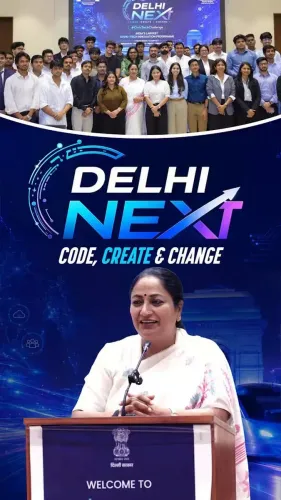
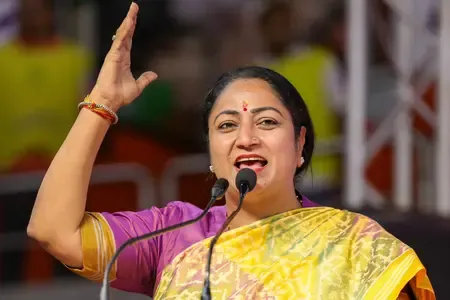
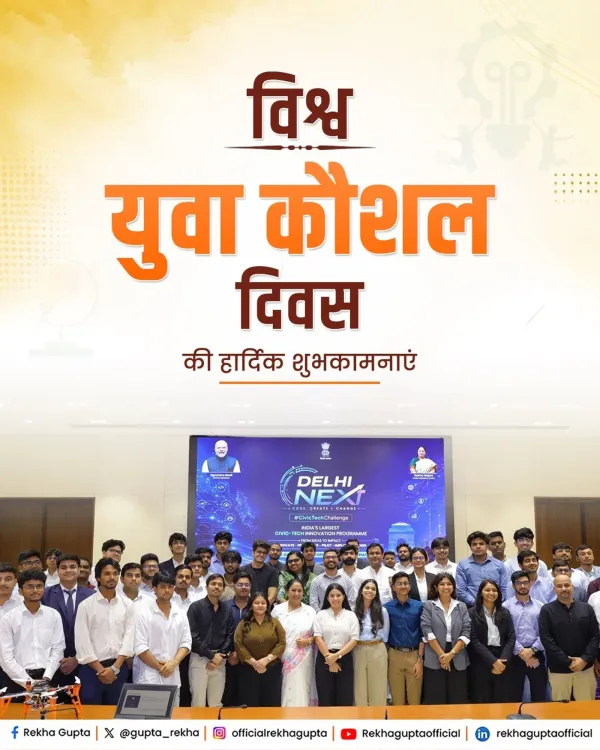
Delhi Chief Minister Rekha Gupta on Wednesday, 15 July 2026 extended greetings on World Youth Skills Day, reaffirming that the Delhi government is fully committed to providing quality skill training and new opportunities to young people across the capital.
Posting in Hindi on the occasion of the annual United Nations observance, CM Gupta stated: 'युवाओं का कौशल विकास ही आत्मनिर्भर भारत और विकसित दिल्ली की मजबूत नींव है' — 'The skill development of youth is the strong foundation of a self-reliant India and a developed Delhi.' She added that youth empowered by skill and hard work will give Delhi's progress new momentum.
Context
World Youth Skills Day is observed every year on 15 July under a United Nations mandate, drawing attention to the importance of equipping young people with market-relevant skills. Governments at both the central and state levels in India typically use the occasion to highlight ongoing training initiatives and policy commitments directed at the youth demographic.
CM Gupta's post explicitly links youth skilling to two larger national frameworks: Atmanirbhar Bharat — the self-reliant India initiative launched in 2020 — and the vision of a 'developed Delhi', aligning the state's agenda with the broader Viksit Bharat 2047 goal.
Policy Backdrop
India's skilling architecture rests on foundations laid in 2015, when the National Skill Development Mission and the Skill India Mission were launched with a target of training 400 million people by 2022. The flagship central scheme, Pradhan Mantri Kaushal Vikas Yojana (PMKVY), has since provided short-term, industry-aligned certification to millions of youth across states.
Delhi, as a major urban centre, implements these central schemes while also deploying its own training infrastructure and placement drives. State-level skill centres and polytechnic institutions have historically served as delivery points for both PMKVY-linked and state-funded courses, addressing urban unemployment among young residents of the capital.
Stakeholders and Impact
The primary beneficiaries of Delhi's skill-development push are the capital's large population of young job-seekers and vocational trainees, many of whom migrate from other states in search of employment. Quality certification and placement support can directly improve their earning potential and reduce structural unemployment in the city.
Industry bodies and small and medium enterprises operating in Delhi-NCR are also key stakeholders, as a better-trained local workforce reduces their recruitment costs and dependence on skilled labour from outside the region. CM Gupta's renewed commitment signals continued state support for public-private skilling partnerships.
What's Next
Observers will watch Delhi's upcoming budget allocations and any new skill-centre rollouts announced in the months ahead as a measure of how the government's stated commitment translates into on-ground investment. Certification and placement data under PMKVY and state-run programmes will serve as key indicators of progress.
If the Delhi government follows through with targeted announcements — such as new training hubs, industry tie-ups, or enhanced stipends for trainees — the World Youth Skills Day message could mark the opening of a broader policy push ahead of the next budget cycle.
Point of View
Offering no new scheme or budget figure, which limits its immediate policy weight. Nevertheless, the statement stakes reputational ground: if Delhi's skilling outcomes improve in the coming months, the government can point to this commitment as the starting signal. The broader arc here is India's ongoing attempt to convert its demographic dividend into economic productivity before the window narrows.
NationPress
15 Jul 2026
Frequently Asked Questions
What did Delhi CM Rekha Gupta say on World Youth Skills Day 2026?
Delhi CM Rekha Gupta said the skill development of youth is the strong foundation of a self-reliant India and a developed Delhi, and pledged that the Delhi government is fully committed to providing quality skill training and new opportunities to young people.
What is World Youth Skills Day?
World Youth Skills Day is observed every year on 15 July under a United Nations mandate to highlight the importance of equipping young people with job-ready skills for employment and entrepreneurship.
What is Atmanirbhar Bharat and how does it relate to youth skilling?
Atmanirbhar Bharat is India's self-reliant initiative launched in 2020 to promote domestic production and employment. CM Gupta linked youth skill development directly to this national goal, framing trained youth as essential to achieving economic self-reliance.
What is PMKVY and does Delhi implement it?
Pradhan Mantri Kaushal Vikas Yojana (PMKVY) is a central government scheme launched in 2015 to provide short-term, industry-aligned skill certification to youth. Delhi, like other states, implements PMKVY alongside its own state-level training programmes.
What should we watch for next from the Delhi government on skill development?
Key indicators will be Delhi's upcoming budget allocations for skill centres, any new training hub announcements, industry tie-ups, and placement and certification data under PMKVY and state-run schemes.